Economics — March 9, 2026 — Edu AI Team
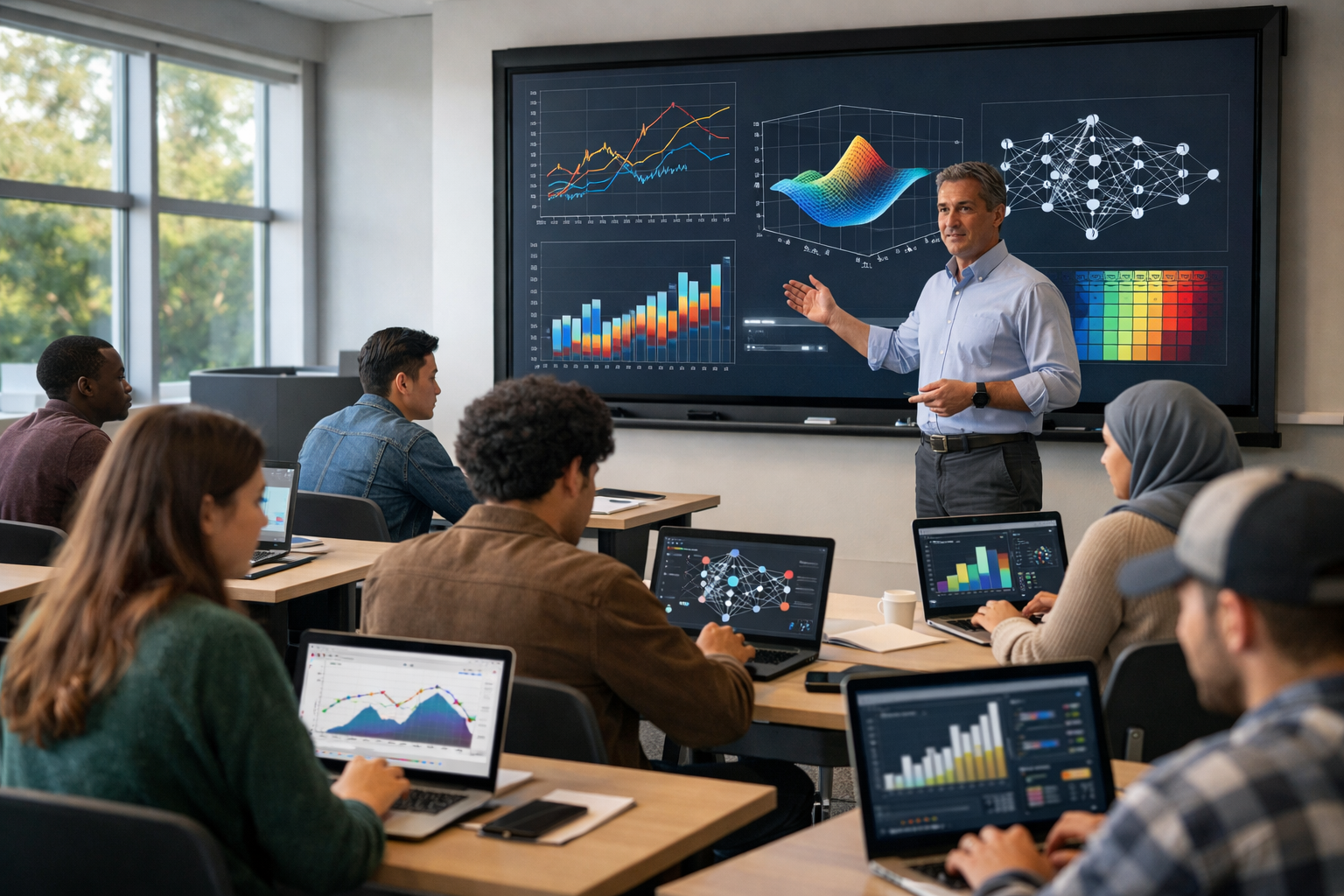
Artificial intelligence is transforming nearly every industry—and economics is no exception. Understanding how AI is changing the economics job market is essential for students, graduates, and professionals who want to stay relevant in an increasingly data-driven world.
From automating repetitive tasks to enabling real-time macroeconomic forecasting, AI is reshaping the skills employers demand and redefining traditional economic roles. In this article, we break down the biggest changes, emerging opportunities, and the practical steps you can take to future-proof your career.
Historically, economics graduates pursued careers in:
These roles relied heavily on statistical analysis, econometric modeling, and structured datasets. Economists typically worked with historical data, using established models to interpret trends and inform decision-making.
Today, AI is expanding these capabilities—but it is also changing the nature of the work itself.
One of the most immediate ways AI is changing the economics job market is through automation. Tasks that once required hours of manual effort can now be completed in minutes using AI-powered tools.
For example, machine learning systems can automatically process large datasets from financial markets, government reports, or consumer behavior platforms. Instead of spending time compiling spreadsheets, economists increasingly focus on interpreting AI-generated insights.
Impact on jobs: Entry-level analytical roles that focus solely on data preparation are shrinking. However, roles requiring interpretation, strategic thinking, and advanced modeling are growing.
Modern economics is no longer limited to structured survey data and quarterly GDP reports. AI allows economists to analyze:
This shift has led to the emergence of computational economics and data science-driven policy analysis. Employers now expect economists to be comfortable working with machine learning libraries, programming languages like Python, and large-scale datasets.
If you want to stay competitive, developing technical skills is critical. Many learners begin with AI and programming foundations through our courses, which combine economic theory with practical machine learning applications.
While some traditional roles are evolving, entirely new career paths are emerging at the intersection of AI and economics.
These professionals blend econometrics with machine learning. They build predictive models for governments, banks, and corporations, often using neural networks or advanced regression techniques.
As AI becomes central to economic productivity, governments need experts who understand both technology and economic policy. These analysts assess the macroeconomic impact of automation, AI regulation, and digital transformation.
Financial institutions increasingly use AI-driven trading algorithms. Economists with coding skills help design, evaluate, and regulate these systems.
AI enables detailed behavioral modeling. Economists can now analyze micro-level consumer patterns to inform pricing strategies and economic forecasting.
The common thread across these roles is clear: strong analytical thinking combined with technical fluency.
Understanding how AI is changing the economics job market also means understanding which skills are becoming non-negotiable.
AI tools can generate outputs—but they cannot replace economic reasoning. The professionals who thrive will be those who can ask better questions, interpret complex results, and connect data insights to real-world economic systems.
AI's impact is not evenly distributed. Certain industries are seeing more dramatic change.
Algorithmic trading, credit risk assessment, fraud detection, and portfolio optimization now rely heavily on AI models. Economists who understand machine learning are in high demand.
Governments use AI to forecast tax revenues, analyze labor markets, and design welfare policies. Economists must interpret machine-generated forecasts responsibly and transparently.
Firms expect data-backed recommendations powered by predictive analytics. AI-enhanced scenario modeling is becoming standard practice.
A common concern is whether AI will eliminate economics jobs entirely. The evidence suggests otherwise.
AI excels at:
However, AI struggles with:
Economic decision-making often involves political, social, and ethical considerations that extend beyond raw data. AI enhances economists—it does not replace them.
The job market is not shrinking; it is shifting.
If you are studying economics or considering entering the field, here are practical steps you can take:
Python has become a standard tool in economic research and industry analytics. Pair your economics studies with coding skills to stand out.
You do not need to become a deep learning engineer, but understanding supervised learning, regression models, and classification algorithms is crucial.
Create portfolio projects that analyze economic datasets. Employers value applied experience over theoretical knowledge alone.
AI regulation and economic governance are rapidly evolving fields. Reading policy papers and global reports can give you a competitive edge.
If you are ready to develop in-demand skills, explore our courses or register free to start building expertise in AI, economics, and computing.
Another important dimension of how AI is changing the economics job market is globalization. Remote work, digital collaboration tools, and cloud computing mean economists can now work across borders.
AI-driven platforms allow multinational firms to analyze global markets in real time. This increases competition—but also opportunity. Professionals with strong AI and economic skills can access international roles previously limited by geography.
Over the next decade, AI will likely deepen its integration into economic analysis. We can expect:
Rather than diminishing the field, AI is making economics more dynamic, quantitative, and technologically advanced.
Understanding how AI is changing the economics job market is no longer optional—it is essential. Automation is transforming routine tasks, but new opportunities are emerging for professionals who combine economic reasoning with technical expertise.
The future belongs to economists who can interpret AI outputs, design intelligent models, and guide ethical decision-making in a data-driven world. By investing in programming, machine learning, and analytical thinking today, you position yourself at the forefront of tomorrow’s economy.
The shift has already begun. The question is not whether AI will influence economics—it’s whether you are prepared to evolve with it.



- Learning Evolved.
- Intelligence Amplified.