Economics — March 9, 2026 — Edu AI Team
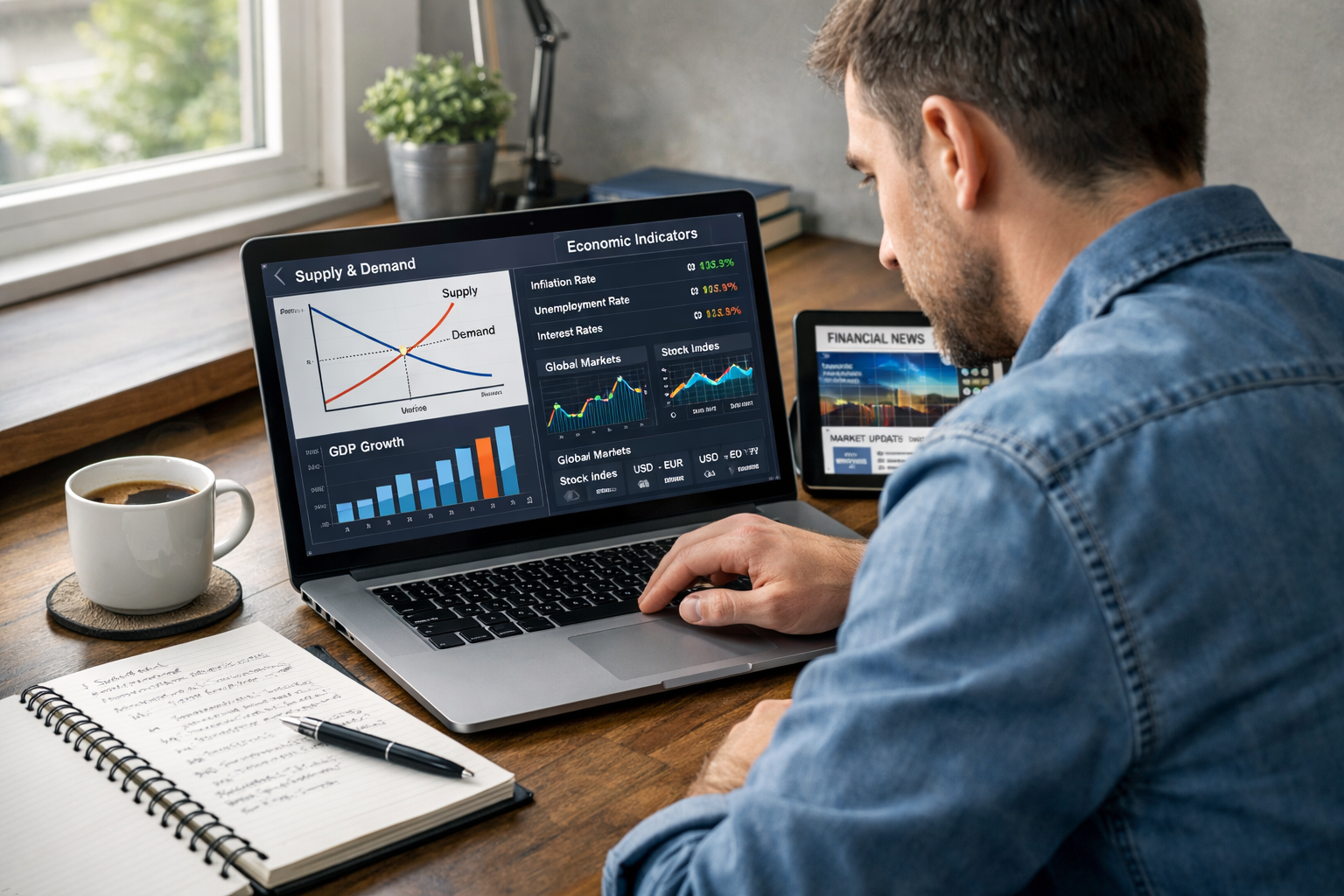
Economics shapes everything around us — from inflation and interest rates to job markets and business strategy. If you want to understand how money, markets, and policies work, learning economics is one of the smartest investments you can make.
The good news? You don’t need a university classroom to master it. With the right structure, tools, and mindset, you can learn economics online effectively and build real-world skills at your own pace.
This guide will show you exactly how to do that — step by step.
Before opening a textbook or watching lectures, define what you want from economics.
Learning economics online effectively starts with clarity. When you know your purpose, you can focus on relevant topics instead of feeling overwhelmed by theory.
For example:
One of the biggest mistakes students make is jumping into advanced topics too quickly. Economics builds on core principles, and without them, everything feels confusing.
If you are using structured programs like our courses, the curriculum is designed to guide you logically from fundamentals to advanced applications. This structured progression is crucial for long-term retention.
Consistency beats intensity. Instead of studying for five hours once a week, aim for shorter, focused sessions several times per week.
This repetition cycle improves understanding and memory. Economics is not about memorizing definitions — it’s about thinking logically and applying models.
To truly learn economics online effectively, you must connect theory to real life.
Whenever you learn a concept, ask:
For example:
This habit transforms abstract graphs into practical insight.
Passive watching doesn’t work. Active learning dramatically increases retention and understanding.
Many online learners skip problem-solving because it feels harder than watching videos. But problem-solving is where real learning happens.
Economics uses basic algebra, percentages, and graph interpretation. Advanced economics may include calculus and statistics, but most foundational learning only requires:
If math feels like a barrier, spend extra time reinforcing these basics. Even small improvements dramatically boost confidence.
One powerful way to learn economics online effectively is by connecting study with current events.
Each week:
Then ask yourself: Which economic principles explain this situation?
This habit builds analytical thinking — a key skill employers value.
Self-study works best when supported by structured guidance. Random YouTube videos often create knowledge gaps.
Well-designed programs like our courses combine:
Structured learning ensures you don’t miss foundational principles that later topics depend on.
If you're just getting started, you can register free and explore beginner-friendly materials before committing to advanced content.
Motivation improves when you see measurable progress.
Clear targets prevent drifting and keep your learning focused.
The ultimate goal is not memorizing definitions. It’s developing an “economic mindset.”
Economic thinking means:
When you begin applying these ideas naturally in daily decisions — budgeting, investing, business strategy — you know you’ve truly learned economics.
Avoiding these mistakes alone will put you ahead of most self-learners.
This depends on your goal:
With consistent weekly study and structured guidance, most learners see noticeable improvement within 30 days.
Learning economics online effectively is completely achievable — but it requires structure, consistency, and active engagement.
To recap:
Economics is more than a subject — it’s a framework for understanding the world. Whether you're improving personal finance decisions, preparing for exams, or building business expertise, the skills you gain will serve you for life.
If you're ready to start your journey, explore our courses or register free today and begin building real-world economic knowledge with AI-powered guidance.
The best time to understand how the economy works? Now.



- Learning Evolved.
- Intelligence Amplified.