Languages — March 12, 2026 — Edu AI Team
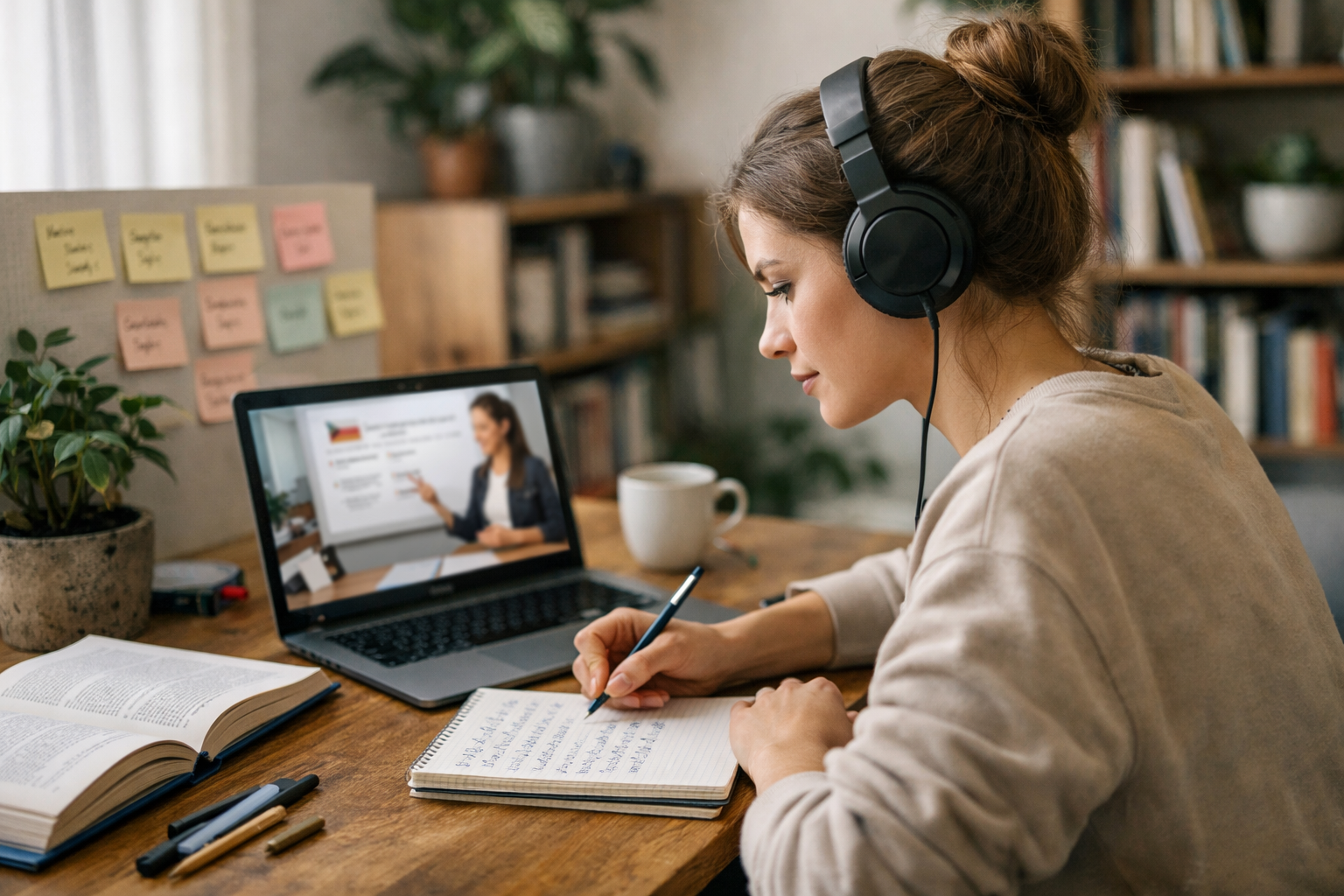
Many learners believe you need to move abroad to become fluent. The truth is, language immersion at home: techniques that work can be just as powerful—if you apply them strategically. With the right structure, tools, and mindset, your home can become a highly effective language-learning environment.
In this guide, we’ll break down practical, research-backed immersion strategies you can implement immediately. Whether you’re learning Spanish, French, Mandarin, or any other language, these techniques will help you think, respond, and live more naturally in your target language.
Language immersion means surrounding yourself with your target language so consistently that it becomes part of your daily life. Instead of studying for 30 minutes and switching back to your native language, immersion integrates listening, speaking, reading, and thinking into normal routines.
When done correctly, home immersion:
The key is intentional exposure—not passive background noise.
Your phone and laptop are immersion goldmines. Switch your device language to your target language. At first, it may feel uncomfortable—that’s the point. You’ll quickly learn practical vocabulary related to daily tasks.
This creates repeated exposure to real-world vocabulary. For structured guidance alongside immersion, explore our courses designed to combine AI-driven feedback with daily language practice.
This classic method works—when done properly. Label objects around your home: refrigerator, mirror, desk, door, sink. But don’t just read them once.
Every time you see a label:
For example: Instead of just seeing “la puerta,” say, “Abro la puerta porque…” and complete the sentence. This shifts you from recognition to production.
Immersion isn’t random exposure—it’s strategic repetition. Create daily input blocks of 20–45 minutes focused entirely on one skill.
This balance ensures immersion remains productive rather than overwhelming.
Shadowing is one of the most powerful language immersion at home techniques that work for pronunciation and fluency. It involves listening to a native speaker and repeating simultaneously.
This method improves rhythm, intonation, and natural pacing. Over time, your speech begins to mirror native patterns.
Most learners mentally translate. To build fluency, train yourself to think directly in the language.
If you don’t know a word, simplify the idea instead of translating. This develops cognitive flexibility—a core fluency skill.
Immersion works best when it mirrors real communication. Create practical simulations at home.
These scenarios activate vocabulary and grammar under realistic pressure, strengthening recall.
Set specific hours where only your target language is allowed—no switching. Start with 30 minutes daily and expand gradually.
During this time:
Consistency is more important than duration. Short daily immersion beats occasional long sessions.
One of the biggest barriers to home immersion is lack of conversation partners. Modern AI tools solve this problem by providing instant feedback on pronunciation, grammar, and vocabulary use.
With guided systems, you can simulate conversations, receive corrections, and track improvement over time. If you’re serious about accelerating fluency, register free to explore structured AI-supported language programs.
Background TV without attention does little. Engage actively—pause, repeat, summarize.
Immersion should challenge, not exhaust. Choose content slightly above your level (comprehensible input).
Many learners consume content but avoid production. Speaking—even alone—is essential.
Fluency builds through daily exposure. Ten minutes daily beats two hours once a week.
With consistent immersion:
Results vary depending on language difficulty, study intensity, and prior experience. The key variable is daily engagement.
To make language immersion at home sustainable:
Combining immersion with structured lessons creates the strongest results. Guided learning ensures you fill grammar gaps while immersion builds natural flow. Explore our courses to integrate AI-powered feedback with daily immersion practice.
You don’t need a plane ticket to achieve fluency. With the right approach, language immersion at home can replicate many of the cognitive benefits of living abroad.
The techniques that work are simple but powerful: change your environment, engage actively, speak daily, think in the language, and stay consistent. Turn your home into a living classroom—and let immersion transform the way you learn.
Start today. Small daily changes lead to remarkable long-term fluency.


- Learning Evolved.
- Intelligence Amplified.