AI Education — March 5, 2026 — Edu AI Team
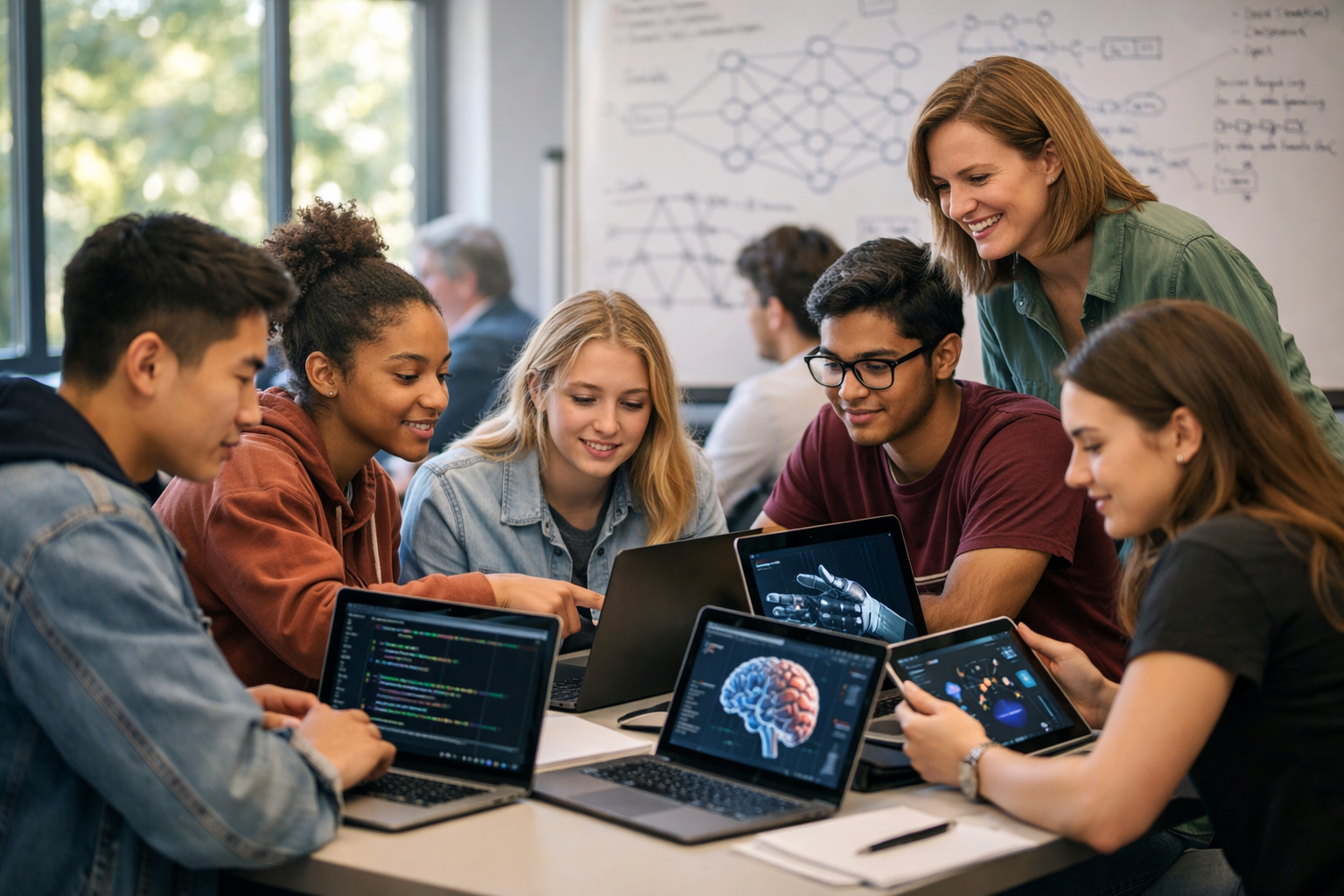
Artificial Intelligence is no longer a futuristic concept — it is shaping the way we work, learn, create, and communicate. From personalized recommendations on streaming platforms to self-driving cars and intelligent chatbots, AI powers much of the modern world. That’s why understanding the top AI skills every student should learn today is no longer optional — it’s essential.
Whether you want to become a software engineer, entrepreneur, designer, economist, or language specialist, AI literacy gives you a powerful advantage. In this guide, we break down the most important AI skills students should start developing right now — and how to build them effectively.
According to global workforce trends, AI and automation are transforming nearly every industry. Employers are not just looking for degrees — they are looking for adaptable thinkers who understand technology and can work alongside intelligent systems.
Students who develop AI skills gain:
The key is not just learning theory, but building practical, hands-on capability.
Before diving into coding or machine learning models, students must understand what AI actually is — and what it is not.
This foundational knowledge helps students critically evaluate AI tools instead of blindly using them. It also prepares them to specialize later.
At Edu AI, our AI and Machine Learning programs introduce students to these concepts in a structured, beginner-friendly way. Explore our courses to start building strong fundamentals.
Programming is one of the top AI skills every student should learn today. While you don’t need to be a professional developer to understand AI, coding dramatically expands your capabilities.
Students should learn how to:
Even basic coding knowledge allows students to automate tasks, analyze data, and experiment with machine learning projects.
AI runs on data. Students who cannot understand data cannot truly understand AI.
Data literacy includes:
This skill is valuable not only in tech careers but also in economics, finance, marketing, healthcare, and public policy.
Students should practice asking:
Strong critical thinking prevents misuse of AI tools and builds responsible innovators.
In 2026, knowing how to effectively use AI tools is a major competitive advantage. Prompt engineering — the skill of giving clear, structured instructions to AI systems — is quickly becoming essential.
This applies to writing, research, coding assistance, language learning, business analysis, and creative design.
However, students must use AI as an assistant — not a replacement for thinking. The most successful learners combine human creativity with machine efficiency.
Machine learning (ML) is at the heart of modern AI systems. While advanced mathematics is required for deep specialization, students can begin with practical, intuitive learning.
Building small projects — such as predicting prices or classifying images — makes these concepts easier to grasp.
Students who gain even introductory ML experience stand out when applying for internships, scholarships, or tech-related programs.
AI is not just about coding — it’s transforming creative industries as well.
Students interested in design, animation, or gaming should explore:
Combining AI with 3D graphics skills creates powerful career opportunities in digital art, architecture, film, and product design.
Creative AI skills demonstrate adaptability — a trait employers highly value.
AI is reshaping global economies. Students should understand how automation affects jobs, markets, and entrepreneurship.
Economic literacy combined with AI knowledge prepares students to make smarter career and investment decisions.
One of the most overlooked yet critical AI skills is ethics.
Students must understand:
Future leaders will be those who build technology that benefits society. Ethical awareness ensures AI is used for progress, not harm.
AI projects are rarely solo efforts. They require teamwork between engineers, designers, economists, and communicators.
Students should develop:
Being able to explain complex AI ideas in simple language is a rare and valuable skill.
Building AI skills does not require expensive university programs or advanced degrees. With structured online education and consistent practice, students can begin immediately.
Here’s a simple roadmap:
The most important step is starting.
At Edu AI, we provide structured, AI-powered learning pathways across Artificial Intelligence, Computing, 3D Graphics, Economics, Languages, and Personal Development. Our interactive lessons are designed to make advanced skills accessible and practical.
If you’re ready to future-proof your education, explore our courses or register free today and begin building the skills that tomorrow’s world demands.
The top AI skills every student should learn today go far beyond coding alone. They include data literacy, ethical awareness, creative application, economic understanding, and effective communication.
AI will not replace students — but students who understand AI will replace those who do not.
The future belongs to learners who adapt, experiment, and build. Start now, stay curious, and let AI become a tool that amplifies your potential.



- Learning Evolved.
- Intelligence Amplified.