Computing — March 13, 2026 — Edu AI Team
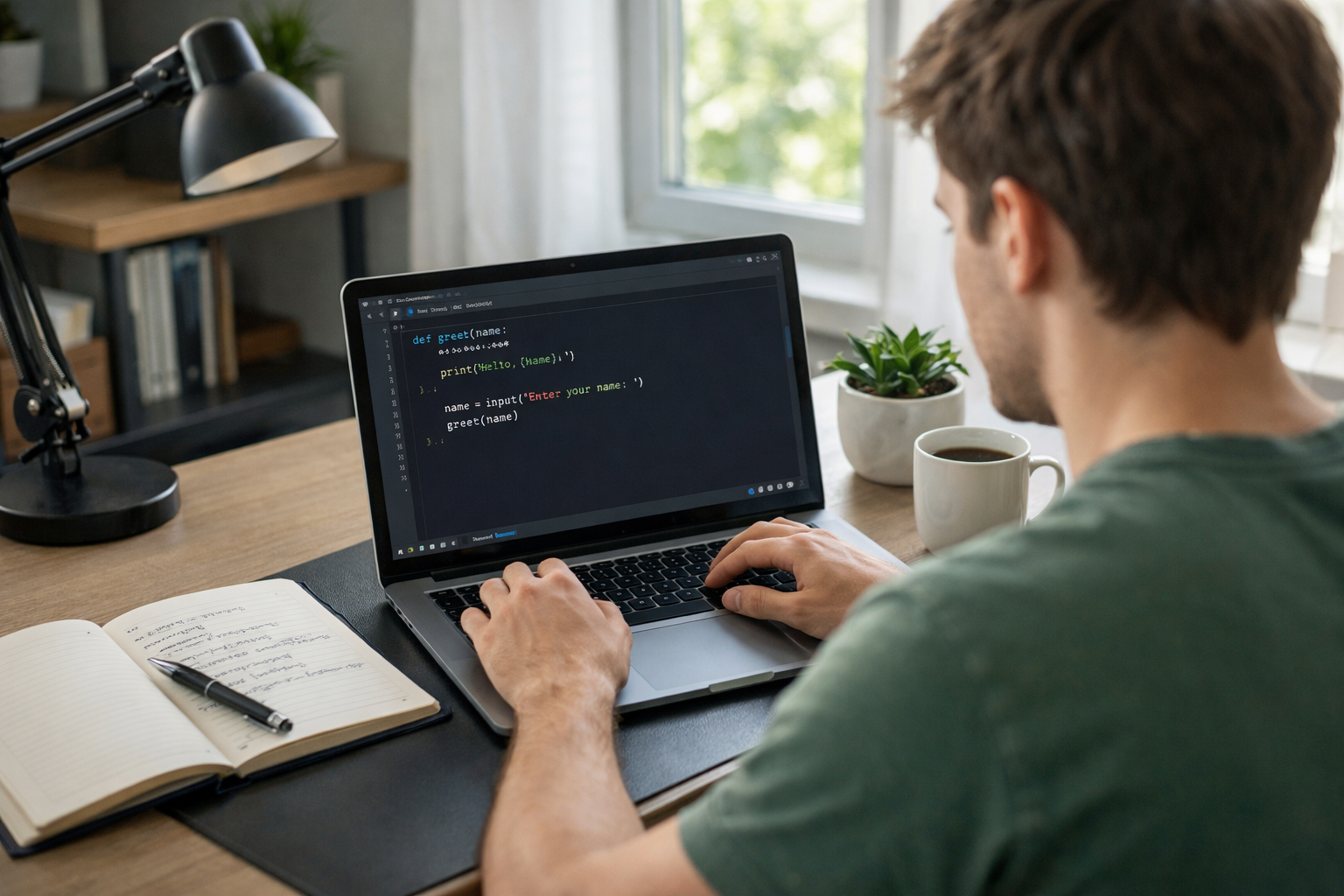
If you’re wondering how to start coding with no experience, you’re not alone. Programming can seem intimidating at first — strange symbols, unfamiliar terms, and endless programming languages. But here’s the truth: coding is a learnable skill, not a talent you’re born with.
Every professional developer once started at zero. With the right roadmap, tools, and consistent practice, you can go from complete beginner to confident coder faster than you think. This guide will walk you step by step through everything you need to know to begin.
Coding simply means writing instructions that a computer can understand. These instructions are written in programming languages like Python, JavaScript, or C++.
When you learn to code, you’re learning how to:
You don’t need a computer science degree to begin. You just need curiosity and a structured plan.
One of the biggest beginner mistakes is trying to learn too many languages at once. If you truly want to understand how to start coding with no experience, begin with one beginner-friendly language.
Python is widely recommended because:
At Edu AI, our Computing & Python programs are designed specifically for beginners who want structured, AI-supported learning. You can explore our courses to find a beginner-friendly path.
Getting started technically is easier than most people expect.
Many platforms also offer browser-based coding environments, so you don’t even need to install anything initially.
The key is not to overcomplicate this stage. Your goal is simply to write and run your first lines of code.
When figuring out how to start coding with no experience, focus on mastering the basics before moving to advanced topics.
These concepts form the foundation of nearly every programming language. Once you understand them, learning additional languages becomes much easier.
Reading about coding is not enough. You learn by doing.
Start with small projects like:
These projects reinforce logic and problem-solving skills. They also help you build confidence quickly.
Consistency matters more than intensity. Coding for 30 minutes daily is better than studying 5 hours once a week.
Structured learning platforms make this process easier by organizing content into progressive modules. If you’re serious about starting, you can register free and begin with guided lessons.
Learning how to start coding with no experience is just the beginning. Coding opens doors to many fields, including:
If you’re interested in AI specifically, Python is a critical first step before moving into machine learning. You can explore AI-focused learning paths inside our courses once you’ve mastered the fundamentals.
When starting from scratch, it’s easy to fall into traps. Here are the most common mistakes:
Stick to one language and one structured path.
Passive learning doesn’t build real skills. Always code alongside tutorials.
Confusion is part of the learning process. Struggling with a bug often leads to your biggest breakthroughs.
Focus on your progress. Coding is a personal journey.
The timeline depends on your goals and consistency.
Remember, coding is not about memorizing everything. It’s about learning how to think computationally and solve problems efficiently.
Modern AI tools can dramatically speed up the learning process. Instead of getting stuck for hours, you can:
This personalized feedback makes learning smoother and less frustrating — especially when you’re starting with zero experience.
If you truly want to master how to start coding with no experience, adopt these mental habits:
Coding is about breaking problems into small, logical steps.
Error messages are not failures. They are clues guiding you to the solution.
Your first programs will be messy — and that’s completely normal.
Here’s a simple action plan you can follow starting today:
The most important step is simply starting.
Learning how to start coding with no experience may feel overwhelming at first, but it’s one of the most valuable skills you can build in today’s digital world. Coding improves logical thinking, boosts career opportunities, and empowers you to create real-world solutions.
You don’t need prior knowledge. You don’t need to be “good at math.” You just need structured guidance, consistent practice, and patience.
If you’re ready to take your first step, explore structured beginner paths in our courses or register free and begin building your coding skills today.
Your journey starts with a single line of code.



- Learning Evolved.
- Intelligence Amplified.