AI Education — March 30, 2026 — Edu AI Team
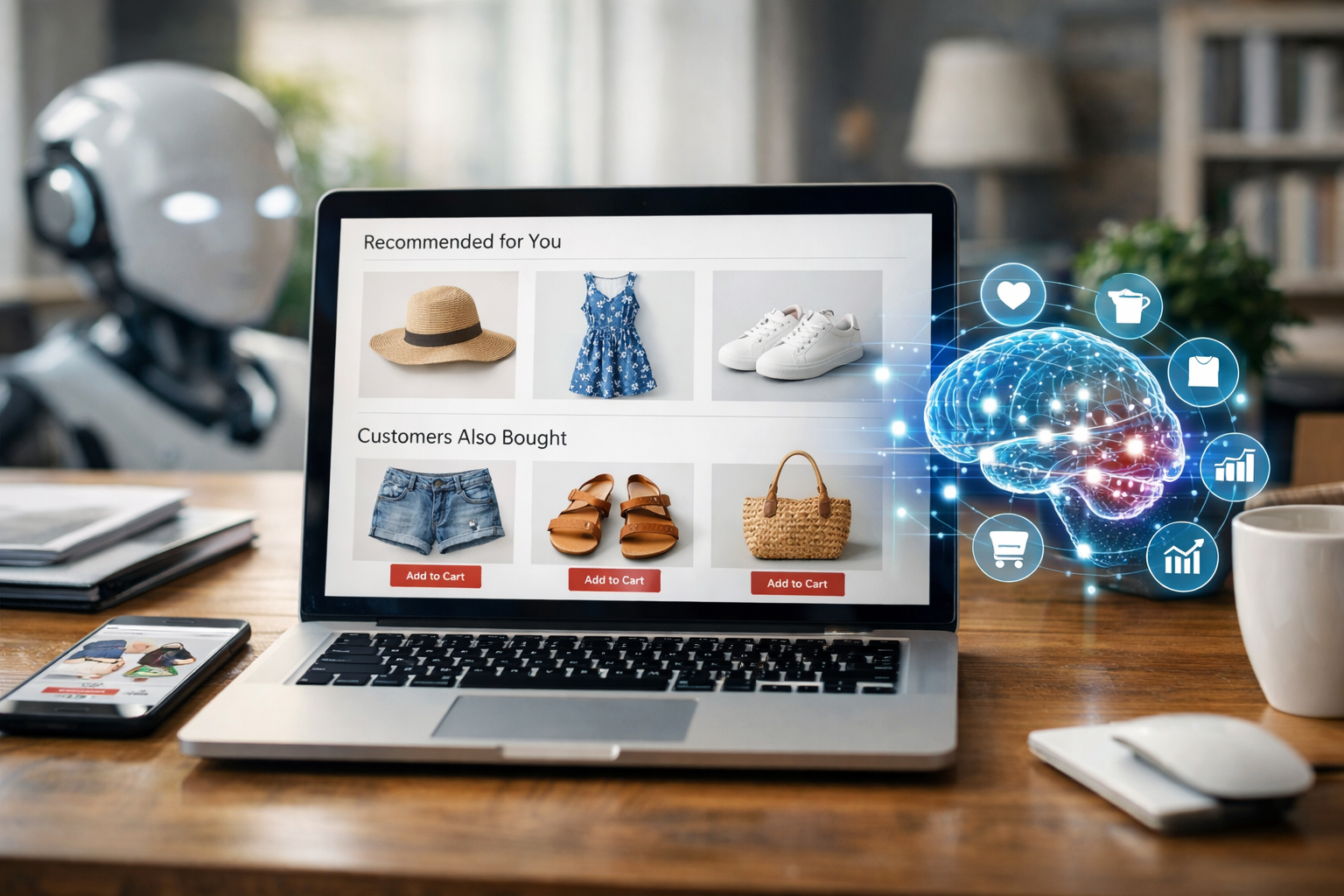
AI for e-commerce helps online stores show the right product to the right shopper at the right time. It does this by using machine learning, which is a way for computers to learn patterns from past data, such as what people clicked, viewed, added to cart, and bought. In simple terms, machine learning powers product recommendations and upsells by spotting what a shopper is likely to want next, then suggesting it in a helpful moment, like on a product page, in the cart, or at checkout.
If you have ever seen “Customers also bought,” “You may also like,” or “Upgrade to the premium version,” you have already seen this in action. For e-commerce businesses, these suggestions can increase average order value, improve conversion rates, and make shopping feel faster and more personal. For beginners learning AI, e-commerce is one of the easiest real-world examples to understand because the results are so visible.
Machine learning is a branch of AI that learns from examples instead of following only fixed rules. A normal rule-based system might say, “If someone buys a phone, show a phone case.” That can work, but it is limited. A machine learning system can look at thousands or millions of shopping sessions and learn more flexible patterns, such as:
The more useful data the system sees, the better it can become at making predictions. This is why large online stores often feel very personalized: the recommendation system is learning continuously from customer behavior.
At a beginner level, product recommendation systems answer one simple question: “What item should we show this shopper next?” To answer it, the system looks for patterns in behavior and product relationships.
One common method is to find users with similar behavior. If Shopper A and Shopper B both bought a coffee machine and coffee beans, and Shopper A also bought mugs, the system may recommend mugs to Shopper B. This approach is often called collaborative filtering, but the simple idea is just “people with similar tastes often buy similar things.”
Another method focuses on the products themselves. If two items share features, such as brand, category, price range, color, or style, the system can recommend one based on interest in the other. For example, someone viewing a black office chair may also be shown similar ergonomic chairs.
Modern systems also use real-time signals, meaning what the shopper is doing right now. If someone searches for “waterproof hiking boots,” clicks only outdoor brands, and filters by size 10, the system can quickly adjust recommendations to match that intent.
These recommendations can appear in many places:
Upselling means encouraging a customer to buy a higher-value version of a product or to add extra items that improve the purchase. This is different from random promotion. Good AI upselling feels useful, not pushy.
For example:
Machine learning helps by predicting which offer is most likely to be accepted. Instead of showing the same upsell to everyone, the system can estimate what each customer may respond to based on past behavior and similar user patterns.
Beginners often mix these up:
Example: upgrading from a 128GB phone to a 256GB phone is an upsell. Adding a phone case and charger is a cross-sell. In e-commerce, AI often helps with both at the same time.
Machine learning needs data to learn. In e-commerce, that data usually comes from normal shopping activity, such as:
Imagine an online fashion store with 100,000 monthly visitors. If 8,000 people view jackets, 2,000 add one to the cart, and 900 also buy scarves, the system may learn that scarves are a strong recommendation for jacket buyers. Over time, it becomes more precise by learning which scarf styles work best with which jacket types and seasons.
This is one reason AI matters in business: it turns ordinary activity into useful decisions. If you are curious how systems learn from data like this, you can browse our AI courses for beginner-friendly lessons in machine learning and data basics.
Product recommendations and upsells work because they reduce decision effort. Online stores can feel overwhelming. If a customer sees 500 options, they may leave without buying anything. A good recommendation system narrows the choice to a few relevant options.
Here are four business benefits:
If a shopper was going to spend $40 and adds a $12 accessory, the store earns more from the same visit. Across thousands of orders, this adds up quickly.
When customers find suitable products faster, they are more likely to complete the purchase instead of bouncing to another site.
Helpful suggestions save time. That creates a smoother shopping journey and can increase repeat purchases.
Stores can send follow-up emails with products a shopper is genuinely likely to want, instead of broad promotions that feel generic.
Large retailers have reported that recommendation engines contribute a meaningful share of total sales. Even smaller stores can benefit because modern e-commerce tools make personalization more accessible than before.
Imagine you run an online pet store. A new visitor buys dog food. Without AI, your site might always show the same generic banner: “Buy more pet supplies.” With machine learning, the store can notice patterns such as:
Now the recommendations become smarter:
This is AI creating a shopping journey that feels more timely and personal.
AI in e-commerce is powerful, but it is not magic. Good results depend on good setup.
If a store is new, there may not be enough data yet. A new product also has no history. In this case, stores may start with basic rules or product features until more data builds up.
If product categories are messy or customer behavior is tracked poorly, recommendations can become irrelevant.
Businesses must handle customer data responsibly and follow privacy laws. Trust is essential.
If recommendations become too narrow, shoppers may miss other good options. A balance between relevance and discovery is important.
No. You do not need to be a programmer to understand the business idea behind AI recommendations. At the beginner stage, it is enough to learn three core ideas:
Later, if you want, you can learn the technical side: how models are trained, how product data is prepared, and how predictions are tested. Many career changers start from zero and build this knowledge step by step. If you want a structured path, you can register free on Edu AI and explore beginner courses at your own pace.
E-commerce is one of the clearest industries where AI creates measurable value. That is why recommendation systems are often studied in data science, machine learning, marketing analytics, and product roles. Even if you do not plan to become a machine learning engineer, understanding recommendation systems can help in:
In other words, this is not just a technical topic. It is a practical business skill.
AI for e-commerce is really about one thing: helping shoppers find what they want faster while helping businesses increase sales in a useful, relevant way. Machine learning drives this by learning from clicks, views, carts, and purchases to suggest the next best product, upgrade, or add-on.
If you want to understand these ideas more deeply, the best next step is to learn the basics of AI and machine learning in plain English. You can browse our AI courses to find beginner-friendly lessons, or if you are ready to start learning today, you can register free on Edu AI and explore the platform at your own pace.




- Learning Evolved.
- Intelligence Amplified.