AI Education — March 16, 2026 — Edu AI Team
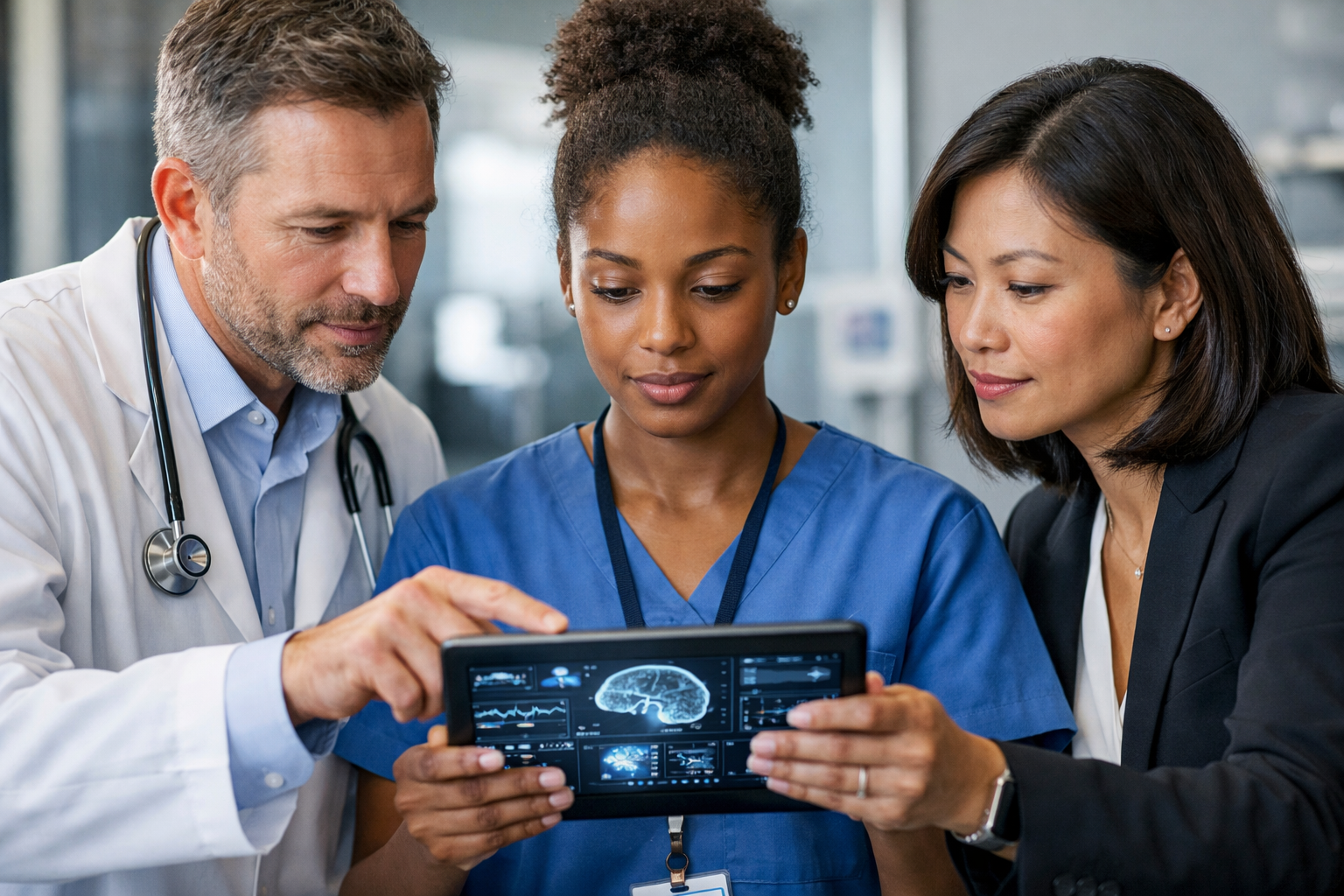
The best AI certifications for healthcare professionals in 2026 are those that combine practical machine learning skills, healthcare data knowledge, and alignment with major cloud platforms like AWS, Google Cloud, and Microsoft Azure. Top options include Google’s Professional Machine Learning Engineer, AWS Certified Machine Learning – Specialty, IBM AI Engineering Professional Certificate, and healthcare-focused programs in medical data science and AI in medicine. The right choice depends on your role—clinician, administrator, researcher, or IT specialist—and your career goals.
Healthcare is rapidly becoming one of the most AI-driven industries. From AI-assisted radiology to predictive analytics in hospital operations, demand for professionals who understand both medicine and machine learning is rising sharply. According to industry reports, healthcare AI adoption is expected to grow at double-digit rates through 2030, with hospitals and biotech firms investing heavily in data-driven systems.
If you're a healthcare professional looking to future-proof your career, here’s a detailed guide to the best AI certifications for healthcare professionals in 2026—and how to choose the right one.
Healthcare is highly regulated, data-intensive, and mission-critical. Employers need proof that you can work with sensitive patient data, understand algorithms, and deploy models responsibly.
An AI certification helps you:
In 2026, recruiters increasingly look for candidates who can bridge the gap between healthcare operations and AI systems—especially those certified in globally recognized frameworks.
Best for: Healthcare IT professionals, data scientists, digital health innovators
This certification focuses on building, evaluating, and deploying ML models using Google Cloud. While not healthcare-specific, it’s highly respected and directly applicable to:
Healthcare organizations using Google Cloud value this certification because it demonstrates real-world deployment skills—not just theory.
Time commitment: 2–4 months of preparation
Level: Intermediate to advanced
Best for: Healthcare data engineers, health tech developers
AWS powers many hospital systems and health-tech startups. This certification proves you can design, implement, and maintain ML solutions on AWS.
Key skills include:
Because healthcare requires strict data protection (HIPAA and global equivalents), cloud-based ML expertise is especially valuable.
Best for: Clinicians transitioning into AI, beginners in healthcare analytics
IBM’s certification (offered through major online platforms) provides structured training in:
This is one of the most accessible pathways for healthcare professionals without a strong technical background.
Best for: Healthcare administrators and IT managers
While not purely AI-focused, CPHIMS builds strong foundations in health informatics, digital systems, and data governance—critical knowledge for AI implementation in hospitals.
If your goal is leadership in digital transformation rather than coding, this certification pairs well with AI coursework.
Best for: Professionals working with Microsoft-based hospital systems
Azure is widely used in healthcare infrastructure. This certification validates skills in:
For hospitals standardizing on Microsoft environments, this certification is highly strategic.
Beyond cloud certifications, 2026 is seeing growth in specialized programs such as:
These are ideal if you want to work in biotech, pharmaceutical AI, or research hospitals.
Not every healthcare professional needs the same path. Use this decision framework:
Most AI certifications assume baseline technical knowledge. Before enrolling, ensure you understand:
If you’re starting from scratch, it’s smart to build foundations first. You can browse our AI courses to find beginner-to-advanced programs covering machine learning, deep learning, and healthcare-focused applications. Our curriculum aligns with major certification frameworks including AWS, Google Cloud, Microsoft, and IBM—so your preparation directly supports certification goals.
In 2026, healthcare AI roles include:
Professionals with AI certifications often report:
The biggest advantage? You become a rare hybrid professional—someone who understands both patient care and algorithmic systems.
AI in healthcare is not just about building models—it’s about deploying safe, explainable, and compliant systems.
The best AI certifications for healthcare professionals in 2026 all require one thing: strong foundational skills. Whether you plan to pursue AWS, Google Cloud, Microsoft, or IBM credentials, structured preparation makes the difference between passing and struggling.
If you’re serious about transitioning into healthcare AI or strengthening your digital skillset, you can register free on Edu AI to access guided learning paths in machine learning, deep learning, Python, and generative AI. You can also view course pricing to choose a plan that fits your goals.
Healthcare is entering an AI-first era. The professionals who understand both medicine and machine learning will lead it. The question isn’t whether AI will transform healthcare—it’s whether you’ll be certified and ready when it does.




- Learning Evolved.
- Intelligence Amplified.