AI Education — March 22, 2026 — Edu AI Team
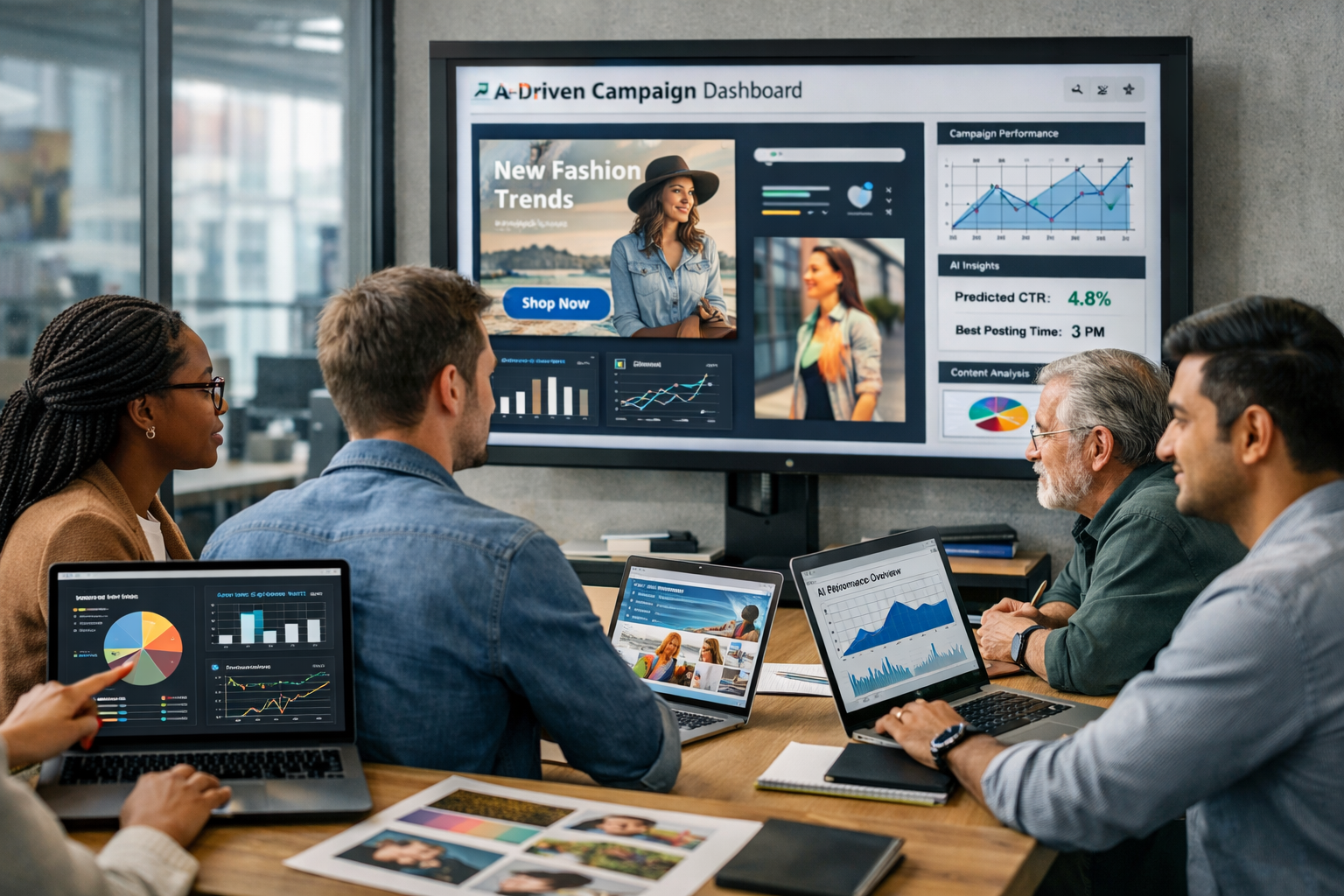
AI is transforming digital marketing in 2026 by turning most campaigns into “always-on systems”: models generate and test creative at scale, predict which audiences are most likely to convert, personalize experiences in real time, and automatically reallocate budgets across channels. The practical result is simpler to measure than the hype—teams are shipping more experiments per week, improving relevance for each user, and making faster decisions with fewer manual reports.
By 2026, the biggest shift is not that marketers “use AI.” It’s that AI is embedded into the full workflow—research → creation → distribution → measurement → optimization—so the bottleneck moves from execution to strategy, data quality, and governance.
This shift is why AI skills now sit at the center of marketing career growth—especially in analytics, automation, and GenAI-driven content workflows.
In 2026, personalization is increasingly based on predicted intent and next-best action. Websites and email programs adapt content blocks, offers, and timing to a user’s probability of converting and their likely friction points.
Example: An online course platform can show a visitor different landing page sections depending on whether the model predicts they are (a) a career changer, (b) a student, or (c) a working professional. The CTA may change too—“download syllabus” vs. “start free registration”—to match predicted readiness.
Rules like “+10 points for a webinar sign-up” still exist, but they’re often outperformed by machine learning lead scoring that learns from historical wins/losses. In 2026, many marketing teams score leads with models that incorporate:
Comparison: If rules-based scoring treats all webinar attendees similarly, ML scoring can distinguish “research mode” behavior from “buying mode” behavior and route leads differently—reducing wasted sales outreach and improving close rates.
Generative AI in 2026 is less about one-off copy and more about systems that generate brand-consistent variants across channels—ads, landing pages, email subject lines, product descriptions, and short-form video scripts.
But high-performing teams don’t just prompt and post. They implement guardrails:
Practical win: Instead of spending 3–5 days producing a full set of campaign assets, teams can draft and QA in hours—then invest more time in strategy, offer design, and audience research.
SEO in 2026 is shaped by AI-powered search experiences and summaries. Ranking still matters, but marketers increasingly optimize for:
Actionable step: Turn one “pillar” page into 6–10 supporting articles that each solve a specific job-to-be-done (e.g., “AI lead scoring model steps,” “prompt library for ads,” “privacy-safe measurement”). This increases the likelihood your content is cited or used as a source in AI-driven results.
As tracking becomes more privacy-limited, AI helps marketers infer performance without over-claiming attribution. In 2026, many teams combine:
Why it matters: Last-click attribution often rewards the “closest-to-conversion” channel and undervalues discovery. Incrementality approaches help you decide what actually caused growth—and where budget should go next.
AI chat and voice agents in 2026 don’t just answer FAQs—they influence conversion and retention. When built well, they:
Example: A user asks, “What should I learn to move into AI marketing?” An AI agent can ask 2–3 clarifying questions (time available, background, goal role) and recommend a learning path—while tagging the user as “career transition: marketing → AI” for future personalization.
A major 2026 trend is the rise of small, highly capable teams using AI to execute end-to-end growth. But this only works when someone on the team can connect data, tools, and experiments.
The differentiator skill set:
If you’re planning a career transition into AI-powered marketing, building this “technical marketer” profile is one of the fastest ways to stand out.
Tools change quickly, so focus on durable capabilities that transfer across platforms:
If you want a structured path, start with fundamentals (Python + data), then add applied ML, then specialize in GenAI and NLP for marketing use cases. You can browse our AI courses to map a path based on your current level.
AI can scale results—and mistakes. The fastest-growing teams pair speed with controls.
These are also the topics increasingly covered in employer expectations and certification-aligned learning. Edu AI courses emphasize practical skills that align with major certification frameworks (AWS, Google Cloud, Microsoft, IBM) where relevant—useful if you want credentials that translate across industries.
If you’re overwhelmed, use a short sprint approach. This is designed for solo marketers and small teams.
After one month, you should have: cleaner data, faster creative production, and at least one AI-assisted decision in the loop.
AI is not “replacing marketers” so much as reshaping job descriptions. In 2026, demand is rising for people who can connect marketing goals to data and automation.
If you’re pivoting from traditional marketing, your fastest leverage is learning enough data + AI to run smarter experiments. If you’re pivoting from tech into marketing, your edge is translating technical capability into business outcomes.
If you want to apply these ideas instead of just reading about them, start by building a foundation in Python, data analysis, and practical machine learning—then add Generative AI and NLP for content and personalization use cases. You can register free on Edu AI to save your progress and access learning paths, or browse our AI courses to pick a track that matches your current level and career goal. If you’re comparing options for upskilling, you can also view course pricing before committing.




- Learning Evolved.
- Intelligence Amplified.