AI Education — April 3, 2026 — Edu AI Team
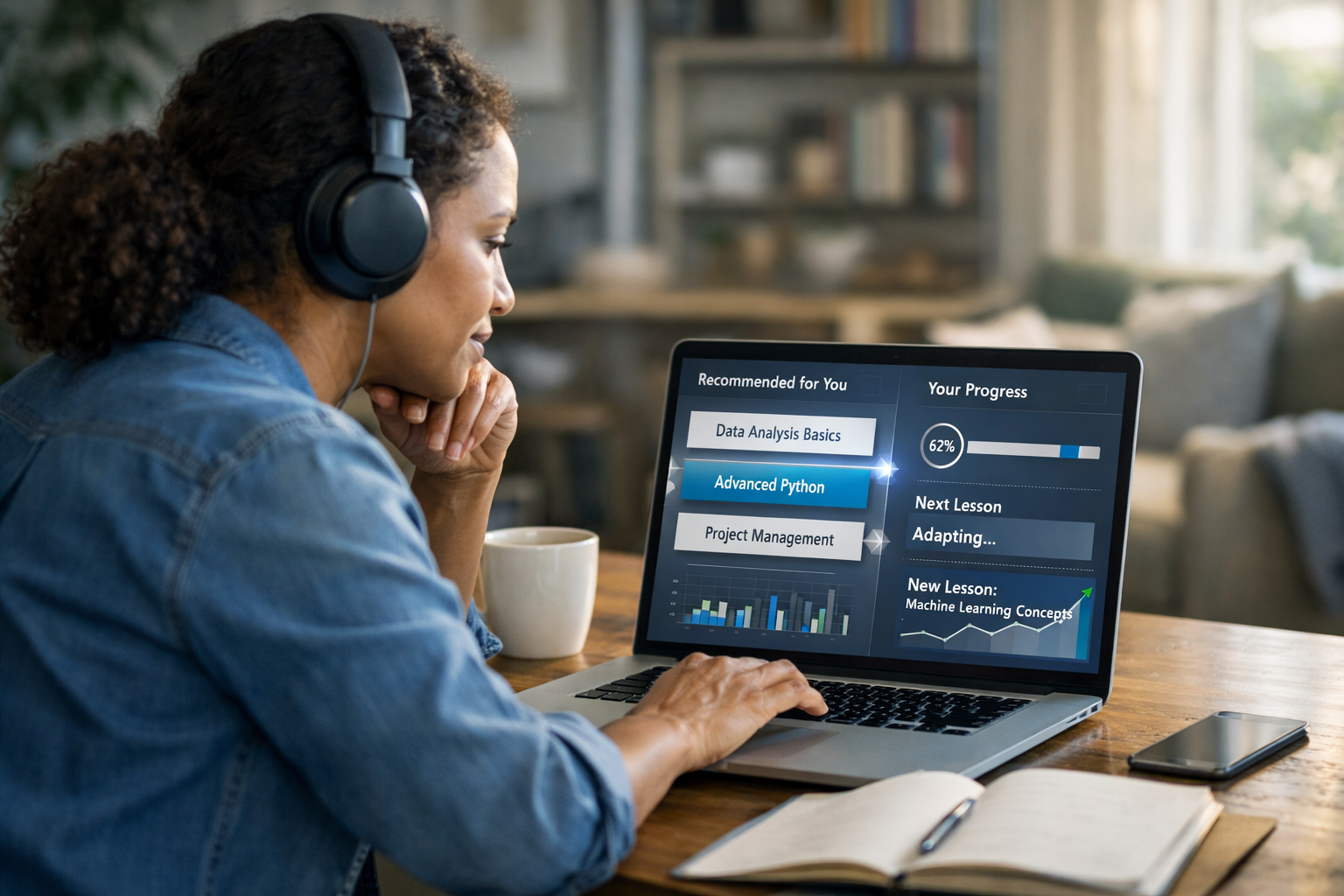
Machine learning personalises online learning by studying how each student learns and then adjusting lessons, practice tasks, recommendations, and pacing to fit that person better. In simple terms, it is a computer system that notices patterns such as what you finish quickly, where you get stuck, what topics you repeat, and what format helps you most. It then uses those patterns to make smarter choices, so learning feels more relevant, efficient, and less overwhelming.
If that sounds technical, do not worry. You do not need coding knowledge to understand it. Think of machine learning as a helpful digital tutor that gets better at supporting you over time. Instead of giving every learner the exact same path, it tries to answer a basic question: what is the best next step for this person right now?
Machine learning is a type of artificial intelligence, or AI, that helps computers learn from data instead of following only fixed rules. Data simply means information. In online learning, that information can include quiz scores, time spent on lessons, videos watched, mistakes made, topics completed, and even which study times work best for a learner.
Here is a simple comparison:
So instead of using one rule for everyone, machine learning can make a more flexible choice. That is the heart of personalisation.
Not everyone learns in the same way. One student may understand a topic after a 5-minute video. Another may need a slower written explanation and three practice questions. A third may learn best by doing a project. If an online course gives all three learners the same lesson in the same order at the same speed, at least one of them will struggle.
Personalisation matters because beginners often quit when learning feels too hard, too easy, or too confusing. Machine learning can reduce that problem by making the experience more responsive.
For example, imagine 100 beginners start an introductory AI course:
A machine learning system can spot those differences much faster than a one-size-fits-all course structure. That means learners are more likely to stay motivated and complete the course.
The platform observes useful signals from your activity. These are not random details. They are clues about how you learn. Common signals include:
One signal alone does not say much. But when many signals are combined, patterns begin to appear.
This is where machine learning becomes useful. The system compares your behaviour with past learning patterns. It may learn, for example, that students who pause often during coding videos benefit from shorter lessons, or that learners who miss two algebra questions in a row need a simpler recap before moving forward.
The goal is not to label people. The goal is to predict what support will help most.
After spotting a pattern, the platform can personalise the learning experience. It might:
In other words, machine learning turns observations into action.
Personalisation is not a one-time event. As you continue learning, the system receives more data and can make better decisions. If your confidence improves, the platform may gradually increase difficulty. If you struggle with a new topic, it may slow down and provide more support.
That is why people often say these systems “learn” over time.
Let us make this more concrete with simple examples.
Suppose you complete a beginner Python lesson and score 90% on the practice quiz. The platform may recommend an introductory machine learning course next. But if you score 40% and spend extra time on the basics, it may suggest another Python fundamentals lesson first. This helps you avoid jumping ahead too early.
An adaptive quiz is a quiz that changes based on your answers. If you answer several questions correctly, the next ones may become slightly harder. If you struggle, the quiz may switch to easier questions or offer hints. This keeps the challenge at a useful level instead of making the test too easy or too discouraging.
If the platform notices that you usually complete lessons successfully at 7 pm on weekdays, it can suggest that as your regular study time. If it sees that long breaks lead to lower quiz scores, it might remind you to review earlier. These small nudges can make a big difference.
Some learners finish videos but skip long articles. Others read carefully but avoid interactive tasks. Machine learning can detect these habits and prioritise the format that works best for you, while still encouraging a balanced learning experience.
For complete beginners, personalisation can make online learning feel less intimidating. Instead of being dropped into a rigid course structure, you get guidance that matches your current level.
This is especially helpful in subjects like AI, coding, data science, or language learning, where one missing foundation skill can make later lessons feel much harder.
No. Machine learning is best understood as a support tool, not a full replacement for human teaching. Good education still depends on clear explanations, strong course design, practical examples, and learner motivation.
What machine learning does well is handling scale. A human tutor can personalise learning for one student or a small group. An online platform with machine learning can do some of that for thousands of learners at once. It can quickly notice patterns, recommend next steps, and help students stay on track.
But the quality of the learning content still matters. Personalisation cannot fix a badly designed course. It works best when strong teaching and smart technology are combined.
Yes, learners should care about privacy. Most personalisation systems use learning behaviour data such as progress, scores, clicks, time spent, and lesson choices. Responsible platforms should explain what data they collect and why.
In general, the purpose should be simple: to improve learning outcomes, not to be intrusive. When used well, this data helps create a better learner experience. When choosing any learning platform, it is worth checking whether it clearly explains how your information is used.
Many adults starting AI or tech learning are changing careers, returning to study after years away, or learning around full-time jobs. They often need flexibility and a path that does not assume prior experience.
That is where personalised learning can be especially powerful. If you are new to topics like machine learning, Python, or data science, a platform that adapts to your level can help you build confidence step by step. You do not need to know everything at once. You just need the right next lesson.
If you want to start from the basics, you can browse our AI courses to see beginner-friendly options across machine learning, deep learning, computing, language learning, and more.
Machine learning is useful, but it is not magic. It can make recommendations based on patterns, but it cannot read your mind. Sometimes it may suggest content that is not perfect. It also depends on having enough useful data. A brand-new learner may receive more general recommendations at first because the system is still learning about them.
That is why the best platforms usually combine personalisation with learner choice. You should still be able to explore topics, repeat lessons, and set your own goals.
So, how machine learning personalises online learning comes down to one simple idea: it uses your learning behaviour to make smarter, more individual learning decisions. That can mean better course recommendations, more suitable practice, improved pacing, and a less frustrating path from beginner to confident learner.
If you are curious about learning AI in a beginner-friendly way, a good next step is to register free on Edu AI and explore the platform at your own pace. You can also view course pricing if you want to compare options before choosing a learning path. Start small, stay consistent, and let the right tools support your progress.




- Learning Evolved.
- Intelligence Amplified.