AI Education — August 26, 2026 — Edu AI Team
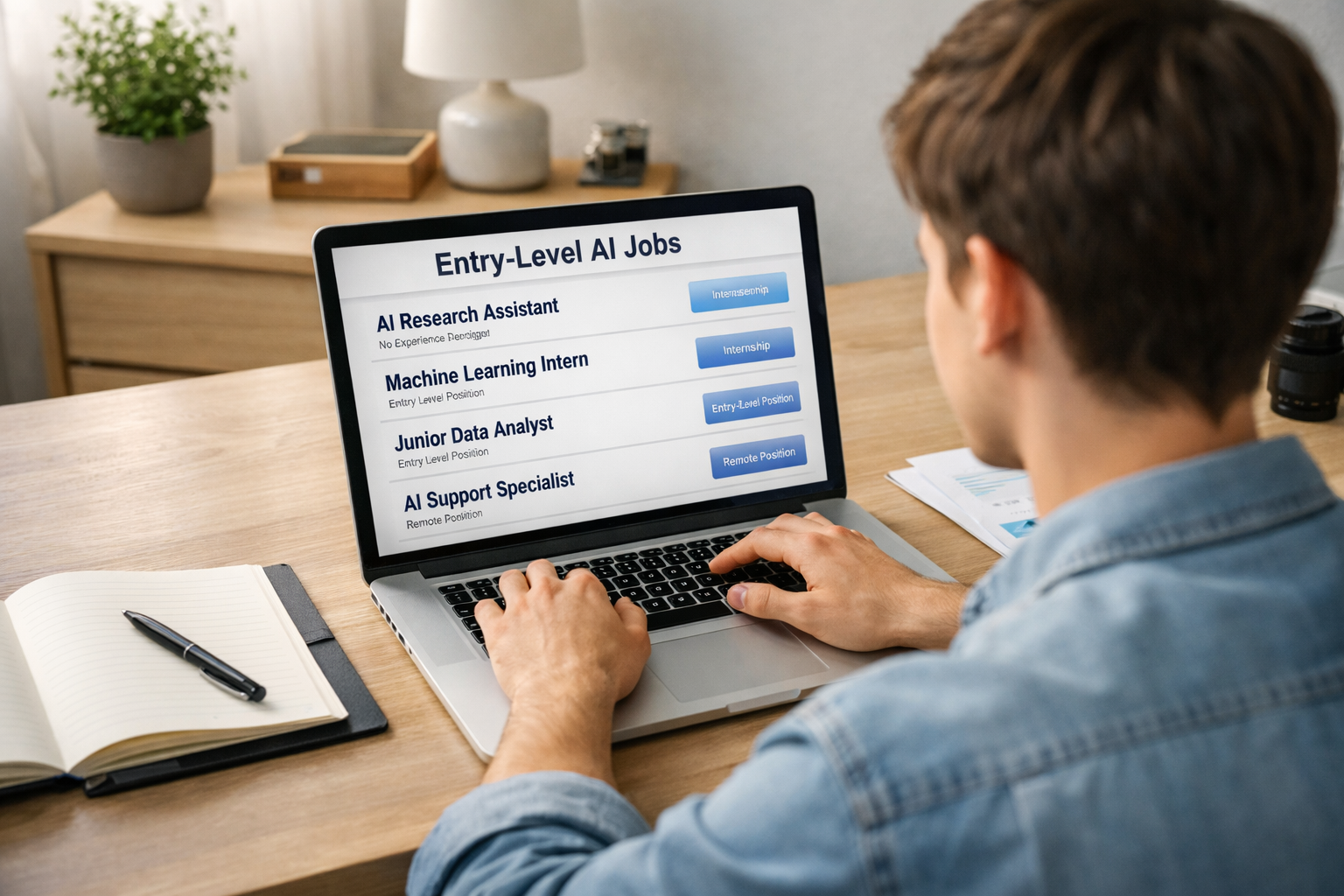
Yes, you can change careers into AI with no computer skills—but the smartest path is not to jump straight into advanced coding. Start by learning basic computer confidence, then simple Python programming, then beginner machine learning, which means teaching computers to find patterns in data. Many people move into AI from teaching, admin, sales, finance, customer service, healthcare, and other non-technical backgrounds by building skills step by step over 3 to 9 months.
The good news is that AI is not one single job. It is a broad field with different entry points. Some roles are technical, like building models. Others focus on using AI tools, preparing data, writing prompts, testing systems, or explaining results to business teams. That means beginners have more room to start than they often think.
Before changing careers, it helps to understand what AI is. Artificial intelligence is software designed to do tasks that normally need human thinking, such as recognising images, answering questions, predicting sales, or sorting emails. A smaller part of AI is machine learning, where computers learn patterns from examples instead of following only fixed rules.
Here are some beginner-friendly AI-related job directions:
Not every AI career starts with building complex algorithms. In fact, many career changers first enter through adjacent roles and grow into more technical work later.
Yes—but be honest about what “no computer skills” means. If you can use email, open documents, search online, and follow video lessons, you already have a foundation. You do not need a computer science degree to begin. You do need patience, regular practice, and a willingness to feel new at something for a while.
Think of it like learning a language. You would not start by reading difficult novels on day one. You begin with the alphabet, common words, and short conversations. AI learning works the same way:
This approach is far more realistic than trying to “become an AI engineer” in a few weeks.
If you feel weak with technology, start here for 1 to 2 weeks. Learn how to manage files, install software, use spreadsheets, and type with confidence. These sound small, but they matter because AI learning often involves notebooks, datasets, and online tools.
A practical goal: create folders, download files, rename them, and open a spreadsheet without help.
Python is a beginner-friendly programming language widely used in AI. A programming language is simply a way to give instructions to a computer. Python is popular because its syntax is relatively readable, almost like simple English compared with some older languages.
You do not need to master everything. Focus first on:
For many beginners, 4 to 6 weeks of steady practice is enough to become comfortable with the basics. If you want guided learning, you can browse our AI courses and start with beginner-friendly computing and Python lessons before moving into machine learning.
AI runs on data. Data means information, such as customer purchases, medical images, website clicks, or written text. If you skip this step, AI concepts feel confusing later.
Learn the basics of:
For example, imagine a shop wants to predict which products will sell next month. Before any AI model is used, someone must collect clean sales data, remove errors, and organise it properly.
Once Python and data basics feel manageable, start machine learning. At a beginner level, you only need to understand three big ideas:
You do not need advanced maths on day one. You need to understand the purpose of each method and what kind of problem it solves.
Projects matter because employers want evidence, not just course names. Keep them simple. Good beginner examples include:
Even a basic project can show that you understand the workflow: collect data, clean it, test an idea, and explain the result.
This step is often missed. Your previous experience still matters. A teacher may be strong at explaining ideas clearly. A salesperson understands customer behaviour. An administrator is often organised and process-driven. A finance worker already knows how to think with numbers.
Employers often like candidates who combine domain knowledge with new AI skills. Domain knowledge means understanding a specific industry or type of work. AI is most useful when paired with real-world context.
For most absolute beginners, a realistic timeline looks like this:
If you study 5 to 7 hours per week, expect slower progress. If you study 10 to 15 hours per week, you can move faster. Consistency matters more than speed.
A common mistake is applying only for “AI engineer” roles. Those usually require much deeper experience. Instead, consider entry points such as:
These roles can lead into machine learning, automation, analytics, or product roles later.
They can help, especially if you are changing careers and need proof of structured learning. Certifications are not magic, but they can make your progress clearer to employers. Beginner courses that align with major industry frameworks from AWS, Google Cloud, Microsoft, and IBM can be useful because they reflect skills employers already recognise.
Still, certifications work best when paired with projects and practical understanding. A certificate alone is not enough if you cannot explain what you learned in simple terms.
A better strategy is to aim for steady progress. One hour a day for 100 days is often more powerful than one intense weekend followed by burnout.
That is normal. Many beginners worry that coding is only for “technical people.” In reality, coding is a learnable skill, not a personality type. You are simply learning how to break a task into steps. For example, “open a file, read the names, sort them alphabetically, save the result” is already the beginning of programming logic.
Use beginner-friendly lessons, type the examples yourself, and repeat often. You do not need perfect memory. Professional programmers search for help all the time. What matters is learning how to think clearly and solve one small problem at a time.
If you want a structured path instead of guessing what to learn next, Edu AI offers beginner-friendly courses designed for people with no prior coding background. You can register free on Edu AI to start exploring lessons, or view course pricing if you want to compare study options first.
The most important thing is to begin with the right expectations: you do not need to know everything today. You only need a clear first step, regular practice, and a path that turns confusion into confidence. AI may feel intimidating now, but with the right beginner approach, it can become a realistic and rewarding career change.




- Learning Evolved.
- Intelligence Amplified.