AI Education — August 30, 2026 — Edu AI Team
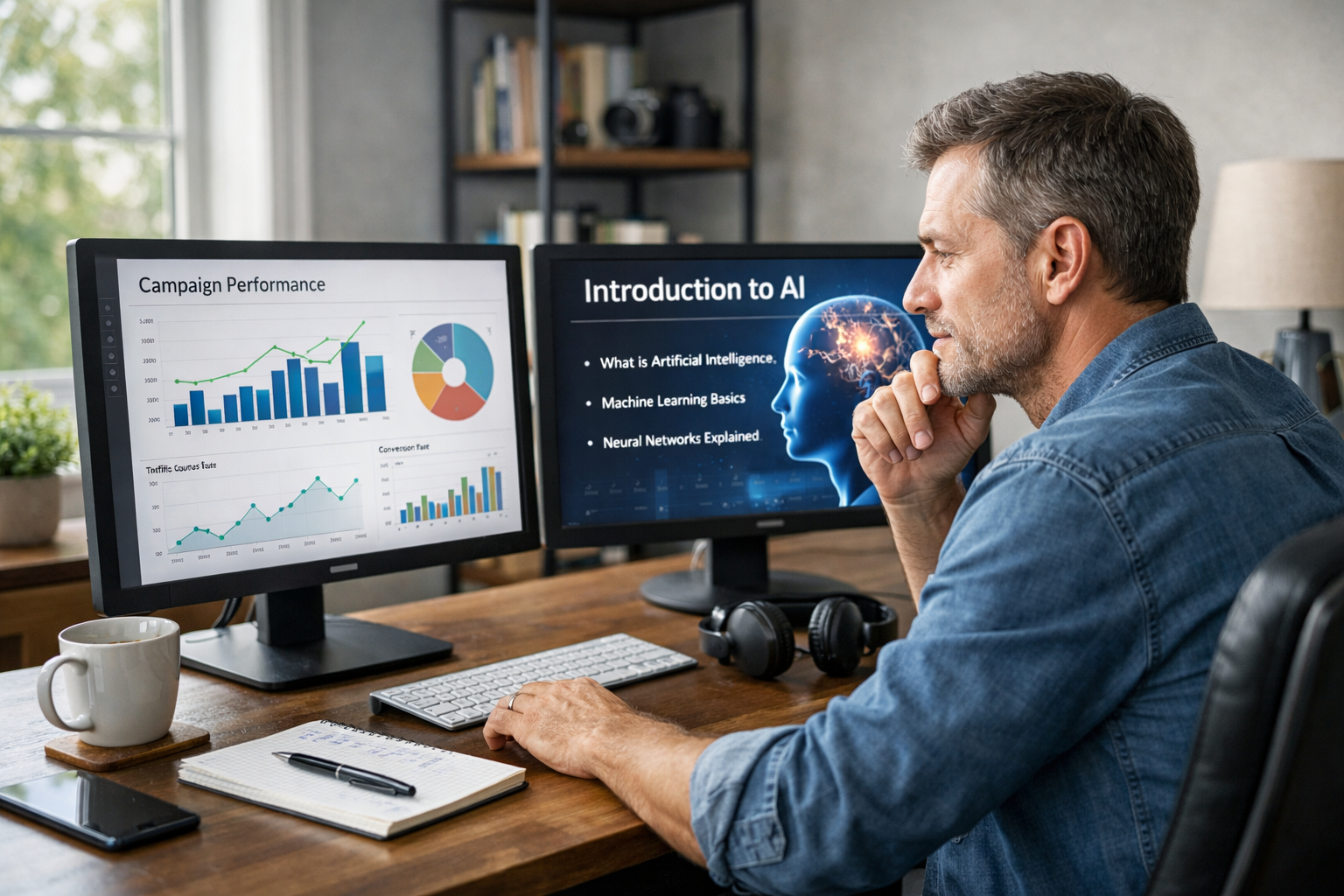
Yes, you can change into AI from a stay-at-home parent role, even if you have no technical degree, no coding experience, and a gap on your CV. The most practical path is to start with beginner-friendly digital skills, learn a small amount of Python, understand what machine learning means in plain English, build 2-3 simple projects, and then apply for entry-level roles such as data analyst, junior AI support, AI operations, or machine learning assistant roles. Many parents make this switch by studying 5-10 hours a week over 4-9 months.
If that sounds surprising, it helps to know what AI really is. Artificial intelligence means computer systems that can find patterns, make predictions, or generate content such as text or images. You do not need to become a top mathematician to begin. At the beginner stage, you mainly need digital confidence, structured learning, and consistency.
Many parents underestimate how much transferable experience they already have. AI roles are not only about writing advanced code. They also involve problem-solving, organisation, communication, research, testing, and attention to detail.
As a stay-at-home parent, you may already use skills that employers value:
These strengths matter because beginner AI work often starts with structured tasks: cleaning data, checking outputs, spotting errors, writing prompts, testing tools, or supporting technical teams. In other words, your previous experience still counts, even if it was unpaid.
One reason this career change feels confusing is that AI is a wide field. You do not need to start by becoming a machine learning engineer. That is a more advanced role.
For most beginners, a smarter first step is entering through a nearby role, such as:
A good comparison is healthcare. Not everyone starts as a surgeon. Some begin in support roles, admin, or training pathways. AI works the same way. You can enter at a beginner level and grow.
Before coding, understand the ideas. Learn what data is, what algorithms are, and what machine learning means.
Data simply means information. For example, a spreadsheet of house prices is data. An algorithm is a set of instructions. Machine learning is when a computer learns patterns from examples instead of following only fixed rules written by a human.
Example: if you show a system 1,000 email examples marked “spam” or “not spam,” it can learn patterns that help it predict future emails. That is machine learning in simple terms.
Python is a beginner-friendly programming language used widely in AI and data science. It is popular because the syntax is relatively simple. Syntax means the way code must be written so a computer can understand it.
You do not need to master everything. In your first month, focus on:
If you want a structured starting point, you can browse our AI courses and look for beginner paths in Python, computing, and introductory machine learning.
AI systems rely on data, so beginners should learn how to read, sort, clean, and understand data. This often starts in spreadsheets and then moves into Python tools.
For example, imagine a table of online shop orders. Some rows may be missing prices, some dates may be written differently, and some entries may be duplicates. Cleaning data means fixing those problems so the information can be used properly. This is one of the most common beginner tasks in real jobs.
Projects prove that you can apply what you learned. They do not need to be complex. Good first projects include:
One project can be very small and still be useful. For example, a beginner house price project might use just three factors: size, location score, and age of the property. The goal is not perfection. The goal is to show that you understand the process.
For most stay-at-home parents, the timeline depends on available study time. Here is a practical estimate:
This does not mean you become an expert in 6 months. It means you can become employable for entry-level roles or freelance tasks. A better target is steady progress, not speed.
Searching only for “AI engineer” can be discouraging because many of those roles want advanced experience. Instead, search for beginner-friendly titles that connect to AI:
Some employers also value learners who understand cloud and certification pathways. As you progress, it can help to know that quality AI training often aligns with major certification frameworks such as AWS, Google Cloud, Microsoft, and IBM. That matters because many companies use those ecosystems in real work.
A career gap does not have to be a weakness. Frame it honestly and positively.
Instead of saying, “I have been out of work for years,” try something like:
“During my time as a stay-at-home parent, I developed strong planning, communication, and problem-solving skills. I have now completed focused training in Python, data analysis, and AI fundamentals, and I have built beginner projects to apply those skills.”
This works because it connects your past experience to your new direction. Employers want evidence that you can learn, organise your time, and follow through.
You can still start. Basic numeracy helps, but many beginner courses teach concepts visually and step by step. Advanced maths can come later if needed.
That is normal. Many successful learners start from zero. Coding is a skill, not a talent people are born with.
Short sessions still work. Even 30 minutes a day adds up to 3.5 hours a week. Over 6 months, that is more than 90 hours of learning.
No. Employers care more about useful skills, reliability, and practical output than age. A well-built beginner portfolio can speak louder than your timeline.
Here is a realistic example for someone with limited time:
This gives you around 3.5 to 4.5 hours a week. It is enough to make real progress if you stay consistent.
The hardest part is often not the learning itself. It is knowing what to learn first, what to ignore, and how to build confidence without wasting time. A clear beginner roadmap can make the change into AI feel much more manageable.
If you want structured learning designed for newcomers, you can view course pricing and compare options that fit your schedule and budget. Choosing one clear path is usually better than jumping between random tutorials.
Changing into AI from a stay-at-home parent role is possible, and it does not require a perfect background. Start with the basics, learn Python slowly, build a few simple projects, and aim for entry-level roles that give you real experience. Small weekly progress can create a big career shift over time.
When you are ready to take the first step, register free on Edu AI and begin exploring beginner-friendly courses in AI, Python, data science, and machine learning.




- Learning Evolved.
- Intelligence Amplified.