AI Education — July 29, 2026 — Edu AI Team
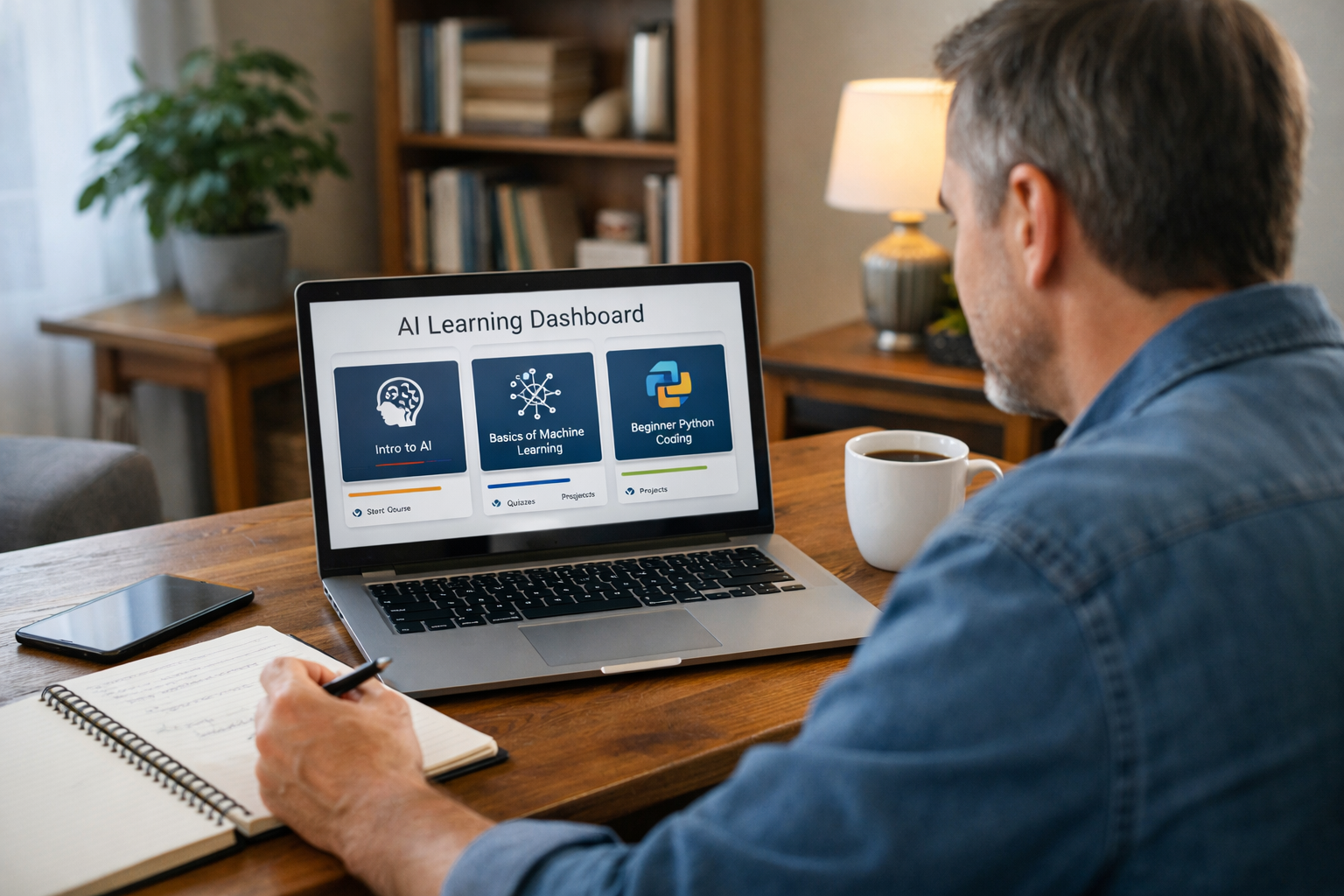
Yes, you can move from hospitality into AI with no coding. You do not need a computer science degree, years of maths, or a software job to get started. The fastest path is to use the strengths you already built in hospitality, such as customer service, problem-solving, teamwork, attention to detail, and working under pressure, then add beginner-friendly AI knowledge step by step. Many entry routes into AI involve understanding tools, data, users, and business problems before writing any code at all.
If you have worked in hotels, restaurants, events, travel, or guest services, you already have valuable experience that employers want. AI companies and AI teams still need people who can understand customer needs, improve processes, explain tools clearly, and support business operations. Coding can come later if you want it, but it is not the only way in.
People often assume AI careers are only for programmers. That is not true. AI, or artificial intelligence, means computer systems that can perform tasks that usually need human thinking, such as spotting patterns, answering questions, making predictions, or generating text and images.
To make AI useful in the real world, companies need more than engineers. They need people who understand customers, workflows, quality, communication, and service. That is where hospitality professionals can stand out.
For example, a hotel front desk supervisor moving into AI does not need to start by building a machine learning model. A much more realistic first step could be learning how AI chat tools help with customer support, booking questions, and service summaries. From there, they could move into an AI support, operations, training, or junior analyst role.
When people search for a no-coding route into AI, they usually mean one of two things:
Both are possible. Today, many AI tools have simple interfaces. You type instructions, upload files, review outputs, and make decisions. This is often called no-code or low-code. No-code means using software without writing programming commands. Low-code means using very small amounts of code, often later on as your confidence grows.
That is why a beginner can start by learning how AI tools are used in business, customer service, marketing, operations, and data reporting. Once you understand the basics, you can decide whether to stay on a no-code path or gradually learn Python, a beginner-friendly programming language used in AI.
You do not need to aim straight for “AI engineer.” A smarter move is to target roles that match your current strengths.
These roles help customers use AI products successfully. Hospitality experience is highly relevant because you already know how to handle questions, complaints, and service standards.
This involves helping a company set up and run AI tools in daily work. For example, you might help a business use AI to answer common customer questions or organise information faster.
Data simply means information. In business, that could be booking numbers, customer ratings, response times, or sales figures. Beginner roles may involve cleaning data, checking reports, and spotting simple patterns.
A prompt is the instruction you give to an AI tool. Companies need people who can write clear prompts, test responses, and improve results. Hospitality staff often do well here because they are used to asking the right questions and adjusting tone for different audiences.
Many office roles now use AI for note-taking, summaries, drafting, scheduling, and research. If you can learn the tools and show good organisation, this can become a bridge into the wider AI field.
You do not need to learn everything at once. A simple 90-day plan is usually more effective than trying to “master AI” in a month.
Start with the core ideas in plain English:
This stage is about confidence, not complexity. Focus on beginner material and simple explanations. If you want a structured starting point, you can browse our AI courses to find beginner-friendly lessons in AI, machine learning, and Python.
Use simple tools for everyday tasks. For example:
The goal is to build evidence that you can use AI productively. Save examples of your work. These can become part of a beginner portfolio, which is a small collection of projects showing what you can do.
Create 2 to 4 simple projects linked to hospitality. For example:
You are not trying to impress employers with advanced code. You are showing practical thinking, business awareness, and willingness to learn.
Not always. Some people build strong careers using AI tools, operations knowledge, and communication skills without becoming full-time coders. But learning a little coding later can open more doors.
The best first language is usually Python. Python is popular because it reads more like simple English than many other programming languages. In AI, Python is used for handling data, building models, and automating tasks.
If that sounds intimidating, remember this: many beginners start with a few lines at a time. You do not need to become an expert overnight. You only need the next manageable step. Edu AI offers beginner-focused learning paths, including computing and Python, so you can start gently rather than diving into advanced material too soon.
One of the biggest mistakes career changers make is hiding their previous experience. Do not do that. Translate it.
Instead of saying:
“Managed guest complaints at a busy hotel.”
You could say:
“Resolved high-volume customer issues quickly, improved service outcomes, and used structured feedback to identify recurring problems.”
Instead of saying:
“Worked in restaurant operations.”
You could say:
“Supported fast-paced operations, improved process efficiency, and maintained service quality under pressure.”
These descriptions make your skills relevant to AI support, operations, and customer-facing tech roles.
A certificate can help, especially if you are changing fields and want a structured path. It shows commitment, gives you a learning roadmap, and can make your CV easier for recruiters to understand. The most useful certificates are the ones that teach practical skills, not just theory.
It also helps if courses align with major industry frameworks from companies such as AWS, Google Cloud, Microsoft, and IBM, because these names are widely recognised in technology hiring. Before paying for anything, it is sensible to view course pricing and compare the learning path with your budget and goals.
No. Employers value maturity, reliability, and real-world business experience. A career change at 30, 40, or 50 is completely possible.
You do not need advanced maths to begin using AI tools or learning the basics. Start with concepts first.
That is fine. Entry-level paths exist precisely for people who are new.
That is enough to start. Even 5 to 7 hours weekly can build momentum over a few months.
Moving from hospitality into AI with no coding is not about becoming a technical expert overnight. It is about using the strengths you already have, learning the basics in plain English, and building small proof that you can use AI in real situations. That is a realistic path, and it is one many beginners can follow.
If you are ready to take the first step, you can register free on Edu AI and start exploring beginner-friendly courses designed for people with no prior coding or AI background. Start small, stay consistent, and give yourself permission to learn one simple concept at a time.




- Learning Evolved.
- Intelligence Amplified.