AI Education — May 8, 2026 — Edu AI Team
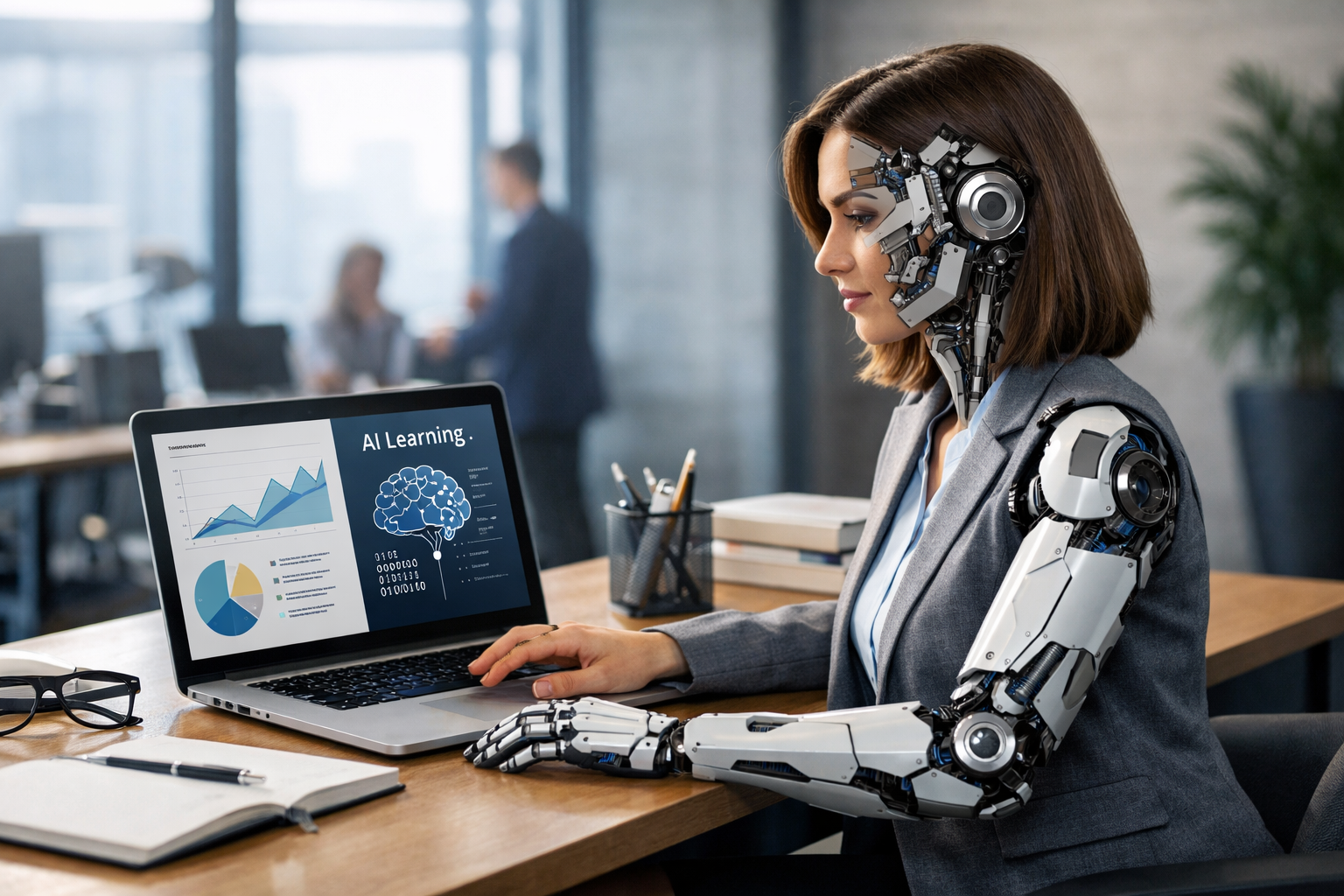
Yes, you can learn how to move into AI from human resources with no coding. In fact, many people in HR already have skills that are valuable in AI roles: understanding people, spotting patterns, improving processes, handling sensitive data, and communicating clearly with teams. The smartest path is not to become a software engineer overnight. It is to start with beginner-friendly AI knowledge, learn how AI is used in hiring and workforce planning, build one or two simple projects, and then target entry-level AI-adjacent roles where your HR background gives you an advantage.
If you work in recruitment, learning and development, people operations, or talent management, you may already be closer to AI than you think. HR teams increasingly use AI tools for CV screening, employee engagement analysis, skills mapping, learning recommendations, and workforce forecasting. That means your domain knowledge matters. The technical part can be learned step by step.
Many beginners imagine AI is only for mathematicians or expert programmers. That is not true. Artificial intelligence means computer systems designed to perform tasks that usually need human judgment, such as sorting information, finding patterns, making predictions, or generating text. A common branch of AI is machine learning, which means training computers to learn from examples instead of following only fixed rules.
In HR, this can look like:
Notice something important: these problems are not purely technical. They involve people, fairness, communication, business priorities, and ethics. HR professionals already understand those areas.
You do not need to aim for “machine learning engineer” as your first target. A better first move is often into a role that combines business understanding with AI awareness.
These roles often value industry knowledge, stakeholder management, and communication just as much as technical depth.
If you have no coding experience, the best first step is usually AI literacy, not programming. AI literacy means understanding what AI is, what it can and cannot do, how data is used, what risks exist, and how AI creates business value.
Think of it like learning to drive. You do not start by building a car engine. First, you learn what the controls do, how the road works, and how to drive safely. Coding can come later if needed.
For many HR career changers, a realistic first learning path is:
This does not make you an expert in 12 weeks, but it can make you employable for beginner roles and much more confident in interviews.
Start with the basics: what AI is, what machine learning means, what data is, and how systems make predictions. A prediction is simply an educated guess made by a computer based on past examples. For instance, if a system learns from past employee data, it may predict which staff groups are most likely to need extra training.
You do not need advanced maths at the beginning. But you should understand rows, columns, trends, averages, percentages, and why clean data matters. If an HR database has missing job titles or duplicate employee records, the AI system may produce poor results. This is the simple idea behind “garbage in, garbage out.”
Focus on tools and workflows you already know. For example:
This helps you speak the language employers want: not just “I want to work in AI,” but “I understand how AI improves hiring efficiency and learning design.”
Many first projects can be done with spreadsheets, visual dashboards, or no-code tools. Later, learning some Python can help. Python is a beginner-friendly programming language often used in AI and data work because it reads more like plain English than many other coding languages. But remember: for your first move, understanding matters more than deep coding skill.
If you want a structured place to begin, you can browse our AI courses to find beginner lessons in AI, machine learning, data science, and Python designed for complete newcomers.
This is especially important for HR. AI used in hiring or employee decisions must be handled carefully. If a system learns from biased past data, it can repeat unfair patterns. Employers value candidates who understand that AI should support human decision-making, not replace thoughtful judgment.
Write down what you already do that relates to AI work. Examples include analysing recruitment trends, managing HR systems, writing reports, handling confidential data, running surveys, or improving onboarding processes. These are all relevant.
Do not try to learn everything. Pick one path such as people analytics, AI in recruitment, AI-powered learning systems, or HR tech operations.
Take one beginner course in AI basics and one in data or Python basics. Good training should explain concepts from first principles and give practical examples. Some learning providers, including Edu AI, also design content that aligns with major certification frameworks from AWS, Google Cloud, Microsoft, and IBM, which can help if you later want more formal credentials.
You do not need a complex app. A strong beginner project could be:
One clear project is better than ten vague claims on a CV.
Employers need to see your career change as logical. Instead of saying, “I have no AI background,” say, “I bring 5 years of HR experience and I am now building applied AI skills in people analytics and AI-supported talent processes.” This shows direction and confidence.
Use language that connects your past experience to your future target role. For example:
Add a short headline such as: HR professional transitioning into AI and people analytics.
For most beginners, a realistic timeline is 3 to 6 months to build enough knowledge for interviews in junior or adjacent roles, if you study consistently for 4 to 6 hours per week. If you can dedicate more time, you may move faster. The key is consistency, not intensity.
You are not trying to master every technical area. You are trying to become credible, informed, and useful in a role where HR knowledge plus AI basics creates value.
For many people, yes. AI-related roles can open new career paths, strengthen your job security, and make your HR experience more valuable in a changing workplace. Companies do not only need coders. They also need professionals who understand how technology affects people, hiring, learning, performance, and culture.
If you can explain AI in plain English, understand basic data, and apply it to real HR problems, you will stand out more than you might expect.
If you are serious about learning how to move into AI from human resources with no coding, start small and start now. Choose one beginner course, one simple project idea, and one target role. You can register free on Edu AI to begin learning at your own pace, or view course pricing if you want to plan a structured path into AI, data, or Python. The goal is not to become technical overnight. The goal is to build enough understanding to turn your HR experience into a strong advantage in the AI job market.




- Learning Evolved.
- Intelligence Amplified.