AI Education — August 17, 2026 — Edu AI Team
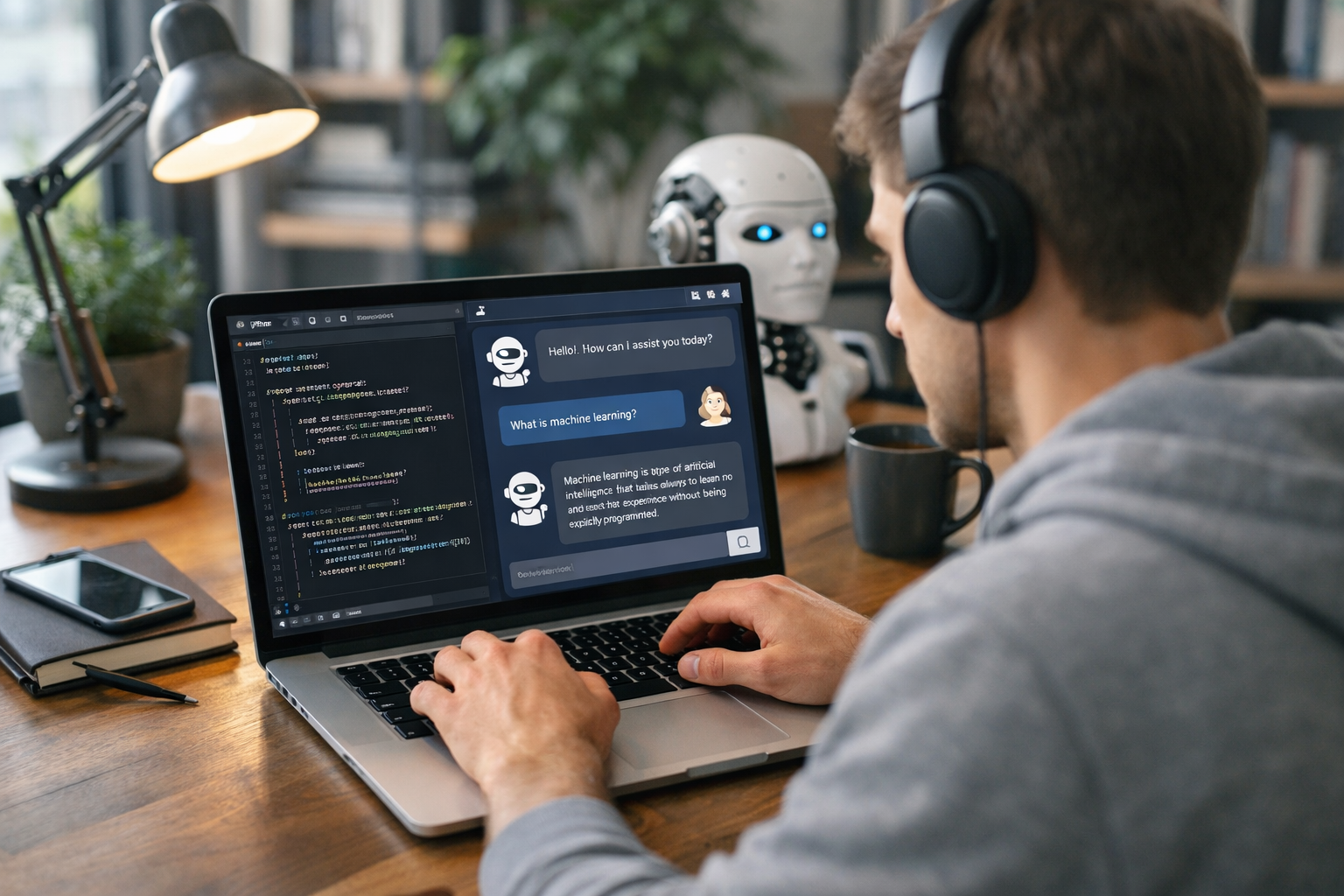
How to start an AI career change with no confidence begins with one simple truth: you do not need to feel ready before you start. You need a small plan, beginner-friendly learning, and proof that you can improve step by step. If you are changing careers into AI with low confidence, the best approach is to stop thinking about becoming an “AI expert” and instead focus on learning one basic skill at a time, building tiny projects, and creating evidence that you can do the work.
That matters because many beginners think confidence comes first. In reality, confidence usually comes after action. You study one topic, finish one exercise, understand one new idea, and your confidence grows from there.
If you have no background in coding, data, or machine learning, this guide is for you. We will explain everything in plain English and show you a realistic path into AI without pretending it is instant or easy.
AI can sound intimidating because the field uses big terms like machine learning, neural networks, and data science. Let’s simplify that. Artificial intelligence, or AI, means teaching computers to perform tasks that usually need human thinking, such as recognising pictures, predicting patterns, or understanding text.
Machine learning is a part of AI. It means a computer learns from examples instead of being told every rule by hand. For example, if you show a system 10,000 emails marked “spam” or “not spam,” it can learn how to sort future emails.
That sounds technical, but beginners often do not fail because AI is too hard. They struggle because they compare themselves to experienced engineers too early. If you are changing careers from retail, admin, teaching, finance, healthcare, customer service, or another field, it is completely normal to feel behind.
Most career changers have three confidence problems:
The good news is that AI is not one single job. It includes many beginner entry points, and not all of them require advanced maths or years of coding.
A bad goal is: “I want to master AI in 3 months.” A better goal is: “In 8 weeks, I want to understand basic Python, know what machine learning means, and complete one beginner project.”
That shift matters because confidence grows from visible progress. If you can point to a finished lesson, a short notebook, or a simple portfolio task, you are no longer “just thinking about AI.” You are already doing it.
For example, a realistic beginner path could look like this:
This is far more achievable than trying to learn everything at once.
If your confidence is low, do not start with a 6-hour study day. Start with 20 to 30 minutes a day. That may sound too small, but consistency beats intensity. Five 25-minute sessions per week gives you over 20 focused learning sessions in a month.
Small wins reduce fear. If you finish a lesson on what a variable is in Python, that is a real step. A variable is simply a named container for information, like storing the number 10 in a label called “age.”
Many people lose confidence because they do not understand the language used in AI. So define terms as you go:
Once these words stop feeling mysterious, AI becomes less scary.
You do not need to start with advanced robotics or research-level deep learning. A better first step is an introduction to Python, basic data handling, and beginner machine learning concepts. If you want a structured place to start, you can browse our AI courses and choose beginner topics in Python, data science, or machine learning.
Structured learning helps because it removes the daily question of “What should I study next?” That is useful when self-doubt is already draining your energy.
This is one of the biggest fears in AI career change, and it is very common. Coding is simply writing instructions for a computer in a language it understands. Python is popular for beginners because it is more readable than many other programming languages.
For example, printing a message in Python can be as simple as writing a short line that tells the computer to display words on the screen. You do not need to memorise everything. You need to understand patterns through practice.
Think of coding like learning basic phrases in a new language. At first, every line looks strange. After repetition, you start recognising common structures. Beginners often improve faster than they expect after 30 to 40 hours of guided practice.
If you are worried that coding means you are aiming for a highly technical engineering job only, remember that AI careers can include data support, AI-assisted analysis, operations, prompt-based tools, testing, and business-facing roles that combine domain knowledge with technical basics.
If you have no confidence, use a plan that is simple enough to follow even on low-motivation days.
A function is a reusable mini-instruction. For example, instead of writing the same task many times, you create one function and run it whenever needed.
This stage is important because action builds confidence faster than passive watching.
Your first project does not need to be impressive. It needs to be clear. For example, you could build a model that predicts simple categories from a small dataset, then explain the process in plain language.
Even after progress, many people still feel they are not good enough. This is where evidence helps. Instead of asking “Do I feel confident?” ask:
If the answer is yes to even two of those, you are moving forward.
It also helps to track progress with numbers. For example:
Numbers make growth visible. Visible growth creates confidence.
Not always, but they can help you structure your learning and show employers that you take the field seriously. Beginner-friendly training that aligns with major certification frameworks can be useful, especially if you want a clearer route into cloud and AI ecosystems used by employers. Edu AI courses are designed to support practical beginner learning and align with major frameworks from AWS, Google Cloud, Microsoft, and IBM where relevant.
That does not mean you need every certificate before applying for jobs. A smarter approach is to combine learning, projects, and one recognised pathway over time. If you want to compare options before committing, you can view course pricing and decide what fits your pace and budget.
The most successful beginners are usually not the most confident at the start. They are the most consistent.
If you want to start an AI career change with no confidence, the best next step is not to wait for motivation. It is to begin with one beginner-friendly lesson, one simple schedule, and one achievable goal. You do not need to become an expert this month. You only need to start building momentum.
A good next move is to register free on Edu AI, explore beginner learning paths, and choose a course that matches your current level. With structured support, clear explanations, and step-by-step practice, AI can become far more approachable than it first seems.




- Learning Evolved.
- Intelligence Amplified.