AI Education — June 15, 2026 — Edu AI Team
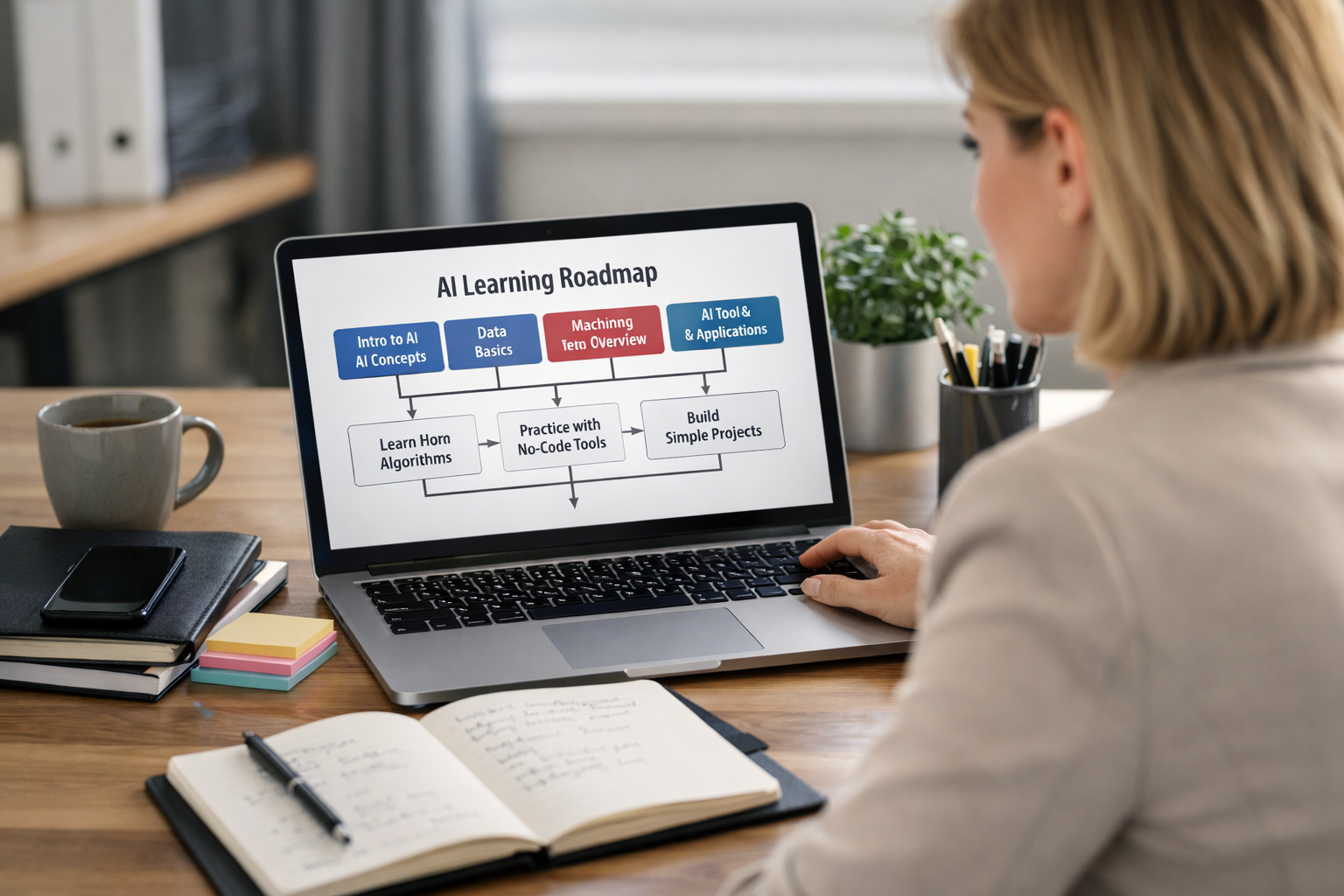
Yes, you can switch into AI from project management with no coding experience. In fact, project managers already have many of the skills AI teams need: planning, communication, stakeholder management, prioritisation, and turning messy business goals into clear action plans. The main gap is not intelligence or talent. It is simply learning how AI works at a beginner level, understanding where you fit, and building enough practical knowledge to speak confidently with technical teams. If you follow a structured path, many people can make meaningful progress in 3 to 6 months.
The good news is that moving into AI does not mean becoming a research scientist overnight. There are beginner-friendly roles around AI projects, AI products, operations, implementation, customer success, and business analysis. Some require light technical knowledge, but not deep programming. This guide breaks the transition down into simple steps.
Many beginners assume AI is only for programmers. That is not true. Artificial intelligence, or AI, is the broad idea of teaching computers to perform tasks that usually need human thinking, such as recognising images, summarising text, making predictions, or answering questions. Behind the scenes, technical specialists build the systems. But businesses also need people who can organise work, manage timelines, reduce risk, and connect technical teams with real business needs.
This is where project management experience becomes valuable. If you have managed budgets, timelines, vendors, or cross-functional teams, you already understand how complex work gets delivered. AI projects still need that discipline.
Your transferable strengths may include:
In other words, you are not starting from zero. You are adding AI knowledge to an existing professional foundation.
Let us be realistic. Some AI jobs do require coding. For example, machine learning engineers and data scientists usually write code to train models and process data. But not every AI-related job starts there.
If you are coming from project management, your first goal is not to master advanced programming. Your first goal is to become AI-literate. That means you can understand basic concepts, ask useful questions, and work effectively with technical teams.
For example, you should learn simple meanings of terms like:
You do not need to memorise technical textbooks. You do need enough understanding to participate in conversations without feeling lost.
If you want to move into AI without coding, focus on roles that reward business understanding and coordination skills. Good entry points include:
This is the most direct transition. You manage timelines, teams, delivery risks, and business goals for AI initiatives. You may work with data scientists, software developers, and business leaders.
These roles focus on keeping AI initiatives organised across teams. You may track performance, documentation, process improvements, and adoption.
Many companies need people to help clients or internal teams set up AI tools, train users, and support rollout. This role often suits people who are organised and customer-focused.
Business analysts help translate business needs into project requirements. In AI, that could mean defining use cases, success metrics, and workflow changes.
If you enjoy helping users adopt new tools, these roles can be a practical bridge into the AI space.
These jobs may still ask for some technical awareness, but they usually do not require the same coding depth as engineering roles.
Start with beginner-friendly learning, not advanced research papers. Your first month should focus on understanding the AI landscape: what AI is, what machine learning is, what kinds of problems AI solves, and how companies use it.
A good beginner course should explain ideas with examples. For instance, a recommendation system on a shopping app is a form of machine learning. A chatbot that drafts emails is a form of generative AI. Framing concepts through everyday tools makes them easier to remember.
If you want a structured place to start, you can browse our AI courses and look for beginner pathways in AI, machine learning, generative AI, and Python fundamentals.
You do not need to know everything. You need enough to speak the language of AI teams. That includes understanding:
Think of it like learning the basics of finance before managing a budget. You may not become an accountant, but you need to understand the numbers.
The keyword says “no coding,” and that is a valid starting point. But here is the honest advice: learning a small amount of Python can make your transition easier, even if your target role is not deeply technical.
Python is a beginner-friendly programming language widely used in AI. You do not need to build complex systems. Even 10 to 20 hours of basic practice can help you understand what technical teammates are doing. It also boosts confidence on your CV.
Aim for simple skills only:
This small step can separate you from other career changers who avoid technical learning completely.
Most people make the mistake of saying, “I have no AI experience.” A better approach is to translate your existing experience into AI-relevant language.
For example:
Suppose you managed a CRM rollout for 200 employees. On paper, that might not look like AI. But the underlying skills, planning, training, communication, and adoption, are highly relevant to AI implementation projects.
Hiring managers like evidence. You do not need a huge portfolio, but you should show practical effort.
Examples of beginner-friendly proof include:
Small, clear projects often work better than vague claims like “passionate about AI.”
For most beginners, a realistic timeline looks like this:
This does not mean you will definitely get a job in 6 months. But it is enough time to become much more credible and confident than when you started.
Certifications can help, especially if you are changing careers and want a clearer signal on your profile. They are most useful when combined with practical understanding. Introductory AI and cloud-related learning can support roles around AI delivery and implementation, and many learning paths align with major certification frameworks from AWS, Google Cloud, Microsoft, and IBM.
Still, employers usually care about three things more: can you understand AI projects, can you communicate clearly, and can you help deliver outcomes? Certification is helpful, but it is not magic.
If you are serious about moving into AI, start small and stay consistent. A beginner-friendly course, a little technical literacy, and a clearer story about your transferable skills can go a long way. You do not need to become an engineer to join the AI field. You need to become useful in an AI environment.
To take the next step, you can register free on Edu AI and begin exploring beginner learning paths. If you want to compare options first, you can also view course pricing and choose a path that matches your goals and budget.




- Learning Evolved.
- Intelligence Amplified.