AI Education — March 29, 2026 — Edu AI Team
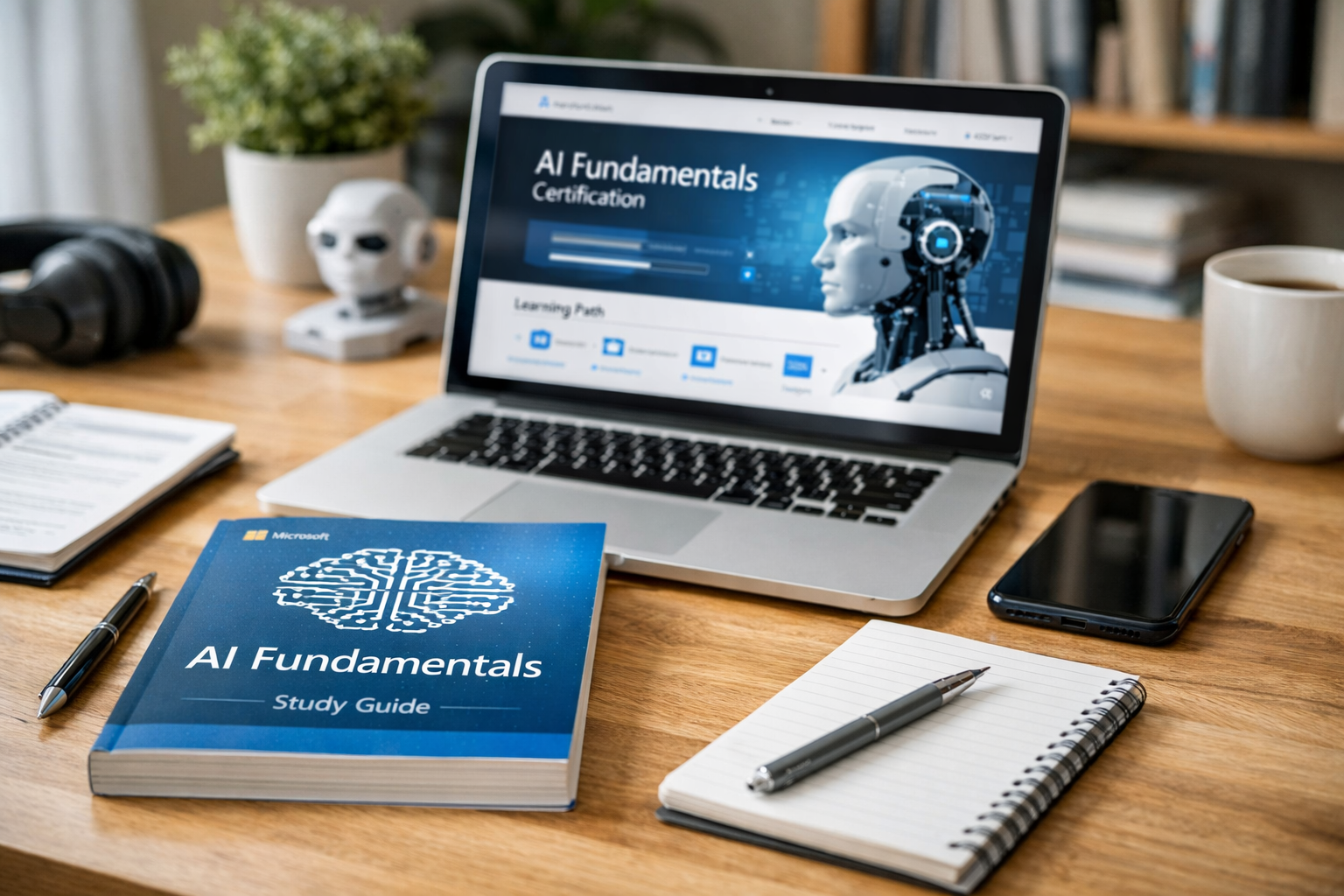
Microsoft AI Fundamentals certification is one of the best entry-level AI certificates for beginners in 2026 because it teaches the basic ideas behind artificial intelligence without expecting you to be a programmer, data scientist, or math expert. If you are new to AI and want a clear first step, the Microsoft AI-900 exam is designed to test your understanding of core concepts like machine learning, computer vision, natural language processing, and responsible AI in simple business and real-world contexts.
For many people, this certification works as a low-pressure starting point. It can help students, career changers, office workers, teachers, and non-technical professionals show they understand the basics of AI. It is not the same as becoming an AI engineer, but it can give you a strong foundation and confidence to keep learning.
Microsoft AI Fundamentals is commonly known by its exam code: AI-900. It is an entry-level Microsoft certification focused on the main ideas of artificial intelligence and Microsoft Azure AI services.
In plain English, this means Microsoft wants you to understand:
The exam is usually described as beginner-friendly. You do not need to build advanced software or write large amounts of code. Instead, you need to understand what the tools do, when they are useful, and the basic ideas behind them.
For complete beginners, yes, often it is worth it. The value comes less from the certificate alone and more from what it helps you do next.
In 2026, employers are still looking for people who understand AI basics, even in non-technical roles. For example, a marketing assistant may need to understand generative AI tools, a project manager may need to discuss AI use cases with a technical team, and a business analyst may need to know the difference between prediction, classification, and automation.
AI-900 can be worth it if you want to:
It may be less useful if you already have strong hands-on AI experience. For example, if you can already build machine learning models in Python, this exam may feel too basic. But for first-time learners, that simplicity is exactly the point.
This certification is aimed at a wide group of beginners. You do not need a computer science degree.
If you are asking, “Can I do this with no coding background?” the answer is yes. Some basic digital confidence helps, but advanced technical skills are not required.
Microsoft updates exam content over time, so always check the official skills outline before booking. But in general, the exam focuses on a few major areas.
You learn where AI is used in everyday life and business. For example:
This section helps you understand the difference between AI as a buzzword and AI as a practical tool.
Machine learning is a way for computers to learn from examples. Imagine showing a computer 10,000 emails marked “spam” or “not spam.” Over time, it learns patterns that help it sort new emails. That is machine learning in simple terms.
You may also see basic terms like:
Computer vision means helping computers understand visual information. Examples include:
You do not need to build these systems from scratch for AI-900, but you should understand what they do.
Natural language processing, often shortened to NLP, is about helping computers work with human language. Examples include:
This is one of the most important areas in 2026. Responsible AI means building and using AI in ways that are fair, safe, and trustworthy. For example, an AI system should not treat one group of people unfairly because of biased training data. It should also protect private information and be explainable where possible.
For most beginners, AI-900 is considered manageable if they prepare properly. It is easier than advanced technical certifications because it tests understanding of concepts more than hands-on engineering.
Still, “beginner-friendly” does not mean “no study needed.” If terms like machine learning, NLP, or Azure are completely new to you, give yourself time to absorb them slowly.
A realistic beginner study plan is often:
The good news is that these topics become easier once you connect them to daily examples. Voice assistants, recommendation systems, image filters, and chatbots are all familiar AI use cases.
The best study plan is simple: learn the concepts, see examples, test yourself, and repeat.
Start with beginner-friendly lessons that explain what AI is, what machine learning is, and how language and image tools work. If you want a structured place to begin, you can browse our AI courses to find beginner lessons in AI, machine learning, Python, NLP, and related topics. Edu AI courses are designed for newcomers and align with major certification pathways, including Microsoft, AWS, Google Cloud, and IBM frameworks where relevant.
Break your study into small pieces:
Do not try to memorise everything at once. Learn one area, then explain it back to yourself in simple words.
If a definition feels abstract, tie it to real life. For example, if “classification” feels confusing, think of a bank system deciding whether a transaction looks normal or suspicious. If “computer vision” feels vague, think of your phone automatically organising photos by subject.
Practice questions help you spot weak areas. If you keep mixing up computer vision and NLP, that is a sign to review those topics again. Aim to understand why an answer is correct rather than memorising the answer alone.
Even though AI-900 is concept-focused, a little practical exposure can make everything clearer. Seeing how AI tools are used in dashboards, cloud platforms, or beginner projects often helps ideas stick. If you are comparing learning options before committing, you can also view course pricing to see what fits your budget and pace.
Passing Microsoft AI Fundamentals will not instantly make you an AI engineer. But it can help you take the next step with more confidence.
After AI-900, many beginners move into:
Think of it as a foundation certificate. It proves basic understanding and helps you build momentum.
If you feel nervous about jumping straight into exam prep, starting with a beginner course can be the smarter option. A course can explain ideas from the ground up, give you structure, and remove the confusion that often comes from studying random materials online.
For many learners, the best path is: learn the basics first, then prepare for the certification. That way, the exam becomes a checkpoint rather than a stressful first encounter with AI concepts.
If Microsoft AI Fundamentals sounds like the right first move, start by building your understanding of AI in simple, practical language. You can register free on Edu AI to begin exploring beginner-friendly lessons, or browse courses that help you prepare for AI learning pathways with confidence. A small first step now can make the whole certification journey feel much easier in 2026.




- Learning Evolved.
- Intelligence Amplified.