AI Education — April 1, 2026 — Edu AI Team
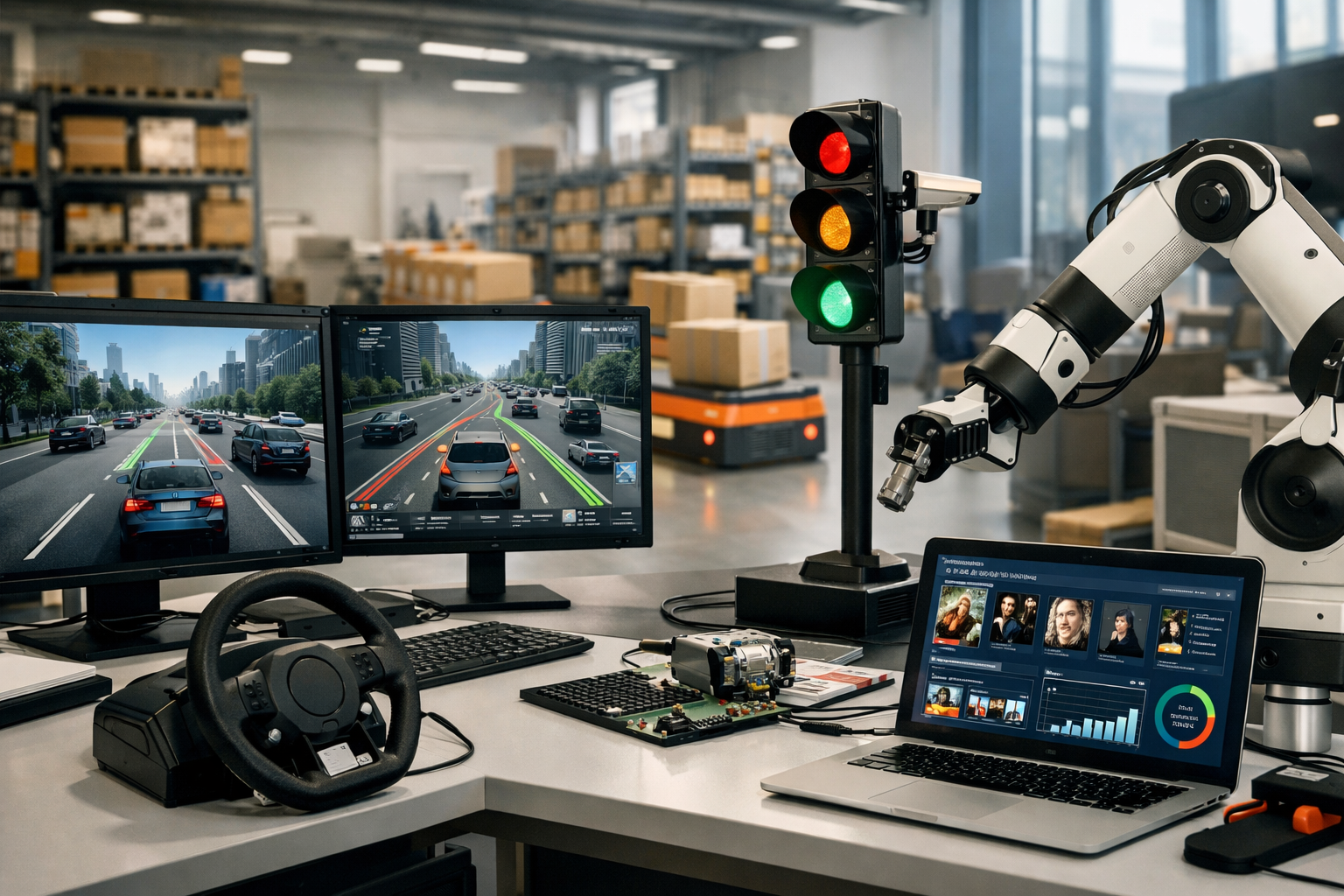
Reinforcement learning applications in real life are already used in areas like self-driving systems, warehouse robots, traffic control, energy management, healthcare planning, finance, gaming, and online recommendations. In simple terms, reinforcement learning is a type of artificial intelligence where a computer learns by trial and error: it takes an action, gets feedback in the form of a reward or penalty, and gradually improves its decisions over time.
If that sounds abstract, think of teaching a dog a trick. Good behavior gets a treat. Wrong behavior gets no treat. Over many attempts, the dog learns what works. Reinforcement learning, often shortened to RL, follows a similar idea—except the learner is software, a robot, or a digital system.
In this guide, we will look at 10 beginner-friendly examples of reinforcement learning in real life, explain why companies use it, and show where this skill can lead if you want to start learning AI from scratch.
Before the examples, let us break the idea down.
In reinforcement learning, there are usually three basic parts:
For example, if a delivery robot finds a faster route without hitting obstacles, it gets a positive reward. If it bumps into something or wastes time, it gets a penalty. After many repeated attempts, the system learns smarter behavior.
This matters because some problems are too complex to solve with a fixed list of rules. Reinforcement learning is useful when a system must make a sequence of decisions and improve from experience.
Many real-life situations involve choices, timing, and changing conditions. A traffic signal must react to traffic flow. A robot must adapt to movement around it. A recommendation engine must learn what users actually engage with. RL is powerful because it can keep learning what works best in dynamic environments.
It is not used everywhere, and it is not always the right AI method. But in problems where learning from outcomes is important, it can be extremely effective.
One of the most well-known reinforcement learning applications is transportation. Autonomous driving systems must make many quick decisions: when to slow down, change lanes, keep distance, or respond to road conditions.
RL can help train driving agents inside simulations where they practice millions of times without real-world danger. The reward might be based on staying in lane, avoiding collisions, following traffic rules, and reaching a destination efficiently.
Even when full self-driving is not involved, parts of advanced driver-assistance systems can benefit from decision-learning methods.
Modern warehouses use robots to move products, avoid obstacles, and optimize routes. A robot in a busy fulfillment center needs to choose the best path while other machines and humans are also moving around.
Reinforcement learning helps these systems improve picking, sorting, and navigation decisions. If a robot reaches a shelf faster and safely, that is a positive outcome. If it creates delays, that is a negative one.
This can reduce wasted movement, save time, and improve overall efficiency in large operations.
Traffic lights often run on pre-set timing, but traffic is not the same every hour. A smarter system can adjust green and red lights based on actual congestion.
With reinforcement learning, a traffic controller can learn patterns over time. Rewards may include shorter waiting times, fewer traffic jams, and smoother vehicle flow.
In busy cities, even small improvements in timing can save thousands of hours of commuter time over a year.
When Netflix suggests a movie or YouTube recommends a video, the system is trying to predict what you may want next. Some recommendation systems use reinforcement learning ideas to improve long-term engagement, not just immediate clicks.
For example, if a platform keeps recommending low-quality but clickable content, users may lose interest later. RL can help balance short-term and long-term rewards by learning which recommendations keep users satisfied over time.
This is one reason AI recommendation systems are a practical example for beginners to understand.
Games are one of the clearest training grounds for reinforcement learning. Why? Because they have rules, goals, scores, and repeatable environments.
AI systems have used RL to learn board games, racing games, and complex strategy games by playing again and again. Winning, surviving longer, or collecting points can all act as rewards.
Although games may seem less serious than healthcare or transport, they are important because they let researchers test decision-making safely before moving to real-world tasks.
In factories, robotic arms may need to pick up objects, place parts, or adjust movements for different shapes and positions. Writing fixed rules for every possible variation is difficult.
Reinforcement learning can allow robots to learn better movement strategies through repeated practice. For instance, a robotic arm may get rewarded for gripping an item securely and placing it accurately without damage.
Over time, this can improve speed, accuracy, and flexibility in manufacturing environments.
Heating, cooling, and electricity usage change throughout the day. Smart systems can use reinforcement learning to decide when to use more or less energy based on occupancy, weather, and demand.
A building management system may be rewarded for lowering energy costs while still keeping rooms comfortable. In power grids, RL can also help balance supply and demand more efficiently.
This is a strong example of AI helping reduce waste while supporting sustainability goals.
Healthcare is a sensitive area, so AI tools must be tested carefully and used responsibly. In some research settings, reinforcement learning has been explored for treatment planning, scheduling, and resource allocation.
For example, a system might learn which sequence of actions leads to better patient outcomes or more efficient use of limited hospital resources. Rewards could reflect recovery improvement, lower risk, or better timing.
In real life, this area requires strong human oversight, but it shows how RL can support complex decision-making.
Financial markets change constantly, which makes them difficult to model with simple rules. Reinforcement learning has been studied for portfolio management, trade timing, and risk-aware decision systems.
The reward may be profit, but real systems also need penalties for excessive risk or unstable behavior. That is important because chasing reward without constraints can lead to bad outcomes.
For beginners, the key idea is this: RL can learn decision strategies in changing environments, and finance is one such environment.
Companies often need to decide which ad, message, or offer to show to different users. Reinforcement learning can help optimize these choices based on what leads to better long-term results, such as sign-ups, purchases, or user retention.
Instead of using one fixed strategy, the system keeps learning from user responses. If one type of message performs better for a certain audience, the model can gradually adapt.
This makes marketing more personalized and more efficient.
These 10 examples may seem very different, but they share the same basic pattern:
That is the core of reinforcement learning.
It can sound advanced at first, but the basic idea is actually quite intuitive. Most beginners struggle not because the concept is impossible, but because many explanations use too much technical language too early.
The best way to learn RL is to start with simple ideas: actions, rewards, goals, and trial-and-error learning. Once those feel clear, you can move into beginner coding projects and visual examples.
If you are curious about AI but do not know where to begin, it helps to first build a strong foundation in Python and machine learning. You can browse our AI courses to find beginner-friendly learning paths in machine learning, reinforcement learning, Python, and related subjects.
You do not need to become a research scientist to benefit from understanding RL. Learning the basics can help you:
For learners planning a career transition, reinforcement learning is often studied alongside machine learning, deep learning, and cloud-based AI tools. Many structured learning paths also align with major industry certification ecosystems such as AWS, Google Cloud, Microsoft, and IBM, which can be useful when building practical job-ready skills.
Machine learning is a broad field. Reinforcement learning is just one part of it. Other types include systems that learn from labeled examples or find patterns in data.
RL systems need lots of training, careful setup, and clear goals. If the reward is badly designed, the system may learn the wrong behavior.
Many people think RL is only about physical machines, but as you saw, it is also used in software, recommendations, finance, and advertising.
If this article made reinforcement learning feel more approachable, your next step is to learn the basics in a structured way. Start with beginner-friendly AI and Python foundations, then move into machine learning and reinforcement learning concepts at your own pace.
You can register free on Edu AI to start exploring lessons, or view course pricing if you want to compare learning options before committing. The goal is simple: build confidence first, then build skills.




- Learning Evolved.
- Intelligence Amplified.