Computer Vision — Beginner
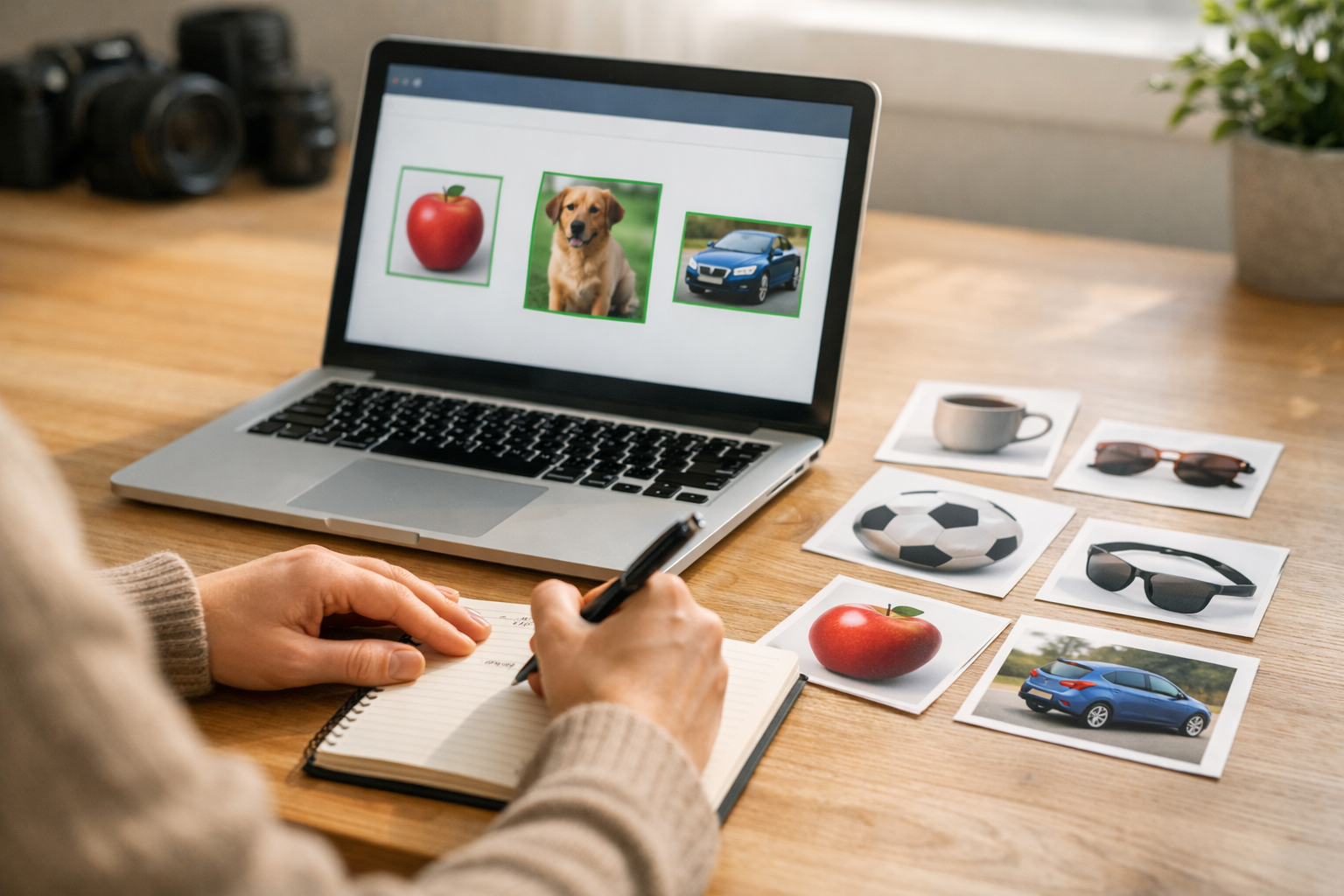
Learn how AI understands pictures in simple beginner steps
AI can now recognize faces, read road signs, sort products, scan medical images, and help machines react to the visual world. But for many beginners, computer vision feels mysterious and too technical to approach. This course changes that. “AI for Beginners: How Computers See” is designed as a short, book-style learning journey that explains the subject in plain language, step by step, with no coding, math, or AI background required.
Instead of dropping you into difficult terms and complex tools, this course starts with the most basic question: what does it actually mean for a computer to see? From there, you will build your understanding chapter by chapter. You will learn how images are stored, how pictures become numbers, how AI learns from many examples, and how computer vision systems make predictions about what they see.
This course follows a logical beginner-friendly progression. First, you discover what computer vision is and where it appears in everyday life. Next, you learn how digital images work at the pixel level so you can understand what a machine receives when it looks at a photo. Then you explore how AI systems learn from datasets, labels, and repeated examples.
Once that foundation is in place, the course introduces the main computer vision tasks such as image classification, object detection, and segmentation. You will then look at how models make decisions, what confidence scores mean, and why systems sometimes get things wrong. Finally, the course closes with practical use cases, limitations, privacy concerns, fairness issues, and realistic next steps for continued learning.
Many AI courses assume prior knowledge. This one does not. Every concept is explained from first principles using simple words, relatable examples, and a teaching flow that builds confidence instead of overwhelm. The goal is not to turn you into an engineer overnight. The goal is to help you truly understand how visual AI works at a beginner level so you can follow future topics with clarity.
By the end of this course, you will be able to explain the basic idea of computer vision, describe how computers represent images, and understand how AI systems learn to recognize patterns in pictures. You will also be able to identify major vision tasks, interpret simple model outputs, and discuss why image quality, training data, and ethics matter in real-world systems.
This understanding can help you become more confident in conversations about AI, evaluate products that use visual recognition, and prepare for more advanced study later. If you are curious about AI but want a gentle entry point, this course is built for you.
This course is ideal for curious beginners, students, professionals changing careers, non-technical managers, and anyone who wants to understand the basics of computer vision without writing code. It is also a strong starting point for learners who plan to explore machine learning, robotics, image analysis, or AI product design in the future.
If you are ready to begin, Register free and start learning today. You can also browse all courses to continue your AI journey after this one.
Computer vision is one of the most exciting parts of modern AI, but it does not have to be hard to understand. With the right teaching approach, even complete beginners can grasp the key ideas. This course gives you that starting point: a clear, structured, and practical introduction to how computers see the world through images.
Senior Computer Vision Engineer
Sofia Chen is a computer vision engineer who designs AI systems that work with images and video in real-world products. She specializes in teaching complex AI ideas in clear, beginner-friendly language and has helped hundreds of new learners build confidence in technical topics.
When people hear the phrase computer vision, they often imagine a machine that sees the world the same way a person does. That is a useful starting intuition, but it is not quite true. Humans see with eyes and interpret with a brain shaped by years of experience. Computers receive image data and process it as numbers. The result can look impressive: a phone unlocks when it recognizes a face, a car warns a driver about lane departure, a warehouse camera counts packages, or a medical system highlights suspicious regions in an X-ray. Yet underneath these abilities is a very practical engineering process. Images are captured, converted into arrays of values, compared against patterns learned from many examples, and turned into outputs such as labels, boxes, masks, or measurements.
This chapter introduces the core idea of computer vision in beginner-friendly terms. You will build a mental model that will support everything later in the course: an image is data, a model is a pattern-finder, and a prediction is a best guess based on training examples. Along the way, we will separate several terms that beginners often mix together: images are the input, labels describe what is in those images, features are useful patterns extracted from the image, and predictions are the outputs produced by a model. Keeping these terms clear will help you reason about what a system is doing and where it can fail.
We will also look at where visual AI appears in daily life. Computer vision is no longer limited to research labs. It is in phones, stores, hospitals, factories, farms, road systems, and social media. Some uses are obvious, like face filters or photo search. Others work quietly in the background, such as quality control on production lines or systems that blur faces for privacy. These systems matter because they automate parts of visual work that would otherwise be slow, expensive, or impossible at scale.
As you read, keep one practical idea in mind: vision systems do not learn from magic, and they do not learn from a handful of examples. They learn from many images, many labels, repeated adjustments, and careful evaluation. A good model depends not only on algorithm design but also on data quality. If the images are blurry, biased, poorly labeled, or unrepresentative of real-world conditions, the model will struggle. In other words, building useful computer vision is as much about sound judgment and data collection as it is about AI.
By the end of this chapter, you should be able to explain what computer vision is, describe how pictures become numbers a computer can work with, recognize the main types of vision tasks, and understand in simple terms how models learn. Just as importantly, you will begin to think like a practitioner: what is the input, what output is needed, what examples are required, and what might go wrong when the system meets the real world?
Practice note for Understand what computer vision is: document your objective, define a measurable success check, and run a small experiment before scaling. Capture what changed, why it changed, and what you would test next. This discipline improves reliability and makes your learning transferable to future projects.
Practice note for Recognize where visual AI appears in daily life: document your objective, define a measurable success check, and run a small experiment before scaling. Capture what changed, why it changed, and what you would test next. This discipline improves reliability and makes your learning transferable to future projects.
Practice note for Compare human sight and computer vision: document your objective, define a measurable success check, and run a small experiment before scaling. Capture what changed, why it changed, and what you would test next. This discipline improves reliability and makes your learning transferable to future projects.
Practice note for Build a simple mental model of image-based AI: document your objective, define a measurable success check, and run a small experiment before scaling. Capture what changed, why it changed, and what you would test next. This discipline improves reliability and makes your learning transferable to future projects.
Human sight feels effortless. You glance at a mug on a table and instantly know what it is, roughly how far away it is, whether it is upright, and whether you can pick it up. You do not consciously calculate edges, colors, or shapes. Your brain handles that interpretation automatically. Computer vision is different. A machine does not begin with understanding. It begins with raw input from a camera or image file and must transform that input into something useful through computation.
This difference matters because beginners often expect computer vision systems to have common sense. Humans use context naturally. If a cat is partly hidden by a chair, you still recognize it. If lighting is poor, you often compensate. A model may not. It sees patterns in data it was trained on. If those patterns change too much, the prediction quality can drop. That is why computer vision is powerful but also fragile in ways that human perception is not.
A helpful mental model is this: human vision is meaning-first, while machine vision is data-first. A computer starts with pixel values. From those values, a model learns to detect useful structures such as edges, corners, textures, and larger shapes. These learned structures are often called features. The system then uses those features to make a prediction, such as “this image contains a dog” or “there is a pedestrian in this region.”
In engineering practice, this means we should define tasks precisely. A person can say, “Look at this scene and tell me what matters.” A computer vision system needs a narrower instruction: classify the image, detect objects, estimate pose, read text, or segment the road. Good results come from choosing the right task definition rather than expecting a vague all-purpose intelligence.
A common beginner mistake is to treat model outputs as facts. In reality, outputs are estimates based on patterns seen in training data. If the data is limited or poorly matched to real use, the model can be confidently wrong. The practical lesson is simple: compare the machine to a very fast pattern recognizer, not to a person with understanding.
To a human, an image is a picture. To a computer, an image is an organized grid of numbers. Each small location in that grid is called a pixel. In a grayscale image, each pixel may hold one value representing brightness. In a color image, each pixel usually holds three values, often for red, green, and blue. Together, these values encode the appearance of the picture.
This is one of the most important beginner ideas in computer vision: pictures become numbers before any AI can use them. If you have an image that is 100 pixels wide and 100 pixels tall, that is 10,000 pixel positions. In color, each position may have three numbers, so the computer is processing 30,000 values. Larger images contain far more data. A model does not “see a dog” directly. It receives many values and learns which value patterns are associated with the label dog.
Now we can separate four terms clearly. An image is the input data. A label is the answer attached to an image during training, such as “cat,” “car,” or “defective part.” A feature is a useful pattern or signal extracted from the image, such as an edge, texture, contour, or more abstract representation learned by a neural network. A prediction is the model’s output when it examines a new image. Keeping these roles distinct helps avoid confusion later.
Image quality strongly affects performance. If images are blurry, dark, overexposed, or cropped badly, the numerical patterns become less reliable. A model trained on clean studio photos may fail on real images from a factory floor or outdoor camera. This is why engineering judgment begins before modeling. You must ask: where do the images come from, what conditions vary, what resolution is needed, and are the labels trustworthy?
The practical outcome is that successful vision work starts with understanding the data format, the image conditions, and the meaning of each label. Before building a model, make sure you know what the pixels represent and what answer you want the system to produce.
Computer vision already appears in daily life, often without people noticing. When a phone groups photos by faces, that is vision. When a document scanning app detects the page edges and flattens the image, that is vision. When a social media app applies a face filter, tracks eyes, or blurs the background behind a person, that is vision too. In stores, cameras may estimate shelf inventory. In traffic systems, cameras can count vehicles or detect incidents. In agriculture, drones can inspect crops. In healthcare, systems can help review scans and images.
These examples show an important point: computer vision is not one thing. It is a family of tools for extracting useful information from images and video. The exact goal depends on the setting. A shopping app may want to identify a product from a photo. A manufacturing system may want to spot scratches or missing parts. A security system may want to detect people entering restricted areas. Different goals lead to different data requirements and different definitions of success.
As a beginner, it is useful to ask practical questions whenever you see a visual AI system. What is the input? A single image, a live video stream, or a scanned document? What is the output? A category, a location, a measurement, or a warning? What kind of mistakes matter most? In some applications, a missed detection is worse than a false alarm. In others, the opposite is true.
A common mistake is to assume that if a system works well in one environment, it will work equally well everywhere. A face unlock feature on a phone is built for a narrow and controlled task. That does not mean the same approach can identify people reliably across all public settings, lighting conditions, and camera angles. Real-world computer vision is highly dependent on the match between training data and deployment conditions.
The lesson here is practical optimism. Computer vision is already useful in ordinary products and services, but each success usually comes from a carefully designed task, a lot of examples, and thoughtful limits on where the system is expected to perform.
Although computer vision includes many techniques, a few core tasks appear again and again. The first is image classification. In classification, the model looks at the whole image and predicts a category, such as “cat,” “tree,” or “damaged.” This is useful when one main label describes the image.
The second major task is object detection. Detection does more than say what is present. It says where objects are, usually by drawing boxes around them. For example, a road scene may contain cars, pedestrians, bicycles, and signs, all in one frame. Detection helps systems interact with busy scenes where location matters.
A third task is segmentation, where the model labels pixels or regions instead of whole images or boxes. This is useful when shape and exact boundaries matter, such as identifying tumors in medical images or separating road from sidewalk in driving systems. Another important task is optical character recognition, or OCR, which reads text from images. There are also tasks like pose estimation, tracking, depth estimation, and anomaly detection.
These tasks connect directly to the beginner mental model of image-based AI. The workflow often looks like this:
At a simple level, this is how AI models learn: they adjust internal parameters so that their predictions become better on many examples. They do not memorize in a human way; they learn statistical patterns. If shown enough varied and well-labeled examples, a model can often generalize to new images. If the examples are too few, too narrow, or mislabeled, the model may learn the wrong thing.
A frequent beginner error is choosing the wrong task. If you only need to know whether an image contains a helmet, classification may be enough. If you need to know which worker is missing a helmet and where they are in the scene, detection is more appropriate. Good engineering starts by matching the problem to the correct computer vision job.
Computer vision matters because so much of the world is visual. People inspect products, read signs, monitor traffic, review medical images, sort photos, and navigate spaces using sight. When computers can assist with parts of that work, the result can be faster decisions, reduced manual effort, improved safety, and entirely new products. In many settings, vision systems do not replace human judgment; they support it by handling repetitive visual tasks at scale.
For example, in manufacturing, a vision system can inspect thousands of parts and flag likely defects for review. In agriculture, image analysis can help detect plant stress earlier than casual observation. In accessibility tools, image captioning and scene description can help users understand visual content. In healthcare, systems can help prioritize images that need urgent attention. These are not just technical achievements. They change workflows and can create real practical value.
But value depends on reliability, and reliability depends heavily on data quality. This is one of the central ideas of modern AI engineering. If the training images do not represent the real world, the system may fail when conditions change. If labels are inconsistent, the model will learn confusion. If some important cases are rare and missing from the data, the model may ignore them. A strong model cannot fully rescue weak data.
That is why good teams spend time on collection, labeling, cleaning, and evaluation. They ask whether the data includes day and night conditions, different camera angles, different object sizes, and unusual cases. They test not just average performance, but failure patterns. This is engineering judgment: knowing that accuracy on a benchmark is not the whole story.
The practical takeaway is that computer vision matters because it turns visual information into action. Yet its success comes from careful problem definition, thoughtful data work, and clear awareness of limitations. In beginner terms, useful vision systems are built, not wished into existence.
At this point, you have the basic pieces needed to study computer vision with confidence. You know that computer vision is the field of teaching computers to extract meaning from images and video. You know that computers do not interpret pictures directly; they process numerical pixel data. You also know the beginner vocabulary that will appear throughout the course: images are inputs, labels are target answers, features are useful learned patterns, and predictions are outputs.
As you move forward, keep a simple workflow in mind. First, define the task clearly. Second, gather data that matches the real-world problem. Third, label the data carefully. Fourth, train a model to connect images to outputs. Fifth, evaluate where it succeeds and where it fails. This workflow sounds simple, but it already captures much of practical AI development.
There are several habits that will help you learn well in the rest of the course. Always ask what the model is supposed to predict. Always ask what examples it learned from. Always ask whether the training data resembles the images it will see in use. These questions will help you think like an engineer rather than just a user of AI tools.
Expect to meet more detailed ideas later, such as neural networks, datasets, evaluation metrics, and common failure modes. For now, your goal is not mathematical depth. Your goal is a clear mental model. If an app can recognize a flower, detect a face, or read text from a sign, you should be able to explain the high-level process behind it: image in, numbers processed, learned patterns applied, prediction out.
One final practical note: beginners often focus only on model architecture because it sounds advanced. In reality, many improvements come from better data, clearer labels, and sharper task design. Keep that perspective as you continue. This course will gradually build from intuition to technique, and this chapter is your foundation.
1. According to the chapter, what is the best beginner-friendly description of computer vision?
2. Which example best shows computer vision being used in daily life?
3. In the chapter's mental model, what is a model?
4. What is the difference between labels and predictions?
5. What does the chapter say is especially important for building a useful computer vision system?
When people look at a photo, they usually see meaningful objects right away: a face, a dog, a stop sign, a handwritten number, or a cracked screen. A computer does not begin with that understanding. It starts with data. This chapter explains the key idea behind computer vision: before an AI system can classify, detect, or recognize anything, an image must be represented in a form a machine can process. That form is numerical.
This is one of the most important mindset shifts for beginners. A picture on a phone or laptop appears smooth and natural, but inside a computer it is stored as an organized collection of values. Those values describe tiny parts of the image, their color, and their arrangement. Once images become numbers, software can measure patterns, compare examples, and learn from many labeled images. That is the foundation of modern vision systems.
In this chapter, you will learn how digital images are stored, how pixels and color channels work, why resolution matters, and how pictures become number grids used by AI models. You will also see an engineering truth that matters in real projects: image quality strongly affects model quality. If the data is blurry, badly cropped, too dark, mislabeled, or inconsistent, even a powerful model may fail in practice.
It also helps to connect the chapter to the larger workflow of AI. An image is the raw input. A label is the correct answer attached to a training image, such as cat, car, or defective part. Features are useful patterns extracted from the image, whether designed by humans in older systems or learned automatically in deep learning. A prediction is the model's output when it sees a new image. Understanding these differences makes computer vision much easier to follow.
As you read, keep one practical question in mind: if a computer only sees numbers, what kinds of numbers help it make good decisions? The answer begins with pixels, channels, and resolution, and ends with a careful pipeline that turns raw image files into reliable AI input.
Practice note for Learn how digital images are stored: document your objective, define a measurable success check, and run a small experiment before scaling. Capture what changed, why it changed, and what you would test next. This discipline improves reliability and makes your learning transferable to future projects.
Practice note for Understand pixels, color, and resolution: document your objective, define a measurable success check, and run a small experiment before scaling. Capture what changed, why it changed, and what you would test next. This discipline improves reliability and makes your learning transferable to future projects.
Practice note for See how pictures become numbers: document your objective, define a measurable success check, and run a small experiment before scaling. Capture what changed, why it changed, and what you would test next. This discipline improves reliability and makes your learning transferable to future projects.
Practice note for Connect image data to AI systems: document your objective, define a measurable success check, and run a small experiment before scaling. Capture what changed, why it changed, and what you would test next. This discipline improves reliability and makes your learning transferable to future projects.
Practice note for Learn how digital images are stored: document your objective, define a measurable success check, and run a small experiment before scaling. Capture what changed, why it changed, and what you would test next. This discipline improves reliability and makes your learning transferable to future projects.
Practice note for Understand pixels, color, and resolution: document your objective, define a measurable success check, and run a small experiment before scaling. Capture what changed, why it changed, and what you would test next. This discipline improves reliability and makes your learning transferable to future projects.
Practice note for See how pictures become numbers: document your objective, define a measurable success check, and run a small experiment before scaling. Capture what changed, why it changed, and what you would test next. This discipline improves reliability and makes your learning transferable to future projects.
A digital image is built from very small units called pixels. The word pixel comes from picture element. Each pixel represents one tiny sample of the scene. If you zoom into a photo far enough, the smooth image breaks into a grid of little squares. Those squares are not just a display trick; they are the basic stored parts of the image.
You can think of pixels as tiles in a mosaic. A single tile does not tell you much, but many tiles arranged together create a meaningful picture. Computers store these pixels in rows and columns, like cells in a spreadsheet. Each pixel has values that describe its brightness or color. Because the location of every pixel is known, the computer can preserve shapes and patterns across the image.
This matters because AI models do not receive the image as a human story. They receive a structured grid. Nearby pixels often relate to one another: edges, corners, textures, and object boundaries are all created by changes between neighboring pixel values. Vision models learn to use those local patterns. For example, a handwritten digit recognizer may learn that certain groups of dark pixels form a curved line, while a traffic sign model may learn that strong edges and color patterns often indicate a sign.
A common beginner mistake is to imagine that the computer first sees a full object such as a cat or bicycle. It does not. It begins with pixel-level values. The object meaning comes later, after processing and learning. This is why labeled examples are so important: the system must be shown many pixel grids paired with correct answers.
From an engineering point of view, pixels are simple but powerful. They make image storage consistent and machine-readable. They also create trade-offs. More pixels can mean more detail, but also more memory, slower processing, and sometimes more noise. A practical computer vision workflow starts by asking how much pixel detail is actually needed for the task.
Many beginners think a color image is stored as one single value per pixel. In most common formats, that is not true. A color image is usually represented with channels. The most familiar system is RGB: red, green, and blue. For each pixel, the computer stores three numbers, one for each channel. Together they define the visible color at that location.
For example, a bright red pixel might have a high red value and low green and blue values. A white pixel might have high values in all three channels. A black pixel might have low values in all three. A grayscale image is simpler because each pixel may need only one value representing brightness. That is useful in some tasks, especially when color does not add important information.
Why channels matter in AI is straightforward: they provide more measurable information. A ripe fruit detector might rely heavily on color differences. A medical imaging task might use grayscale only. A factory inspection system might even use special channels beyond ordinary RGB, such as infrared or depth, depending on the sensors available. The choice of channels changes what the model can learn.
In many image systems, channel values range from 0 to 255. This means each channel can store 256 possible levels. So one RGB pixel contains three values, such as (120, 200, 35). In model pipelines, these values are often normalized into a smaller range like 0 to 1. This does not change the picture meaning, but it makes the numbers easier for machine learning systems to handle consistently.
A practical mistake is mixing up channel order or assuming every image uses the same format. Some software libraries use RGB, while others may use BGR. If the order is wrong, colors become distorted, and a model may perform poorly for reasons that are hard to spot. Good engineering practice means checking image format, channel count, and value range before training or deployment.
Resolution describes how many pixels an image contains, usually written as width by height, such as 640 by 480 or 1920 by 1080. Higher resolution means more pixels are available to represent the scene. In general, that gives the image more detail. Small text, fine edges, and tiny objects are easier to preserve when there are enough pixels to describe them.
But more resolution is not always better. In computer vision, every design choice has trade-offs. A very large image requires more storage, more memory, and more computation. Training on unnecessarily high-resolution data can slow down experimentation and increase cost. On the other hand, resizing images too small can remove critical details. If a detection model must identify a distant pedestrian or a tiny scratch on a product, reducing the resolution too much may make success impossible.
This is where engineering judgment matters. The right image size depends on the task. For image classification, a moderate size may be enough because the model only needs to decide the main category. For object detection or segmentation, preserving spatial detail is often more important. Teams often test multiple resolutions to balance speed and accuracy.
Another source of confusion is the difference between file size and image resolution. A compressed JPEG might have a small file size but still contain many pixels. Meanwhile, aggressive compression can add artifacts that reduce useful detail. So resolution alone does not guarantee quality.
A common beginner mistake is assuming that if an image looks acceptable to a person, it is automatically suitable for AI. Humans are very good at recognizing objects from poor images. Models are less forgiving. If important details disappear during resizing, cropping, or compression, the model may miss the signal entirely. Practical vision work means choosing a resolution that keeps the information needed for the final outcome.
Once you understand pixels, channels, and resolution, the next step is easy to state: a picture becomes a grid of numbers. That grid is what software and AI models actually consume. For a grayscale image, the grid may be a two-dimensional array of brightness values. For a color image, it is often a three-dimensional array: height, width, and channels.
Imagine a tiny 3 by 3 grayscale image. It might be represented as values such as 0, 50, 200, and so on. In a real image, the grid is much larger, but the idea is the same. The model never sees “a face” directly. It sees a numeric structure. Learning means discovering patterns inside that structure that reliably connect to labels.
This is where the chapter connects strongly to AI systems. During training, each image grid is paired with a label. The model compares its current prediction with the correct label and adjusts internal parameters to improve over many examples. Over time, it learns useful features from the number patterns. In older computer vision systems, engineers often designed features by hand, such as edges or corners. In deep learning, the model learns many features automatically from the training data.
Before images reach the model, they usually go through preprocessing. Common steps include resizing, normalizing pixel values, converting color spaces, cropping, and sometimes augmenting the image with flips, rotations, or brightness changes. These steps help make the input more consistent and improve learning. But preprocessing must be chosen carefully. If you crop too aggressively or change colors in unrealistic ways, the model may learn the wrong patterns.
A practical workflow is to inspect sample inputs after every preprocessing step. Many bugs come from silent data errors: upside-down images, incorrect color channels, broken labels, or accidental distortion. Since AI depends on number grids, small technical mistakes in those grids can lead to large performance problems later.
One of the most important lessons in computer vision is that data quality shapes model quality. If the input images are poor, inconsistent, or misleading, the system will struggle no matter how impressive the model architecture sounds. This is true in beginner projects and in professional deployments.
Image quality includes several practical factors: focus, lighting, contrast, framing, motion blur, occlusion, noise, compression artifacts, and labeling accuracy. Suppose you want to build a model that detects helmets on workers. If most training images are bright daytime photos, the model may fail at night. If many helmets are partly hidden, the task becomes harder. If some images are labeled incorrectly, the model learns confusion instead of useful patterns.
Consistency also matters. If one camera produces sharp images and another produces grainy ones, the model may accidentally learn camera-specific signals rather than the real object of interest. This can lead to poor generalization. In other words, the model seems to perform well during testing on familiar data but fails in the real world when conditions change.
Good engineering practice includes reviewing the dataset visually, checking for duplicates, balancing classes when possible, and making sure labels match the task definition. You should also ask whether the dataset reflects the actual deployment environment. A grocery store model should be trained on the kinds of shelves, lighting, packaging, and camera angles it will truly encounter.
A common mistake is trying to solve a data problem with only model changes. Sometimes the fastest path to better results is not a larger model but better images, clearer labels, or more representative examples. In vision systems, practical success often comes from careful dataset curation as much as from algorithm choice.
Now we can connect everything into one end-to-end view. A raw image begins as a file captured by a camera or loaded from storage. That file contains encoded pixel information. Software decodes it into a pixel grid with one or more channels. The image may then be resized, normalized, and formatted so that a machine learning model can accept it as input. At that point, the picture has fully become data in a form AI can work with.
In a typical workflow, the steps look like this: collect images, define labels, inspect quality, preprocess consistently, split data into training and evaluation sets, then feed the numeric arrays into a model. During training, the model learns from examples. During inference, a new image goes through the same preprocessing steps and the model outputs a prediction, such as a class name, a confidence score, or a bounding box around an object.
This section also clarifies the difference between several beginner terms. The image is the input data. The label is the known answer used during training. Features are patterns extracted from the image that help distinguish one category from another. The prediction is the model's best output for a new example. These four ideas appear repeatedly across classification, detection, segmentation, and other vision tasks.
Practical engineering depends on consistency. If training images are normalized one way but deployment images are processed differently, accuracy can drop sharply. If labels are vague, the model learns vague boundaries. If preprocessing removes important details, predictions suffer. A reliable system is not just a model; it is a pipeline.
The big takeaway from this chapter is simple but powerful: computers see images as structured numbers. Once you understand that, many ideas in computer vision become easier to grasp. Pixels, channels, resolution, preprocessing, labels, features, and predictions all fit into one story. The better that story is designed, the more useful the final AI system becomes in real life.
1. What is the main idea behind how a computer processes an image?
2. Why are pixels important in digital images?
3. According to the chapter, why does image quality matter for AI models?
4. In the AI workflow described in the chapter, what is a label?
5. How do pixels, channels, and resolution help AI systems?
People often imagine artificial intelligence as something mysterious, but in computer vision, the basic idea is surprisingly practical: show a model many example images, tell it what those images represent, and let it gradually learn useful patterns. This chapter explains that learning process in beginner-friendly terms. If a person wants to teach a child to recognize apples and bananas, they usually do not begin with a mathematical definition. They point to many examples and repeat the names. AI systems for vision work in a similar way, except the computer does not see the world as humans do. It receives image data as numbers and looks for patterns that often appear together.
To build a useful vision system, we need more than just images. We need organized examples called datasets, clear target answers called labels, and a process that separates learning from evaluation. This is where practical engineering judgment matters. A model can appear smart simply because it memorized its training images, yet fail on new photos from the real world. A strong beginner should understand not only what training is, but also why testing must be different, why data quality matters so much, and how poor labels or biased examples can weaken a system before any algorithm is even chosen.
In this chapter, we will connect four essential ideas: how AI learns from examples, what labels and datasets mean, why training and testing must be separated, and how good data leads to better predictions. These ideas are the foundation of almost every modern vision system, from face unlock on phones to factory inspection cameras and apps that identify plants. By the end of the chapter, you should be able to describe the workflow of teaching a vision model in plain language and recognize common beginner mistakes before they become bigger problems.
A useful way to think about the full workflow is as a pipeline. First, people collect images. Next, they assign labels or annotations. Then they split the data into training, validation, and testing groups. After that, they train a model to find patterns. Finally, they evaluate how well the model predicts on images it has never seen before. At every step, choices about quality, balance, and clarity affect the final result.
Beginners sometimes focus too quickly on advanced algorithms, but experienced engineers know that most vision problems are won or lost in the data. A clean, well-labeled, realistic dataset usually beats a messy one, even when the messy one is larger. Good computer vision starts with good examples.
Practice note for Understand how AI learns from examples: document your objective, define a measurable success check, and run a small experiment before scaling. Capture what changed, why it changed, and what you would test next. This discipline improves reliability and makes your learning transferable to future projects.
Practice note for Learn the meaning of labels and datasets: document your objective, define a measurable success check, and run a small experiment before scaling. Capture what changed, why it changed, and what you would test next. This discipline improves reliability and makes your learning transferable to future projects.
Practice note for See why training and testing are different: document your objective, define a measurable success check, and run a small experiment before scaling. Capture what changed, why it changed, and what you would test next. This discipline improves reliability and makes your learning transferable to future projects.
Practice note for Recognize the importance of good data: document your objective, define a measurable success check, and run a small experiment before scaling. Capture what changed, why it changed, and what you would test next. This discipline improves reliability and makes your learning transferable to future projects.
In everyday language, learning means understanding. In AI, learning usually means adjusting internal numerical settings so the model becomes better at making predictions from examples. A computer vision model does not “know” what a cat is in the human sense. Instead, after seeing many labeled cat and non-cat images, it becomes able to detect visual patterns that often match the label “cat.” That is an important shift in thinking. The model is not given deep meaning; it is given examples and feedback.
Suppose we want a simple model to separate photos of ripe bananas from unripe bananas. We collect many images and attach the correct label to each one. During training, the model makes a guess, compares that guess with the correct answer, and then changes its internal parameters a little. This happens over and over across many examples. Slowly, the model becomes better at mapping image patterns to the correct label. It may notice color ranges, texture differences, and shape cues, even though it does not describe them in words.
Good engineering judgment means remembering that learning is based on patterns in the examples provided. If the examples are too few, too narrow, or too unrealistic, the model learns the wrong lesson. For instance, if every banana photo was taken on the same kitchen table, the model might accidentally learn to associate the table pattern with banana ripeness. That would look successful during training but fail in a grocery store. This is why “learning from examples” is powerful but also fragile.
A practical outcome of this section is simple: when someone says an AI model has learned, they usually mean it has become statistically better at turning image inputs into useful predictions. It has not developed human-style understanding. That distinction helps beginners make sense of both the strengths and limits of computer vision systems.
A dataset is an organized collection of examples used to build or evaluate an AI system. In computer vision, those examples are often images, but they can also include videos, depth maps, or medical scans. Each example usually comes with extra information that tells the model what it should learn. For image classification, that extra information is often a label such as “dog,” “car,” or “apple.” Labels are the target answers. Categories are the possible groups that labels belong to.
Clear labels are essential. If half of your fruit images call a tomato a vegetable and the other half call it a fruit, the model receives mixed signals. It cannot learn a stable pattern if humans are inconsistent. This is one reason labeling guidelines matter. Teams often create simple written rules: what counts as a damaged product, what counts as a pedestrian, what counts as a blurry image that should be removed. These rules reduce confusion and improve consistency.
Practical datasets also need variety. If you are building a model to recognize shoes, your dataset should include different colors, brands, lighting conditions, backgrounds, and camera angles. A narrow dataset creates a narrow model. Another common issue is imbalance. If 95% of the images are one category and only 5% are another, the model may lean too heavily toward the majority class. A beginner may think “more images” automatically means “better,” but balanced and representative data is often more valuable than raw size.
In real projects, datasets may include more than one label type. An image can have a category label, a bounding box showing object location, or a quality flag saying the image is difficult. As systems become more advanced, annotation becomes more detailed. But the beginner lesson stays the same: a dataset is the teaching material, labels are the answers, and categories define the choices the model is expected to make.
One of the most important habits in machine learning is separating the data into different parts. The training set is used to teach the model. The validation set is used during development to compare versions, tune settings, and decide when to stop training. The test set is held back until the end to measure how well the finished system performs on new examples. These three groups exist for a practical reason: a model can memorize what it has seen, so we need a fair way to check whether it generalizes.
Imagine studying for a spelling test by reading the exact answer sheet in advance. You could score perfectly without truly learning how to spell new words. A vision model can do something similar. If we evaluate it on the same images it trained on, the result may look excellent but tell us very little. Good testing means using images the model never saw during training. That is the closest simulation of the real world, where each new photo is unfamiliar.
Validation is sometimes confusing to beginners because it sounds similar to testing. The difference is that validation helps you make decisions while building the model. You might use validation results to choose between a smaller and larger model, or to compare two data preprocessing methods. Because these decisions depend on validation performance, the validation set is no longer a perfectly untouched measure. That is why the test set must remain separate until the end.
A common mistake is data leakage. This happens when information from testing accidentally influences training, even indirectly. Duplicate images, near-identical frames from the same video, or mislabeled file splits can make test results seem better than they really are. Practical engineers check for this carefully. The real outcome we want is not a high number on paper but confidence that the system will work on future images outside the lab.
Once images and labels are prepared, the model’s job is to connect visual patterns to likely answers. These useful visual signals are often called features. In older computer vision systems, engineers designed features by hand, such as edges, corners, textures, or color histograms. In modern AI, especially deep learning, models often learn many of these features automatically from data. Either way, the key idea is the same: the model does not work with “meaning” directly. It works with measurable patterns extracted from image data.
For example, to recognize handwritten digits, a model may become sensitive to strokes, curves, and line positions. To identify a stop sign, it may rely on shape, color, and contrast. In animal classification, fur texture, ear shape, and body outline may become important. A prediction is the model’s output after examining these patterns. In a classification task, the prediction might be “cat” with 92% confidence and “fox” with 6% confidence. In object detection, the prediction may include both a category and a box showing where the object appears.
Engineering judgment matters because not all learned patterns are reliable. A model might notice shortcuts. If all wolf photos happen to contain snow in the background, the model may use snow as a feature instead of the animal itself. This can create surprisingly wrong predictions in normal settings. The lesson is not just that models find patterns, but that they find whichever patterns help reduce error in the training data, whether those patterns are meaningful or accidental.
Practically, this means we should inspect results, review failure cases, and ask what the model might truly be using. Strong computer vision work combines numerical evaluation with human reasoning. When predictions look impressive, we still need to verify that the underlying features make sense for the real-world task.
Data quality is one of the biggest factors in whether a vision system becomes useful or disappointing. Good data is clear, relevant, correctly labeled, and representative of the real situations where the model will be used. Bad data may be blurry, mislabeled, duplicated, heavily biased, too narrow, or collected under conditions that do not match reality. Because models learn from examples, poor examples teach poor habits.
Consider a recycling sorter trained only on clean product photos taken in bright studio lighting. It may perform badly on a real conveyor belt where items are crushed, dirty, partially hidden, and photographed under uneven light. The issue is not necessarily the model architecture. The issue is the gap between the training data and the deployment environment. Good data closes that gap. This is why experienced teams spend significant effort collecting examples from realistic conditions, including edge cases and difficult images.
Label quality matters just as much as image quality. If workers annotate fast but inconsistently, the dataset may contain hidden contradictions. Two similar images may have different labels for no valid reason. The model then tries to fit noise. Another problem is hidden bias. If one category mostly appears indoors and another mostly outdoors, the model may rely on background instead of the object. Good datasets aim for fairness and balance across environments, camera types, and conditions.
A practical rule for beginners is this: when performance is poor, inspect the data before blaming the algorithm. Ask whether the labels are trustworthy, whether the categories are well defined, whether there are enough examples of rare cases, and whether the images resemble real use. In many projects, improving the dataset gives more benefit than making the model more complex.
Beginners often assume that if a model scores highly during training, it must be good. This is one of the most common misunderstandings. Training accuracy mainly shows how well the model fits the examples it was taught with. A useful system must also perform well on new images. That is why separate validation and test sets are so important. Another misunderstanding is thinking that more data automatically fixes everything. More low-quality or badly labeled data can actually make training slower and less reliable.
Another frequent mistake is confusing labels, features, and predictions. A label is the known correct answer in the dataset. A feature is a useful pattern in the image. A prediction is the model’s guess after processing the image. Keeping these ideas separate helps avoid confusion when reading about machine learning workflows. Some beginners also think a model “looks at the whole image like a person.” In reality, it processes arrays of numbers and learns statistical relationships among pixel patterns.
People are also often surprised that the hardest part of AI is not always training the model. Collecting data, cleaning it, defining categories, checking labels, and evaluating errors can take more time than running the training code. This is not wasted effort. It is core engineering work. Strong systems come from careful preparation, not just clever algorithms.
Finally, beginners may believe that wrong predictions mean AI is useless. A better view is that errors reveal where the system needs improvement. Each failure can point to a missing data type, an unclear label rule, or a mismatch between training and real-world conditions. In practice, building vision systems is an iterative process. We gather examples, train, test, inspect mistakes, improve the data, and train again. That cycle is how computer vision becomes reliable enough for practical use.
1. How does a computer vision model mainly learn to recognize things in images?
2. What is the role of a label in a dataset?
3. Why should training and testing use different images?
4. Which workflow step comes after assigning labels or annotations?
5. According to the chapter, what often matters more than using a very complicated model?
In the last chapter, you saw that computers do not look at images the way people do. A computer receives pixel values, turns them into numbers, and uses patterns in those numbers to make decisions. Now it is time to look at the main jobs, or tasks, that computer vision systems are built to perform. This chapter is important because many beginners hear terms like classification, detection, and segmentation without understanding how they differ. In practice, choosing the wrong task can lead to a system that is expensive, confusing, or not useful.
A helpful way to think about vision tasks is to ask a simple question: what kind of answer do you need from the image? Sometimes you only need one label for the whole image, such as “cat” or “dog.” Sometimes you need to know where objects are, such as the location of every car in a traffic photo. Sometimes you need a more detailed understanding, such as which exact pixels belong to a road, a person, or the sky. These different needs lead to different computer vision tasks.
As an engineer or product builder, your goal is not to choose the most advanced method. Your goal is to choose the simplest task that solves the real problem. If a factory camera only needs to decide whether a product is defective, full segmentation may be unnecessary. If a medical system must show the exact boundary of a tumor, then a single class label is not enough. Good computer vision work depends on matching the task to the decision that people need to make.
Another key idea is that each task requires different labels in the training data. Image classification needs image-level labels. Object detection needs bounding boxes around objects. Segmentation needs pixel-level masks, which are much more detailed and costly to create. This is why data quality matters so much. The better your labels match the task, the more useful the model becomes. Poor labels often produce poor predictions, even if the model is technically advanced.
In this chapter, you will distinguish the main vision tasks, identify what classification does, understand detection and segmentation at a basic level, and learn how to match each task to real-world problems. You will also see that some applications combine several tasks at once. A phone camera may detect a face, classify a scene as night or daylight, and read text from a sign in the same moment. Computer vision is not one single skill. It is a toolbox of related tasks, each designed for a different kind of visual question.
Classification answers: What is in this image?
Detection answers: What objects are present, and where are they?
Segmentation answers: Which exact pixels belong to each object or region?
Specialized tasks such as face analysis, text reading, and scene understanding answer more focused questions about identity, language, or context.
As you read the sections below, keep one practical rule in mind: the right task is the one that gives enough information for action, without collecting extra detail you do not need. That rule saves time, data labeling effort, computing resources, and product complexity.
Practice note for Distinguish the main vision tasks: document your objective, define a measurable success check, and run a small experiment before scaling. Capture what changed, why it changed, and what you would test next. This discipline improves reliability and makes your learning transferable to future projects.
Practice note for Identify what classification does: document your objective, define a measurable success check, and run a small experiment before scaling. Capture what changed, why it changed, and what you would test next. This discipline improves reliability and makes your learning transferable to future projects.
Practice note for Understand detection and segmentation at a basic level: document your objective, define a measurable success check, and run a small experiment before scaling. Capture what changed, why it changed, and what you would test next. This discipline improves reliability and makes your learning transferable to future projects.
Image classification is the simplest and most common core task in computer vision. The model looks at an entire image and assigns one label, or sometimes several labels, to it. For example, a model might output “pizza,” “bicycle,” “forest,” or “damaged product.” The important point is that classification does not usually tell you where the object is. It only predicts what the image contains at the image level.
This task works well when the main question is broad and direct. Is this X-ray normal or abnormal? Is this fruit ripe or unripe? Is this photo indoors or outdoors? In each case, the decision is about the whole image. The training workflow is also relatively simple. You collect many example images, assign each one a correct label, train a model to connect pixel patterns to those labels, and then test how well it predicts on new images.
Engineering judgment matters here. Beginners often use classification for problems that really need location information. Imagine trying to count cars in a parking lot with a classifier. A classification model might say “cars present,” but that does not tell you how many there are or where they are. Another common mistake is using labels that are too vague. If one person labels an image “dog” and another labels a similar image “pet,” the model learns confusing patterns.
Classification is practical because it is usually cheaper to label data for. You need one label per image, not boxes or masks. This makes it a good first step for many projects. If your business only needs a yes-or-no decision, classification may be enough. If not, it can still serve as a baseline before moving to a more detailed task.
Object detection goes one step beyond classification. Instead of only saying what is in an image, a detection model also identifies where each object appears. The most common output is a bounding box, a rectangle drawn around each detected object, along with a class label such as “person,” “car,” or “bottle.” This makes detection useful when location matters.
Think about a street camera. A classification model could tell you that a traffic image contains vehicles. A detection model can point to every car, bus, and bicycle in the scene. That extra information makes counting, tracking, warning systems, and automation possible. Detection is widely used in self-driving research, retail shelf monitoring, warehouse robots, and security systems.
The workflow for detection requires more detailed labels than classification. Human annotators must draw boxes around objects in training images. That takes more time, and poor boxes lead to poor results. If boxes are too loose, inconsistent, or missing small objects, the model learns the wrong visual boundaries. This is a common practical failure in real projects. The model is blamed, but the real problem is often inconsistent annotation.
Detection also brings engineering trade-offs. Small objects are harder to detect than large ones. Overlapping objects create confusion. Busy backgrounds can produce false detections. In deployment, teams must decide how confident a prediction should be before acting on it. If the confidence threshold is too low, the system may report many false alarms. If it is too high, it may miss important objects. Good detection systems are not only trained well; they are tuned for the real cost of mistakes.
Image segmentation provides the most detailed visual understanding among the three main beginner tasks. Instead of giving one label to the whole image or one box around an object, segmentation assigns a label to individual pixels or small regions. In other words, it tells the computer exactly which parts of the image belong to which object or surface. This is useful when shape, area, or boundary matters.
There are two common ideas beginners should know. In semantic segmentation, every pixel is classified into a category such as road, sky, person, or building. In instance segmentation, separate objects of the same type are distinguished from one another, so two different people are not merged into one region. You do not need the advanced math yet. The key point is that segmentation is about precise outlines, not broad labels.
This precision is valuable in fields like medical imaging, agriculture, and robotics. A doctor may need the exact outline of a tumor, not just a box around it. A farm robot may need to separate crops from weeds at the pixel level. A self-driving system may need to know exactly which pixels belong to the road surface. In all these cases, classification is too simple and detection may be too rough.
The downside is cost and complexity. Pixel-level labeling is much slower than image labeling or box drawing. It also demands careful quality control. If the masks are inaccurate, the model learns inaccurate boundaries. Beginners sometimes choose segmentation because it sounds powerful, but it is not automatically the best choice. If the task only needs “defect” versus “no defect,” segmentation may be unnecessary. Strong engineering judgment means using segmentation only when exact boundaries create real value.
Not all computer vision problems fit neatly into the three broad tasks above. Many practical systems focus on special forms of visual understanding. Face-related applications may detect faces, identify whether a face is present, estimate facial landmarks such as eyes and mouth positions, or verify whether two face images belong to the same person. Text systems may locate text in an image and then convert it into digital characters, a process often called optical character recognition, or OCR. Scene understanding may classify an image as beach, office, kitchen, or nighttime street, sometimes with added context about weather, lighting, or activities.
These are best thought of as combinations or extensions of the core tasks. A face unlock feature may first detect the face, then analyze features for recognition. A document scanner may detect text regions, segment them from the background, and classify character shapes. A smart camera may classify the scene while also detecting important objects in it. Real products often mix tasks rather than relying on only one.
This is where practical design becomes important. If your app only needs to know whether a face is visible for autofocus, full identity recognition is unnecessary and raises privacy concerns. If you need to read a license plate, generic scene classification will not help; you need text detection and text recognition. Beginners often choose models based on what seems impressive instead of what supports the actual workflow.
Good vision systems are built around the final action. Ask what the user needs to do next. Unlock a phone? Count people entering a store? Read numbers from a meter? Once the next action is clear, the vision task becomes clearer too.
Choosing the right computer vision task is one of the most important decisions in a project. It affects the kind of data you need, the labeling effort, the model complexity, the computing cost, and the usefulness of the final system. A simple rule helps: start from the business or human decision, not from the model type. Ask what output is needed to make a useful choice.
If you only need one answer for the whole image, classification is often enough. If you need object locations, use detection. If you need exact shapes or boundaries, use segmentation. If you need something specialized like reading text or comparing faces, use the task that directly matches that need. This sounds obvious, but many failed projects begin by selecting a fancy technique before defining the real problem.
Another practical factor is annotation cost. Classification labels are cheaper than boxes, and boxes are cheaper than masks. If your team has limited time or budget, this matters. There is no award for collecting more detailed labels than you need. In fact, extra detail can slow a project and create more opportunities for labeling errors.
You should also think about error tolerance. In some cases, a rough answer is acceptable. In others, precision is critical. A social media photo tag can survive occasional mistakes. A medical system or factory safety alert cannot. That difference affects the task choice, confidence settings, review process, and testing plan.
Use classification when the image-level label drives the decision.
Use detection when object count or location matters.
Use segmentation when exact area, outline, or pixel membership matters.
Use specialized tasks when the problem involves text, faces, pose, or richer scene context.
Strong engineering is not about doing the most. It is about doing what is necessary, reliably, with good data and clear evaluation.
Seeing the tasks in real settings makes the differences easier to remember. In healthcare, image classification may help sort scans into “normal” and “needs review.” Detection may highlight suspicious regions for a doctor to inspect. Segmentation may outline an organ or tumor so its size can be measured. Each task adds a different level of detail, and the right choice depends on what the clinician needs to do.
In retail, classification can identify whether a shelf image looks stocked or empty. Detection can locate every product on the shelf and count missing items. Segmentation can separate products from the background for more precise shelf-space analysis. A store manager does not always need the most detailed output. If a simple restock alert is enough, classification may be the fastest solution to deploy.
In manufacturing, classification is often used for pass-or-fail inspection. Detection can locate scratches, dents, or missing parts. Segmentation can measure the exact area of a defect. In agriculture, classification can label plant health, detection can find fruits for harvesting, and segmentation can separate crops from weeds or estimate leaf coverage. In transportation, detection is central for cars, pedestrians, and traffic signs, while segmentation helps understand the road surface and lane regions.
These examples show an important practical truth: the same industry may use multiple tasks for different steps of the workflow. A smart system is often a pipeline, not a single model. One model finds an object, another reads text, and another predicts a condition. When you can match each task to a real-world purpose, computer vision becomes much less mysterious. It becomes a set of tools for answering visual questions clearly, efficiently, and with the right level of detail.
1. Which computer vision task gives one label for the entire image, such as "cat" or "dog"?
2. If you need to know where every car is in a traffic photo, which task is the best match?
3. What kind of training labels does segmentation require?
4. Why might full segmentation be unnecessary for a factory camera checking if a product is defective?
5. According to the chapter, how should you choose the right vision task?
By this point in the course, you know that a computer does not see an image the way a person does. It receives a grid of numbers, processes those numbers, and produces an output such as a label, a box around an object, or a score. In this chapter, we focus on the decision step: how a vision model moves from raw pixel values to a final answer. This matters because the output of a model is not magic. It is the result of learned patterns, simple calculations repeated many times, and engineering choices about data, labels, and thresholds.
A useful beginner idea is this: a vision model is a pattern-matching system that has been trained on many examples. During training, it learns which image patterns often appear together with a label such as cat, stop sign, face, or defect. During prediction, it compares the new image to the patterns it has learned. If enough useful evidence is present, it gives a higher score to one answer than to others. That score is then turned into a prediction.
This chapter connects four practical lessons. First, you will understand simple model thinking: models do not "know" objects in a human sense, but they can learn repeatable signals. Second, you will learn what features and patterns mean in everyday language. Third, you will see why some predictions are right or wrong, including common failure cases. Fourth, you will learn how to read basic output such as scores and confidence. These ideas help you judge model behavior more realistically and communicate results more clearly.
When engineers build vision systems, they do not only ask, "Is the model accurate?" They also ask, "What clues is the model using?" "When does it become uncertain?" and "What simple changes can improve reliability?" Good engineering judgment comes from understanding the full workflow: input image, feature extraction, scoring, prediction, and review of mistakes. If you can follow that chain, you can reason about both success and failure.
Another important point is that a decision from a model is always tied to the data it learned from. If the training images are clean, varied, and correctly labeled, the model usually learns stronger patterns. If the data is messy, biased, or incomplete, the model may learn shortcuts that work in some cases but fail badly in others. So model decisions are not separate from data quality; they are built from it.
In the sections that follow, we will walk through the decision process from start to finish. We will keep the language simple, but we will also stay practical. You will see how features become predictions, why confidence scores need careful interpretation, and what engineers can do when model outputs are confusing or unreliable.
Practice note for Understand simple model thinking: document your objective, define a measurable success check, and run a small experiment before scaling. Capture what changed, why it changed, and what you would test next. This discipline improves reliability and makes your learning transferable to future projects.
Practice note for Learn what features and patterns mean: document your objective, define a measurable success check, and run a small experiment before scaling. Capture what changed, why it changed, and what you would test next. This discipline improves reliability and makes your learning transferable to future projects.
Practice note for See why some predictions are right or wrong: document your objective, define a measurable success check, and run a small experiment before scaling. Capture what changed, why it changed, and what you would test next. This discipline improves reliability and makes your learning transferable to future projects.
Practice note for Read basic output like scores and confidence: document your objective, define a measurable success check, and run a small experiment before scaling. Capture what changed, why it changed, and what you would test next. This discipline improves reliability and makes your learning transferable to future projects.
Practice note for Understand simple model thinking: document your objective, define a measurable success check, and run a small experiment before scaling. Capture what changed, why it changed, and what you would test next. This discipline improves reliability and makes your learning transferable to future projects.
A vision model starts with an input image, but it does not receive meaning directly. It receives numbers. Each pixel has values, often for red, green, and blue channels. Before a model can make a decision, these values are usually resized, normalized, and arranged into a consistent format. This preprocessing step matters because models expect images in a particular shape and numeric range. A blurry image, a dark image, or a badly cropped image may already reduce the quality of the final answer before the model even begins its main work.
Once the image is prepared, the model processes it through layers of computation. At a beginner level, you can think of this as repeated filtering and comparison. Early steps look for simple signals such as edges, corners, brightness changes, or color regions. Later steps combine these signals into more meaningful structures. For example, the model may combine short edges into a curve, curves into a wheel shape, and wheel-like shapes with other clues into the prediction car. The model does not think in sentences. It builds evidence from small parts to larger patterns.
At the end, the model produces output values. In image classification, it may output one score for each possible label. In object detection, it may output both a label and a bounding box location. In segmentation, it may output a category for each pixel. A final rule then turns these raw outputs into a displayed answer, such as selecting the highest score or keeping only detections above a threshold.
This workflow seems simple, but engineering judgment is needed at every step. If an image is stretched in the wrong way, important shape clues may be damaged. If the label list is poorly designed, the model may be forced to choose between categories that overlap. If the threshold is too high, good detections may be removed. If it is too low, false alarms may appear. Understanding the path from image to answer helps you debug results in a practical way instead of treating the model as a black box.
A feature is a measurable clue in the image that helps the model tell one thing from another. For beginners, it helps to think of features as pieces of evidence. A straight edge, a round shape, a repeated texture, a color patch, or the relationship between two parts can all act as features. A pattern is a useful combination of features that appears often enough to support recognition. For example, a stop sign may involve a red region, a roughly octagonal outline, and certain text-like marks. A face may involve eyes above a nose and mouth, plus typical spacing between them.
In simple model thinking, features do not have to be described by humans one by one. Modern models learn many of them automatically from data. That is powerful, but it also means the model may learn features people did not expect. Sometimes this is helpful. Other times it creates trouble. A model trained to recognize boats might focus too much on water in the background instead of the boat itself. Then it may fail when a boat appears on land in a repair yard. The model recognized a shortcut pattern, not the real concept engineers wanted.
Recognition happens when the model finds enough matching evidence in the new image. It is not usually one feature alone that causes a decision. Instead, many weak clues combine into a stronger signal. This is why a partially blocked object can still be recognized: enough of the pattern remains. It is also why unusual lighting, angle, or clutter can confuse the system: the usual pattern may be incomplete or distorted.
A common beginner mistake is to assume features are always visible and obvious. In reality, some learned features are abstract combinations spread across the image. Practical work therefore includes checking whether the model is relying on sensible patterns. If outputs look suspicious, engineers review example images, inspect errors, compare backgrounds, and ask whether the learned evidence matches the intended task. Better recognition comes from better features, and better features usually come from better data and clearer labeling.
A neural network is a model made of many connected mathematical units that transform numbers step by step. For a beginner, the key idea is not biology but layering. Each layer takes inputs, applies learned weights, and passes results forward. Early layers respond to simple image structures. Deeper layers combine those responses into more complex patterns. By the final layers, the network produces scores for possible answers.
Training is how the network learns those weights. It sees many example images together with their correct labels. At first, its predictions are poor. The model compares its outputs with the correct answers, measures the error, and slightly adjusts internal weights to reduce future mistakes. After enough examples, useful patterns become stronger and unhelpful patterns become weaker. This is why large and varied datasets matter so much. The network does not gain common sense on its own. It learns from what it is shown.
For practical understanding, imagine a long chain of tiny decision makers. No single unit understands the whole image. But together, they build a decision from simple signals. One group may react to edges. Another may react to textures. Another may react to larger object parts. The final output is a weighted combination of all these internal signals. This is how the system turns pixels into a prediction.
A common mistake is to think a neural network always finds the "best" rule. In fact, it finds rules that fit the training process and data. If the data contains bias, missing examples, or repeated shortcuts, the network can learn those too. Good engineering practice therefore includes validation on new images, checking failure cases, and avoiding overconfidence in a model just because it performs well on familiar examples. A beginner does not need all the math to understand this. The practical lesson is enough: neural networks learn patterns from examples, and their decisions reflect the quality and limits of those examples.
Most vision models do not only output a label. They also output scores, often shown as confidence values. These values are useful, but they are easy to misunderstand. A confidence score usually means the model finds one answer more strongly supported than the alternatives according to its learned patterns. It does not mean the answer is guaranteed to be correct. A model can be highly confident and still wrong, especially when it sees unusual data or has learned a misleading shortcut.
Suppose a classifier returns cat: 0.82, dog: 0.12, rabbit: 0.06. A beginner may read 0.82 as "82% certain in a human sense." That is not always safe. In practice, the value is best treated as a decision score that helps rank choices and compare predictions. It tells you how strongly the model leans toward one class relative to others under its training experience. If the model has never seen similar images before, the score may still look high while being unreliable.
Confidence is especially important when setting thresholds. In a security camera system, a low threshold may catch more possible events but also create more false alarms. In medical screening, engineers may prefer a lower threshold for suspicious cases so fewer real issues are missed, but then a human expert reviews the extra alerts. Threshold choice depends on the cost of being wrong. This is an engineering decision, not just a model decision.
A practical way to read output is to ask four questions: What is the top prediction? How far ahead is it from the next choice? Is the image similar to training examples? What action will be taken if the model is wrong? These questions turn raw scores into useful judgment. Confidence is not the same as truth. It is one clue in a larger decision process.
Vision models make mistakes for many reasons, and understanding those reasons is one of the most practical skills in computer vision. Some errors come from the image itself: blur, darkness, glare, low resolution, poor angle, or partial blockage. If the evidence in the image is weak, the model has less to work with. Other errors come from the data used in training. If important cases were rare or missing, the model may fail on them even if they seem obvious to people.
Another common cause is confusing classes. If two categories look similar, such as wolves and huskies in snowy scenes, the model may mix them up. It may also learn background clues instead of object clues. For example, if most train images appear on tracks, the model may rely too heavily on the track pattern. Then a toy train on a carpet could be missed. This is a classic example of the model being right for the wrong reason during training and then wrong in real use.
Label quality also matters. If training labels are inconsistent, the model learns inconsistent rules. One person may label a small van as car while another labels it as truck. The network then receives mixed signals about what each class means. Similarly, class imbalance can hurt results. If the dataset has thousands of cat images and very few fox images, the model may not learn fox well enough.
Beginners sometimes assume mistakes mean the model is useless. That is not the right conclusion. Errors are information. They show where the system lacks coverage, where preprocessing may be weak, or where labels need cleanup. Reviewing wrong predictions in groups often reveals patterns: nighttime failures, side-view failures, clutter failures, small-object failures. Once errors are grouped, improvement becomes much easier. Good teams do not only celebrate correct predictions. They study failures to understand how the model really makes decisions.
Improving a vision model does not always require a brand-new architecture. Often, simple steps produce large gains. The first and most effective improvement is usually better data. Add more examples of difficult cases, such as low light, unusual angles, partial occlusion, and background variation. Make sure labels are consistent and clear. Remove obviously incorrect examples. If the model is making predictable mistakes, gather more images of exactly those cases. In practice, targeted data improvement is often better than blindly collecting more of the same easy images.
Second, improve preprocessing and input quality. Check whether images are resized correctly, whether color channels are handled consistently, and whether cropping removes important context. If the task depends on small details, using images that are too low resolution may limit performance no matter how good the model is. Sometimes a simple camera adjustment or better lighting improves the system more than additional training time.
Third, tune the decision rules around the model. Thresholds for confidence, non-maximum suppression in detection, and class-specific settings can all change practical behavior. If one class creates many false alarms, it may need a higher threshold. If a safety-critical class is often missed, lowering the threshold and sending uncertain cases to human review may be a better design.
Finally, build a habit of error analysis. Save incorrect predictions, sort them by type, and ask what common pattern connects them. This teaches engineering judgment. You begin to see whether the issue comes from data coverage, label design, image quality, or unrealistic expectations. The outcome is not just a more accurate model. It is a more reliable system that behaves better in the real world. That is the true goal of computer vision engineering: not perfect guesses, but useful decisions based on evidence, careful review, and continuous improvement.
1. According to the chapter, what is a useful beginner way to think about a vision model?
2. What usually happens during prediction when a model finds enough useful evidence for one answer?
3. Why can a model make wrong predictions even if it seems to work sometimes?
4. Which sequence best matches the workflow described in the chapter?
5. What does the chapter say about confidence scores?
By this point in the course, you have seen that computer vision is about turning images into numbers, patterns, and predictions. A vision system may classify an image, detect objects, or estimate where something is in a scene. Those abilities are powerful, but power always comes with responsibility. A model can help people work faster, notice patterns, and automate repetitive visual tasks. It can also make mistakes, miss important context, or be used in ways that feel intrusive or unfair. This is why responsible use is not an extra topic added at the end. It is part of building any useful computer vision system.
In real life, computer vision appears in ordinary places: in phones that organize photos, in stores that track shelves, in hospitals that help review scans, and in cars that watch the road. These systems do not truly “understand” the world in the human sense. They are statistical tools trained from example images. Their outputs depend on data quality, labels, model design, and the environment where they are used. A model that works well in a lab may perform poorly in rain, low light, crowded scenes, or with people and objects that were underrepresented in training data.
Good engineering judgment means asking practical questions before deployment. What exactly is the task? Who benefits if the system works well? Who could be harmed if it fails? What kind of images were used for training, and what is missing? Is the model making a low-risk suggestion or a high-stakes decision? Can a human review uncertain cases? These questions help teams move from “Can we build it?” to “Should we build it this way?”
Another important idea is that image predictions are not facts. A label such as “cat,” “helmet,” or “damaged product” is a model output, not ground truth about the whole situation. A person looking tired might be sick, stressed, or simply caught in a bad frame. A vehicle partly hidden in fog may go undetected. Responsible vision systems are designed with these limits in mind. They use confidence scores carefully, collect better data over time, and avoid pretending that a model is more certain than it really is.
In this chapter, you will connect the technical ideas from earlier chapters to real-world decisions. We will explore practical uses of computer vision, understand the limits of visual AI, recognize fairness and privacy concerns, and end with a clear beginner-level big picture. The goal is not to make you suspicious of all visual AI. The goal is to help you become thoughtful. Useful computer vision is not just accurate. It is also appropriate for the setting, respectful of people, and honest about what it can and cannot do.
As a beginner, you do not need to solve every ethical challenge alone. But you should learn the habit of asking better questions. That habit is one of the most practical skills in AI. It helps you build systems that are safer, more useful, and more trusted by the people who interact with them.
Practice note for Explore practical uses of computer vision: document your objective, define a measurable success check, and run a small experiment before scaling. Capture what changed, why it changed, and what you would test next. This discipline improves reliability and makes your learning transferable to future projects.
Practice note for Understand the limits of visual AI: document your objective, define a measurable success check, and run a small experiment before scaling. Capture what changed, why it changed, and what you would test next. This discipline improves reliability and makes your learning transferable to future projects.
Practice note for Recognize fairness and privacy concerns: document your objective, define a measurable success check, and run a small experiment before scaling. Capture what changed, why it changed, and what you would test next. This discipline improves reliability and makes your learning transferable to future projects.
Many people use computer vision every day without thinking about it. On phones, vision helps unlock devices with a face, blur backgrounds in photos, scan documents, translate text from signs, and search for pictures by category. In stores, cameras can help count people, monitor inventory on shelves, detect empty spaces, and reduce checkout friction. In cars, vision systems help detect lanes, signs, pedestrians, and nearby vehicles. These examples show why computer vision matters: it turns visual input into practical actions.
But each setting has different risks and design needs. A phone feature that groups photos incorrectly may be annoying but low risk. A store system that miscounts products can waste money. A car vision system that misses a pedestrian can be dangerous. Responsible engineering starts by matching model performance to the seriousness of the task. The same core technology may be acceptable in one setting and not acceptable in another.
Workflow matters too. Teams usually define the problem, collect example images, label them, train a model, test it, and then monitor performance after deployment. In practice, failures often come from conditions that looked minor during development. A shelf-monitoring model may work in one store but fail in another because lighting, camera angle, packaging design, or customer behavior changed. A driving model may struggle at dusk or in heavy rain because those examples were too rare in the training set.
Common mistakes include assuming that a model trained on one environment will transfer perfectly to another, using labels that are too vague, and focusing only on average accuracy. In the real world, edge cases matter. Engineers need to ask: when does it fail, for whom, and with what consequences? Practical outcomes improve when teams test on realistic conditions, gather diverse data, and provide fallback options when confidence is low. That is responsible use in action.
Some of the most meaningful uses of computer vision appear in healthcare, workplace safety, and public services. In healthcare, vision models can help review X-rays, skin images, microscope slides, or scans. In safety settings, they can detect whether workers wear helmets, whether a machine area is occupied, or whether smoke is visible. In public services, vision may help inspect roads, sort waste, monitor infrastructure, or support emergency response. These uses can save time and help people notice patterns they might otherwise miss.
However, these are often high-stakes environments, so the role of the model must be chosen carefully. A beginner-friendly rule is simple: the higher the stakes, the more important human oversight becomes. In a hospital, a model should usually support clinicians rather than replace them. In safety systems, a missed detection could lead to injury, while too many false alarms could cause workers to ignore alerts. In public settings, the people affected may not even know a system is operating, which raises trust and accountability questions.
Engineering judgment here means looking beyond technical performance. Teams should define what success means operationally. Does the model save review time? Does it reduce missed hazards? Does it work equally well across different equipment, camera types, and populations? Does it create new burdens, such as many false alerts? Useful vision systems fit into a workflow with clear escalation steps, logging, maintenance, and periodic retraining when conditions change.
A common mistake is treating a model score as a final answer. In responsible deployments, predictions are evidence, not decisions by themselves. Another mistake is using training data from one hospital, city, or workplace and expecting the same results everywhere. Real-world performance depends on data quality, local context, and the quality of labels. Good teams pilot carefully, measure outcomes honestly, and make sure the tool supports people rather than quietly creating new risks.
Bias in computer vision does not always look dramatic. Often it begins with missing data, uneven representation, or labels that hide important differences. If a model is trained mostly on bright images, it may perform worse at night. If it sees more examples of some faces, clothing styles, body types, or neighborhoods than others, its predictions may be less reliable for underrepresented groups. This is a fairness issue because errors are not always shared equally.
Computer vision also struggles with missing context. An image is only a partial snapshot of reality. A person running could be exercising, fleeing danger, or trying to catch a bus. A raised hand could mean waving, pointing, or asking for help. A cracked object could be damaged inventory or a product intentionally designed that way. The model sees pixels and patterns, not the full social situation. When systems are used without context, they can lead to unfair conclusions.
Practical fairness work starts with the dataset. Teams should inspect what kinds of examples are present, what is rare, and how labels were assigned. They should test performance across meaningful groups and conditions, not just report one overall score. If a face-related model performs differently across skin tones or ages, that difference matters. If a traffic model works well in clear weather but poorly in snow, that is also a fairness and safety concern because some users face more risk than others.
Common mistakes include believing that more data automatically fixes bias, ignoring the social meaning of labels, and using proxies for sensitive traits without discussion. Responsible teams document data sources, include domain experts, and stay cautious when the task itself is hard to define fairly. Sometimes the right decision is not to automate a judgment at all. Fairness is not only about adjusting a model. It is also about deciding whether the system belongs in that situation in the first place.
Because computer vision works with images and video, privacy concerns are especially important. Photos can reveal faces, locations, habits, health clues, family members, and other personal details. Even when a system is designed for a helpful purpose, people may feel uncomfortable if they are recorded, analyzed, or identified without clear notice. Responsible use means thinking about privacy before collecting data, not after a system is already built.
Consent is a practical and ethical question. Did people know images were being captured? Did they agree to the intended use? Will the same images later be used for model training, quality review, or a new purpose that was never explained? A responsible team limits data collection to what is needed, stores it securely, and avoids keeping personal images longer than necessary. If images can be anonymized, blurred, or processed on-device rather than uploaded, that often reduces risk.
Engineering choices can support privacy. For example, a system that counts people in a room may not need to identify who they are. A safety camera might detect whether protective gear is present without storing full-resolution video forever. These design decisions matter. They reflect the principle of data minimization: collect and retain only what the task truly requires.
Common mistakes include using public images as if they were automatically fair game, failing to document who can access data, and expanding system use beyond the original purpose without review. Responsible use also includes transparency. People should understand, at an appropriate level, when vision systems are operating and what they are meant to do. Trust grows when organizations can explain the purpose, limits, safeguards, and review process around a visual AI system.
A beginner often hears two extreme claims about AI: that it will solve everything, or that it cannot be trusted at all. The truth is more useful. Computer vision can do many narrow tasks very well when the problem is clearly defined, the data is strong, and the environment is controlled. It can classify common objects, detect known patterns, measure simple visual changes, and support human review at scale. That is already valuable.
At the same time, computer vision has clear limits. It does not naturally understand intention, causality, emotion, or social meaning the way people do. It may be fooled by unusual camera angles, low light, reflections, occlusion, or examples that differ from training data. It may produce confident predictions even when it is wrong. This is why deployment should include thresholds, exception handling, monitoring, and sometimes a human in the loop.
Engineering judgment means asking whether the visual task is truly observable from pixels. Can a camera determine if a package is present? Usually yes. Can a single image reliably reveal whether someone is trustworthy, guilty, or suitable for a job? No, that goes far beyond what visual data can support responsibly. Many mistakes happen when teams try to predict complex human traits from weak visual evidence.
A practical way to think about capability is to separate low-risk assistance from high-stakes judgment. Vision is often strongest when it narrows attention, flags possible issues, or speeds up repetitive review. It is much weaker when it tries to replace deep human reasoning. Responsible users respect this boundary. They choose problems where visual signals connect clearly to the task and where mistakes can be detected, corrected, and learned from over time.
You now have a beginner-level map of how computers see: images become numbers, models learn from examples, and predictions depend heavily on data quality and task design. The next step is not only learning more technical details. It is learning to connect technical choices with real-world outcomes. Whenever you encounter a computer vision system, ask what data it uses, what task it performs, how errors are handled, and who is affected by those errors.
If you continue studying, focus on a few practical habits. First, define the task clearly. A model cannot solve a vague problem. Second, inspect the data before admiring the model. Poor labels, narrow coverage, and hidden imbalance often explain failures better than fancy algorithms do. Third, evaluate in realistic conditions. Test the system where it will actually be used. Fourth, think about fairness, privacy, and user trust from the start, not as a final checklist item.
A strong beginner project might be something simple and responsible, such as classifying plant leaves, detecting recyclable items, or identifying whether a parking space is occupied. These projects teach the full workflow: collect images, label them carefully, train a model, test edge cases, and describe limitations honestly. That final step matters. Good AI work includes saying what the system should not be used for.
The big picture is clear: computer vision is useful because it helps machines act on visual information, but its success depends on thoughtful design and responsible use. The best builders are not only curious about model accuracy. They are curious about context, impact, and trust. If you keep that mindset, you will be well prepared for the next stage of learning in computer vision and AI.
1. Why does the chapter say responsible use is not an extra topic added at the end of building a vision system?
2. What is a key reason a computer vision model might perform well in a lab but poorly in the real world?
3. According to the chapter, how should we think about a model prediction like 'cat' or 'damaged product'?
4. Which question best reflects good engineering judgment before deploying a vision system?
5. What is the chapter's beginner-level big picture of useful computer vision?

- Learning Evolved.
- Intelligence Amplified.


