AI In Finance & Trading — Beginner
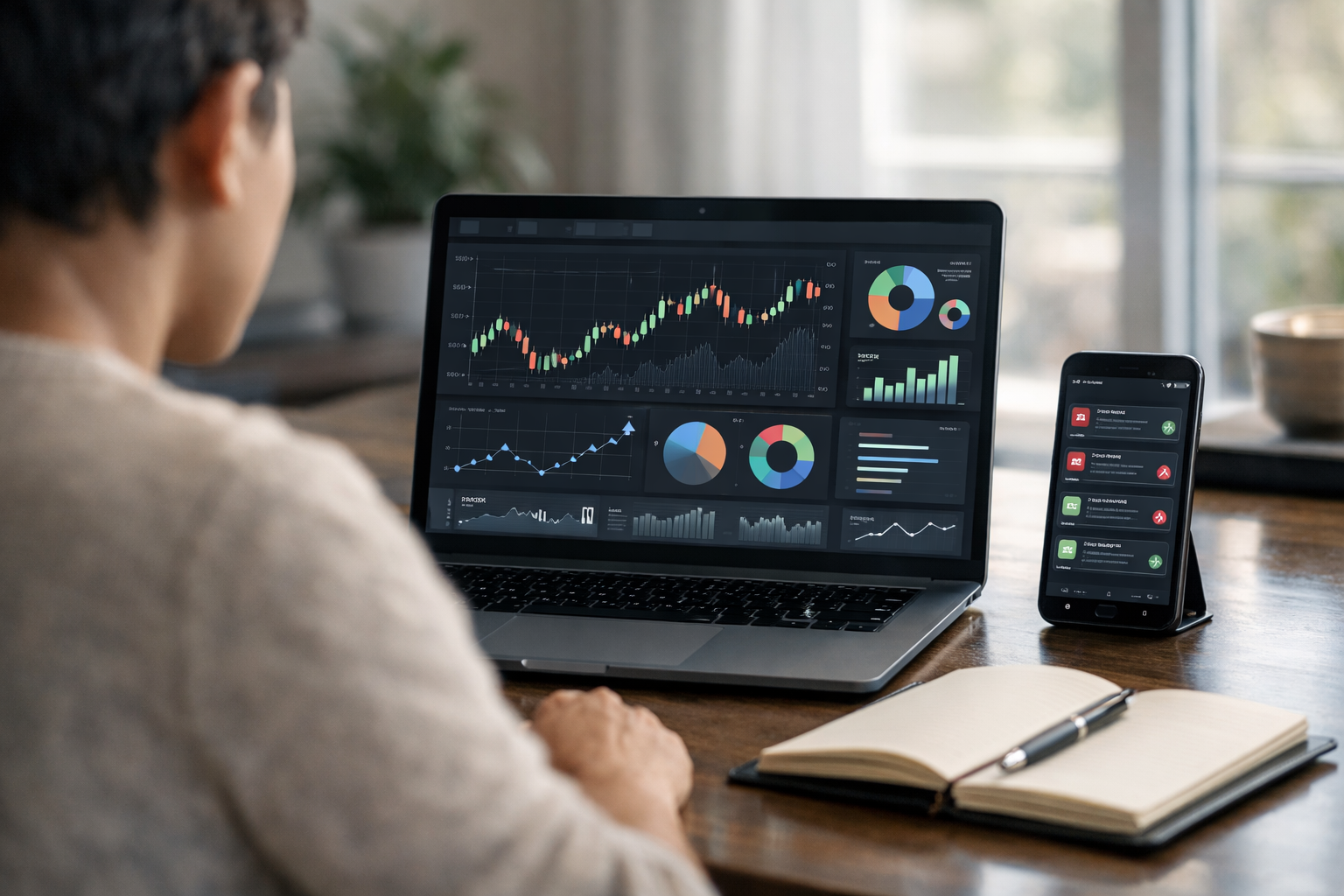
Track crypto smarter and set beginner-friendly AI alerts
This beginner-friendly course is designed like a short technical book, but taught in a clear and practical way. If you have ever wanted to monitor cryptocurrency prices, catch key market moves, and receive useful alerts without needing a background in coding, AI, or trading, this course gives you a simple place to start. Everything is explained from first principles, using plain language and real-world examples.
You will first learn what AI means in a practical sense. In this course, AI is not treated as magic. Instead, it is introduced as a helpful tool for sorting information, spotting patterns, and making alerts more useful. You will also learn what crypto market data looks like, why prices move, and how to think about tracking coins in a realistic and safe way.
Many beginners try to jump straight into prediction, bots, or advanced chart analysis. That often leads to confusion. This course takes a better route. You will start by understanding the main building blocks of crypto tracking: price, volume, timeframes, trend, and volatility. Once these basics are clear, you will learn how to turn them into simple signals that help you decide when an alert should fire.
By moving step by step, you will avoid the common mistake of using complicated tools without understanding the data underneath them. This is especially important in crypto markets, where prices can move quickly and false alarms are common.
By the end of the course, you will have a clear blueprint for a beginner-level AI-assisted crypto tracking system. This includes a watchlist, a basic dashboard, and a set of alert rules that can notify you when something important happens in the market. You will learn how to define useful triggers, how to reduce noise, and how to organize what you see so it is easier to act on.
This course is for learners who are starting from zero. You do not need to know programming. You do not need a data science background. You do not need trading experience. The material is structured so that each chapter builds on the one before it, just like a well-organized short book. That makes it easier to understand not only what to do, but why it works.
The examples focus on practical beginner use cases rather than risky speculation. You will also learn the limits of alerts and automation, how to avoid overconfidence, and why market tracking is different from guaranteed prediction. These ideas help you use AI more responsibly and make better-informed decisions.
Crypto markets operate all day and all night, which makes manual monitoring difficult. AI-assisted tracking can help beginners stay informed without staring at charts all day. A simple alert system can help you notice unusual activity, review changes more efficiently, and build a routine around the information that matters most.
If you are ready to start learning in a structured and approachable way, Register free and begin building your first crypto tracking workflow. You can also browse all courses to explore more beginner-friendly topics in AI, finance, and automation.
This course does not promise perfect predictions or overnight trading success. Instead, it gives you something more valuable: a clear foundation. You will leave with a working understanding of how AI can support crypto monitoring, how to structure simple market alerts, and how to keep improving your setup as your confidence grows. For a beginner, that is the right place to begin.
AI Product Specialist in Financial Data Tools
Sofia Chen designs beginner-friendly AI learning experiences focused on financial data and practical automation. She has helped teams and new learners turn raw market information into simple dashboards, alerts, and decision support workflows.
Welcome to the starting point of your journey into AI-assisted crypto tracking. This course is not about turning you into a high-speed trader or promising easy profits. Instead, it is about building a beginner-friendly system that helps you notice important market changes, organize useful information, and respond with more structure and less guesswork. In practice, that means learning how to follow crypto prices, volume, trend, and volatility, and then using simple AI tools and no-code workflows to turn raw market activity into alerts and dashboards you can actually use.
Many beginners open a crypto app, see hundreds of coins moving up and down, and feel overwhelmed almost immediately. Prices change fast, headlines arrive every hour, and social media often adds noise instead of clarity. AI can help by acting like a filter and an assistant. It can sort information, watch multiple signals at once, summarize patterns, and notify you when predefined conditions happen. That is the central idea of this chapter: AI is most useful when it helps you pay attention to the right things at the right time.
This chapter introduces the practical foundation for the rest of the course. You will learn what AI means in simple language, what cryptocurrency markets are doing beneath all the price charts, and how to think clearly about market tracking without falling into the trap of believing every alert is a prediction. You will also begin to develop engineering judgment, which means choosing tools and rules that are simple, explainable, and safe for a beginner. That matters because a good monitoring system is not the one with the most indicators. It is the one that reliably helps you notice meaningful changes without creating panic or confusion.
By the end of this chapter, you should understand what this course is building and why it matters. You should be able to identify the basic parts of crypto market data, choose beginner-friendly monitoring goals, and think realistically about what alerts can and cannot do. In the chapters ahead, you will gradually turn these ideas into practical workflows, alert rules, and dashboards for daily monitoring.
As you read the six sections in this chapter, keep one practical goal in mind: you are learning how to build a reliable habit of observing the market with structure. That habit is more valuable than reacting emotionally to every chart move. A beginner who tracks a few good signals consistently is in a stronger position than someone who jumps between random indicators and social media tips. Let us begin with the role AI plays in everyday market tracking.
Practice note for Understand what this course builds and why it matters: document your objective, define a measurable success check, and run a small experiment before scaling. Capture what changed, why it changed, and what you would test next. This discipline improves reliability and makes your learning transferable to future projects.
Practice note for Learn the basic idea of AI in plain language: document your objective, define a measurable success check, and run a small experiment before scaling. Capture what changed, why it changed, and what you would test next. This discipline improves reliability and makes your learning transferable to future projects.
Practice note for Recognize the main parts of crypto market data: document your objective, define a measurable success check, and run a small experiment before scaling. Capture what changed, why it changed, and what you would test next. This discipline improves reliability and makes your learning transferable to future projects.
Practice note for Set realistic goals for beginner crypto monitoring: document your objective, define a measurable success check, and run a small experiment before scaling. Capture what changed, why it changed, and what you would test next. This discipline improves reliability and makes your learning transferable to future projects.
When people hear the term AI, they often imagine a system that can fully understand markets and tell them exactly what to buy or sell. That is not the mindset we want in this course. In everyday crypto tracking, AI is better understood as a practical assistant. It helps collect information, sort it, summarize it, compare it against rules, and highlight what deserves your attention. For a beginner, this is already extremely useful.
Imagine that you are watching five cryptocurrencies. Without assistance, you would need to repeatedly check prices, volume, trend lines, and perhaps news updates. AI can reduce this manual effort. It can help scan market data every few minutes, detect unusual changes, and send a message such as: “BTC is down 4% in 6 hours and volume is rising above its recent average.” That type of alert does not tell you what to do, but it gives you an organized signal to investigate.
In plain language, AI works by noticing patterns in data and applying logic at scale. Sometimes that logic is simple, such as if price drops more than 3%, send an alert. Sometimes it is more advanced, such as comparing current volume to typical volume over the last week. The key engineering judgment for beginners is to prefer systems you can understand. If you cannot explain why an alert triggered, you will struggle to trust it or improve it later.
A common mistake is expecting AI to remove uncertainty. Crypto markets are noisy, emotional, and often driven by events outside the chart. AI cannot eliminate this uncertainty. What it can do is create consistency. It can watch the same coins, apply the same rules, and deliver the same type of signal every day without getting tired or distracted. That consistency is valuable because human attention is limited.
This course builds toward a monitoring workflow, not a prediction engine. You will use no-code or low-code tools to gather data, define simple logic, and send alerts into places like email, chat apps, or dashboards. AI can also help summarize what happened during the day, which is especially useful if you do not want to watch charts constantly. In that sense, AI is not replacing your judgment. It is giving your judgment better inputs.
Before tracking the crypto market, you need a basic understanding of what cryptocurrency is. A cryptocurrency is a digital asset that exists on a blockchain or similar distributed system. Different coins and tokens serve different purposes. Some are designed as forms of digital money, some support smart contract platforms, and others are tied to specific applications or ecosystems. For tracking purposes, the important point is that each asset trades in a market where buyers and sellers constantly change the price.
Crypto prices move because supply and demand change. That sounds simple, but many forces affect that balance. News events, regulation, exchange listings, large investor activity, social media attention, macroeconomic conditions, and technical market behavior can all influence price. In crypto, these effects are often stronger than in slower-moving markets. That is one reason crypto tracking needs structure: the pace can be fast, and emotional reactions are common.
Beginners often assume that a price move always has one clear cause. In reality, markets are messy. A coin might rise because of strong general market sentiment, because Bitcoin is moving, because traders expect a product launch, or simply because short-term momentum attracts attention. This is why your monitoring system should focus first on observable signals rather than trying to guess hidden motives too quickly.
Another important point is that not all coins behave the same way. Large assets like Bitcoin and Ethereum may have more liquidity and steadier market participation. Smaller coins may move sharply on lower volume and can be more vulnerable to sudden spikes or drops. Good beginner tracking means recognizing these differences and avoiding the mistake of applying the exact same expectations to every asset.
Why does this matter for AI? Because any useful alerting workflow depends on understanding what the market data represents. If you know that volume often rises when attention increases, or that volatility can expand around major news, then your alerts become more meaningful. You are not just watching numbers. You are watching market behavior. That perspective will help you choose better signals later in the course.
This is one of the most important distinctions in the entire course. Tracking means observing what is happening now or what has recently happened. Predicting means making a claim about what will happen next. Beginners often mix these two ideas together, and that creates unrealistic expectations. A well-built tracking system can tell you that a coin has broken above a recent range with strong volume. It cannot guarantee that the move will continue.
Tracking is practical because it is based on visible evidence. You can define rules such as price up 5% in 24 hours, volume 2 times above average, or volatility increasing over the last few sessions. These are measurable conditions. Prediction is much harder because markets can reverse quickly, react to unseen news, or behave irrationally for long periods. Even advanced professionals do not predict perfectly.
From an engineering perspective, tracking is also easier to test. If you create an alert rule, you can review past data and ask whether it would have triggered at useful moments. You can adjust thresholds and reduce false alarms. That makes your workflow more reliable. Prediction systems, especially black-box ones, are harder for beginners to evaluate. If a model says “bullish,” but you do not know why, you may rely on it too much or abandon it too quickly.
A common mistake is treating alerts like trading instructions. An alert should be a prompt to look closer, not a command to act instantly. For example, a sudden price drop alert may mean panic selling, but it may also signal a normal pullback in a larger uptrend. Tracking helps you notice that something changed. Your judgment decides whether the change matters.
This course therefore focuses on building observation systems. That is the right starting point for beginners because it teaches discipline, pattern recognition, and rule-based thinking. Later, if you choose to explore more advanced models, you will do so from a stronger foundation. In short: first learn to see clearly, then decide carefully. That sequence is safer and more useful than jumping straight into prediction claims.
A beginner-friendly monitoring system should focus on a small set of metrics that are easy to understand and broadly useful. The four core metrics in this course are price, volume, trend, and volatility. If you can read these clearly, you already have a strong starting point. Many newcomers make the mistake of chasing too many indicators at once, which often creates more confusion than insight.
Price is the most obvious metric. It tells you what the market is currently willing to pay for an asset. On its own, however, price can be misleading. A price move matters more when you know the time frame. A 2% move in one hour feels different from a 2% move over one week. That is why alerts usually include both the amount of change and the period over which it occurred.
Volume measures how much of an asset is being traded. This helps you judge the strength of a move. If price rises but volume stays weak, the move may be less convincing. If both price and volume surge together, market attention may be increasing. Beginners should learn to ask not just “Did price move?” but also “How much participation supported that move?”
Trend describes the market direction over time. A simple way to think about trend is whether price is generally moving up, down, or sideways across a chosen period. You do not need complex formulas at the start. Even comparing current price to recent averages can help you see whether the market is strengthening or weakening. Trend matters because a signal often means something different depending on the broader direction.
Volatility measures how fast and how widely price moves. High volatility means larger and quicker swings. In crypto, volatility is common, so it deserves attention. A coin with sudden volatility can trigger alerts frequently, which may overwhelm a beginner unless thresholds are chosen carefully. This is where engineering judgment matters: useful alert settings are sensitive enough to notice important moves, but not so sensitive that they produce constant noise.
These metrics form the language of beginner crypto tracking. In later chapters, you will use them to build simple rules such as “alert me if price drops 4% in 12 hours” or “alert me if volume spikes while trend turns upward.” The goal is clarity, not complexity.
Market alerts are one of the most practical tools you can build with AI and automation. Their purpose is simple: they notify you when something important happens according to rules you define. That could be a sharp price move, a spike in trading volume, or a possible trend shift. Alerts save time because you do not need to stare at charts all day waiting for events manually.
What alerts do well is create timely awareness. For example, instead of checking the market every hour, you can let your system watch for events and send a notification only when conditions are met. This turns raw market data into something actionable: not a trade decision, but a decision to pay attention. In practice, that is a huge advantage for beginners who want structure without becoming overwhelmed.
However, alerts also have limits. They do not explain everything automatically. An alert saying “ETH volume is 3 times above average” tells you that activity has changed, but not why. It does not know whether the change came from positive news, broad market risk, liquidation activity, or short-term speculation. You still need to inspect context. This is why the best workflows combine alerts with a small dashboard or summary view.
Another common mistake is creating too many alerts. If every small fluctuation triggers a message, you will quickly start ignoring them. This is called alert fatigue. Good engineering judgment means choosing thresholds that matter. For beginners, that usually means fewer alerts with clearer significance. It is better to monitor five useful conditions consistently than to create twenty noisy rules you stop trusting.
Alerts also do not remove risk. They cannot protect you from bad decisions, sudden reversals, or poor position sizing. Their job is information delivery. Your job is interpretation and discipline. In this course, you will learn to create beginner-friendly alert rules that focus on meaningful changes: price moves, volume spikes, and trend shifts. When used correctly, alerts become part of a calm and repeatable monitoring routine.
A safe beginner mindset is not about avoiding learning. It is about learning in a way that reduces unnecessary risk and confusion. In crypto, it is easy to feel pressure to move fast, copy others, or assume that more tools always mean better results. In reality, the safest and most effective way to begin is to keep your system simple, understandable, and limited in scope.
Start with realistic goals for crypto monitoring. Your goal is not to track every coin or react to every market move. Your goal is to build a daily process that helps you notice important changes in a small watchlist. For many beginners, that means selecting a few major assets, defining simple alert rules, and reviewing a dashboard once or twice a day. This creates consistency and makes improvement easier.
You should also separate monitoring from decision-making. Monitoring collects information. Decision-making requires judgment, context, and risk awareness. Keeping those roles separate protects you from impulsive reactions. If an alert appears, pause and ask: what changed, how unusual is it, and what additional context do I need? That habit is much safer than treating every notification as urgent.
Another part of a safe mindset is accepting that no system is perfect. Some alerts will be false alarms. Some important moves will happen before your rules trigger. That is normal. The objective is not perfection. It is building a process that is useful more often than not. Over time, you will refine thresholds, remove noisy signals, and improve your dashboard layout. Good systems grow through iteration.
Finally, remember that AI is a support tool, not a substitute for responsibility. A no-code workflow can save time, summarize markets, and organize alerts, but it cannot define your goals for you. Keep your watchlist manageable, avoid overconfidence, and document what works. If you treat this course as a way to build disciplined observation skills, you will be preparing yourself for practical, long-term use of AI in crypto tracking. That is the right foundation for everything that follows.
1. What is the main goal of this course?
2. How is AI described in this chapter?
3. Which set includes the main crypto market signals highlighted for beginners?
4. What is a realistic beginner goal when starting crypto monitoring?
5. According to the chapter, what makes a good monitoring system?
Before you can build useful crypto alerts, you need to know what the data is actually saying. Beginners often jump straight into charts, AI tools, and prediction claims, but strong monitoring starts with simpler questions: What is the current price? How fast is it changing? Is the move supported by trading activity? Is the data coming from a source you trust? This chapter builds those foundations from first principles so you can read crypto market data with more confidence and less guesswork.
In crypto, data arrives fast and from many places. A coin can trade on multiple exchanges, under slightly different prices, volumes, and symbols. Some assets are highly liquid and actively traded. Others barely move until a sudden spike makes them look interesting for a few minutes. An AI-assisted workflow is only as good as the inputs you feed into it. If your price feed is delayed, your symbols are mixed up, or your table includes noisy metrics you do not understand, your alerts will be confusing instead of helpful.
The goal of this chapter is not to turn you into a technical analyst. It is to help you identify the most useful beginner signals and prepare them in a form that simple monitoring tools can use. We will focus on practical market readings: spot price, percentage change, market cap, volume, timeframe, and volatility. You will also learn how to compare coins, exchanges, and data providers with good engineering judgment. That means asking whether a number is timely, consistent, and relevant rather than just impressive-looking.
As you read, keep one practical outcome in mind: by the end of this chapter, you should be able to organize raw crypto data into a clean table that supports simple alerts. For example, you might track BTC, ETH, and SOL with columns for current price, 1-hour change, 24-hour change, 24-hour volume, and a simple volatility flag. That kind of table is enough to power many beginner-friendly no-code or low-code workflows. AI can then help summarize changes, spot unusual behavior, or generate plain-language alerts, but the core understanding still begins with the data itself.
Think of this chapter as building your market reading habit. Instead of asking, “Will this coin go up?” ask, “What is changing, over what period, with how much activity, and from which source?” That small shift is important. It moves you from speculation toward observation, which is exactly what you need for dependable crypto tracking and market alerts.
Practice note for Identify the most useful beginner market signals: document your objective, define a measurable success check, and run a small experiment before scaling. Capture what changed, why it changed, and what you would test next. This discipline improves reliability and makes your learning transferable to future projects.
Practice note for Understand price, volume, and time-based patterns: document your objective, define a measurable success check, and run a small experiment before scaling. Capture what changed, why it changed, and what you would test next. This discipline improves reliability and makes your learning transferable to future projects.
Practice note for Compare exchanges, coins, and data sources: document your objective, define a measurable success check, and run a small experiment before scaling. Capture what changed, why it changed, and what you would test next. This discipline improves reliability and makes your learning transferable to future projects.
Practice note for Prepare clean inputs for simple AI-assisted monitoring: document your objective, define a measurable success check, and run a small experiment before scaling. Capture what changed, why it changed, and what you would test next. This discipline improves reliability and makes your learning transferable to future projects.
Practice note for Identify the most useful beginner market signals: document your objective, define a measurable success check, and run a small experiment before scaling. Capture what changed, why it changed, and what you would test next. This discipline improves reliability and makes your learning transferable to future projects.
The first beginner signals to understand are spot price, percentage change, and market cap. Spot price is the current trading price of a coin at a given moment. It looks simple, but even this number needs context. A coin priced at $0.20 is not automatically cheaper than a coin priced at $2,000. The absolute price alone tells you very little about size, risk, or opportunity. What matters more is how that price changes and how large the asset is overall.
Percentage change solves part of this problem. If one coin rises 2% in an hour and another rises 0.3%, the percentage gives you a better way to compare their movement, even when their dollar prices are very different. For beginner monitoring, common windows are 1 hour, 24 hours, and 7 days. These views tell different stories. A coin may be down on the day but up on the week, which suggests a pullback inside a larger trend rather than a collapse.
Market cap adds another layer of judgment. It is usually calculated as price multiplied by circulating supply. This gives a rough measure of the network’s market size. Large-cap coins like Bitcoin and Ethereum often behave differently from small-cap tokens. In general, larger assets may move more slowly, while smaller assets may swing more violently. This does not make one better than the other, but it helps you choose signals and alert thresholds that fit the asset.
A practical beginner workflow is to track these fields side by side. For each coin, store the latest price, 1-hour percentage change, 24-hour percentage change, and market cap bucket such as large, medium, or small. That lets you build simple rules like: alert me when a large-cap coin moves more than 3% in 24 hours, or when a small-cap coin moves more than 8% in 24 hours. Engineering judgment matters here because one threshold should not be used for every asset.
A common mistake is treating ranking tables as if they are complete truth. Prices can differ slightly across exchanges, market cap calculations depend on supply assumptions, and percentage change depends on the reference point used by the data provider. Always check how the platform defines the metric. For monitoring, consistency is often more important than perfection. If you use one trusted source and apply it consistently, your alerts become easier to interpret and compare over time.
If price tells you where the market is, volume helps tell you how much participation sits behind that move. Trading volume usually measures how much of an asset changed hands over a period such as 24 hours. This matters because a price jump on strong volume often means more traders were involved, while a jump on weak volume may be less trustworthy or easier to reverse. For beginners, volume is one of the most useful context signals because it helps separate meaningful moves from random noise.
Volume becomes especially important when you create alerts. A rule that says “notify me when price rises 5%” can generate many low-quality signals in smaller coins. A better rule may say “notify me when price rises 5% and 24-hour volume is at least 50% above its recent average.” This adds evidence. It does not guarantee anything, but it improves the quality of what gets your attention. In AI-assisted monitoring, this also reduces false positives before the AI summarizes the event.
There are several practical ways to read volume. First, compare current volume to the coin’s own normal range, not just to another coin. BTC always trades with more total volume than a niche token, so raw numbers alone can mislead you. Second, compare volume across time. Is today’s volume unusually high versus the last 7 days? Third, consider whether the volume comes from reliable exchanges or fragmented sources. Inflated or artificial volume can distort your view.
For a simple dashboard, include columns for 24-hour volume and volume change versus a recent baseline. A baseline might be a 7-day average or the average of the last several periods if your tool supports it. Then create labels such as normal, elevated, or spike. These labels are useful for beginners because they turn a hard-to-read raw number into something operational. AI tools can then use those labels to generate concise alerts like “ETH is up 3.8% with elevated trading activity.”
A common mistake is assuming low volume means a hidden opportunity. Sometimes it simply means there is not enough real participation for the price to be reliable. Another mistake is mixing quote currencies without noticing. One source may report volume in USD, another in BTC, and another in native units. Always standardize units in your table. Clean volume data makes your monitoring workflows much more dependable.
Crypto markets run all day, every day, which makes timeframe choice extremely important. The same coin can look bullish on a 5-minute chart, flat on a 1-hour chart, and weak on a 24-hour view. None of these views is automatically wrong. They are just answering different questions. This is why beginner-friendly monitoring should always define the time window clearly. Without a timeframe, “the market is moving” has almost no meaning.
Short timeframes such as 1 minute, 5 minutes, or 15 minutes are useful for fast monitoring, but they also contain more noise. Prices can jump because of temporary imbalances, a large order, or brief reactions to news. Hourly timeframes are often a better starting point for alerts because they smooth some of that noise while still giving timely signals. Daily views are even more stable and useful for seeing broader trend direction, especially if you are not watching the screen constantly.
For beginners, a practical approach is to combine three layers: a short-term timeframe for immediate change, a medium-term timeframe for trend confirmation, and a daily view for context. For example, you might monitor 15-minute change, 1-hour change, and 24-hour change together. If all three are positive and volume is rising, the move may deserve attention. If the 15-minute change is strong but the 24-hour trend is still weak, you may be looking at a bounce rather than a real shift.
This is where engineering judgment matters. More data is not always better. If you track too many timeframes, your dashboard becomes cluttered and your alerts become contradictory. Choose timeframes based on your action cycle. If you only review the market twice a day, minute-level alerts will not help much. If you want near-real-time monitoring, then short intervals may be appropriate, but only if you can handle more noise.
A common mistake is comparing values from different windows as if they were the same type of signal. A 2% move in 5 minutes is not equivalent to a 2% move in 24 hours. The first is much faster and usually more unusual. Always label timeframes directly in your tables and alerts. Good monitoring systems make time explicit so the user never has to guess what a number represents.
Volatility describes how much and how quickly price moves. In crypto, volatility is normal, but not all volatility is equally useful. Some assets move in regular, liquid patterns. Others behave erratically, with sharp candles, thin order books, and frequent reversals. For beginner monitoring, the goal is not to predict every swing. It is to recognize when movement is ordinary, when it is noisy, and when it is unusually large enough to trigger an alert.
Noise is the small, messy movement that happens even when nothing important has changed. If your alert threshold is too sensitive, noise will overwhelm your workflow. You may get repeated messages for tiny jumps that reverse a few minutes later. This creates alert fatigue, and once that happens, even good alerts start to get ignored. One of the simplest ways to handle this is to set thresholds that match the normal behavior of the asset. BTC may need smaller thresholds than a low-cap altcoin, which often swings more dramatically.
You do not need advanced math to monitor volatility. A practical beginner method is to compare current percentage changes to the coin’s recent average range. Another method is to classify coins manually: low volatility, medium volatility, or high volatility. Then apply different alert rules to each class. You can also use simple measures like the difference between daily high and low, or the absolute size of recent hourly moves. The point is to give your monitoring system a basic understanding of what counts as “normal” for that asset.
Sudden swings deserve special treatment. A large move with high volume may indicate a real event such as breaking news, liquidations, or a major market shift. A large move with weak volume may fade quickly. This is why volatility should rarely be read alone. Pair it with volume and timeframe. For example, a 6% move in 10 minutes with a volume spike is more notable than a 6% move spread across a whole day with ordinary activity.
Common mistakes include setting one volatility rule for every coin, ignoring liquidity, and reacting to every large candle without checking source quality. Good practical monitoring reduces false alarms by requiring more than one condition. A useful rule might be: trigger only if price change exceeds threshold, volume is elevated, and the move persists for two consecutive checks. That small bit of structure can make beginner alert systems much more reliable.
Crypto data is widely available, but not all sources are equally reliable. Some platforms aggregate prices from many exchanges, while others focus on direct exchange data. Some update quickly, while others introduce delays. Some are careful about symbol mapping and filtering poor-quality markets, while others may include questionable pairs. Since AI-assisted monitoring depends on consistent inputs, choosing your source is one of the most important early decisions you can make.
Start by asking what you actually need. If your goal is beginner market alerts, you usually want a source that provides spot price, percentage change, market cap, and volume in a standardized format. You also want clear documentation, predictable update frequency, and stable symbols. If one source uses BTC and another uses XBT, or one lists a wrapped token under a confusing symbol, your workflow can break or produce misleading alerts.
When comparing exchanges and data providers, look at three things: consistency, coverage, and transparency. Consistency means the numbers update in a stable way and the fields mean the same thing each time you check them. Coverage means the source includes the coins and exchanges relevant to your watchlist. Transparency means the provider explains where the data comes from and how metrics are calculated. For beginners, a slightly simpler provider with cleaner definitions is often better than a more advanced one with unclear methodology.
A practical approach is to choose one primary source and one secondary source for verification. Use the primary source for your dashboard and alerts. Use the secondary source only when something looks unusual, such as a very large move or missing data. This keeps your workflow simple but still gives you a way to sanity-check errors. AI can help compare source outputs, but it cannot fix poor source selection on its own.
Common mistakes include mixing prices from one source with volume from another, comparing spot and derivatives data without realizing it, and ignoring timezone or update frequency differences. If you are collecting data every 15 minutes, but your source updates less often, you may generate repeated alerts on stale values. Reliable monitoring is not just about having data. It is about knowing how the data was produced and whether it is suitable for your specific alert logic.
Once you understand the key signals, the next step is to organize them into a simple table. This is where raw market data becomes usable for dashboards, automations, and AI summaries. A good beginner table is not overloaded. It includes only the columns needed to answer practical monitoring questions. For example: coin name, symbol, source, timestamp, current price, 1-hour change, 24-hour change, 24-hour volume, market cap, volatility label, and notes. That is already enough to power many useful alert systems.
The reason tables matter is that AI works better with structured inputs than with messy screenshots or scattered browser tabs. A clean row for each coin allows you to sort, filter, compare, and trigger actions. If SOL has a 4.2% 1-hour gain, elevated volume, and a high-volatility tag, your workflow can generate a specific alert. If BTC is flat on the hour but still strong over 24 hours, your dashboard can present it as stable rather than urgent. Structure creates clarity.
When preparing inputs, normalize the data carefully. Use one quote currency such as USD. Keep one consistent timestamp format. Standardize symbols and coin names. Make sure percentage fields are stored as numbers, not text strings with percent signs attached, if you plan to process them programmatically. If a field is missing, decide how you will handle it: leave it blank, fill with zero, or mark it as unavailable. That decision should be consistent across the table.
A practical beginner workflow might look like this. First, choose a watchlist of five to ten major coins. Second, pull the same set of fields for each coin at a fixed schedule. Third, store the data in a spreadsheet, Airtable base, or low-code database. Fourth, add simple calculated columns such as volume spike yes or no, trend direction up or down, and volatility class. Fifth, feed these cleaned rows into your alert tool or AI assistant for summarization. This process is simple, but it reflects good engineering judgment because each step is explicit and testable.
The most common mistake is collecting too much data before knowing how you will use it. More columns usually mean more confusion, not better alerts. Start with a small, reliable schema and expand only when a new field clearly improves decision-making. A simple, well-maintained table is the bridge between market observation and practical crypto monitoring.
1. According to the chapter, what should a beginner ask before relying on a crypto alerting workflow?
2. Why is volume important when reading a price move?
3. What is the main benefit of comparing crypto data across timeframes such as 1-hour and 24-hour change?
4. Which table setup best matches the chapter's recommended beginner-friendly monitoring approach?
5. What is the chapter's overall shift in mindset for dependable crypto tracking?
In the last chapter, you learned how to read basic crypto market data such as price, volume, trend, and volatility. This chapter takes the next step: turning those raw numbers into simple signals that help you decide when a coin deserves attention. A signal is not a prediction and it is not a guarantee. It is a practical rule that tells you, “something changed enough that I should look.” For beginners, this is a much safer and more useful way to monitor markets than trying to guess exact tops and bottoms.
Crypto markets produce nonstop data. Prices update every second, volume changes every minute, and short-term moves can be dramatic. Without a structure, it is easy to stare at charts and react emotionally. Useful signals solve this problem by converting messy market movement into clear alert conditions. Instead of watching every tick, you define simple rules such as “alert me if price rises 5% in 24 hours” or “notify me if volume is twice the recent average.” AI tools, no-code automations, and dashboards become valuable only when the rules behind them are understandable.
The goal of this chapter is beginner-friendly signal design. You will learn how to convert raw market numbers into simple alert conditions, use moving averages and thresholds without confusion, spot stronger moves versus random fluctuations, and build a practical checklist for coins to watch. Think like an engineer, not a gambler. Good signal design starts with a clear purpose, uses a small number of inputs, and avoids unnecessary complexity. If you cannot explain a rule in one sentence, it is probably too complicated for early monitoring workflows.
A strong beginner workflow often follows this sequence: collect market data, compare it with a recent baseline, apply one or two clear rules, and send an alert only if the move is meaningful. This process helps you stay calm and consistent. It also prepares you for later chapters, where dashboards and automations become more useful because the underlying signals are already well chosen.
By the end of this chapter, you should be able to describe what a signal means, create basic alert rules for price moves and volume spikes, understand moving averages as a trend filter, and combine two or three signals carefully. Most importantly, you will learn to avoid overreacting to short-term noise. That judgement is what makes a beginner monitoring system useful instead of stressful.
Practice note for Convert raw market numbers into simple alert conditions: document your objective, define a measurable success check, and run a small experiment before scaling. Capture what changed, why it changed, and what you would test next. This discipline improves reliability and makes your learning transferable to future projects.
Practice note for Use moving averages and thresholds without confusion: document your objective, define a measurable success check, and run a small experiment before scaling. Capture what changed, why it changed, and what you would test next. This discipline improves reliability and makes your learning transferable to future projects.
Practice note for Spot strong moves versus random fluctuations: document your objective, define a measurable success check, and run a small experiment before scaling. Capture what changed, why it changed, and what you would test next. This discipline improves reliability and makes your learning transferable to future projects.
Practice note for Create a beginner signal checklist for coins to watch: document your objective, define a measurable success check, and run a small experiment before scaling. Capture what changed, why it changed, and what you would test next. This discipline improves reliability and makes your learning transferable to future projects.
Practice note for Convert raw market numbers into simple alert conditions: document your objective, define a measurable success check, and run a small experiment before scaling. Capture what changed, why it changed, and what you would test next. This discipline improves reliability and makes your learning transferable to future projects.
A signal is a simple condition that tells you when market data has changed enough to deserve attention. In crypto tracking, the signal is not the market itself. It is your chosen interpretation of market data. For example, the raw number might be “Bitcoin is up 3.8% today.” The signal version is “alert me when Bitcoin moves more than 3% in 24 hours.” That difference matters because raw data is continuous and noisy, while a signal is actionable and structured.
For beginners, the best signals answer one of three questions: Is price moving more than usual? Is trading activity unusually high? Is the short-term trend changing? If your signal does not help answer a practical monitoring question, it may not be useful. This is an important piece of engineering judgement. A signal should reduce mental workload, not increase it. If you create ten alerts that all trigger for the same reason, you are not gaining clarity. You are creating alarm fatigue.
A good signal has four parts: a metric, a comparison, a threshold, and a timeframe. The metric might be price, volume, or a moving average. The comparison might be versus yesterday, versus the last 7 days, or versus a recent average. The threshold is the level that matters, such as 5% or 2x. The timeframe tells you how quickly to measure the change, such as 1 hour, 24 hours, or 7 days. When these parts are clear, your signal can be built in a spreadsheet, dashboard, or alert tool without confusion.
One common mistake is treating every market move as meaningful. Crypto prices naturally bounce around, and many small changes are just normal fluctuations. Another mistake is creating vague rules like “alert me when a coin looks strong.” Software cannot work with vague wording. It needs explicit conditions. A beginner should prefer rules like “price above 7-day average and daily volume above 2x normal.” That rule is not perfect, but it is understandable, measurable, and easy to improve later.
The practical outcome of thinking this way is that you stop watching charts aimlessly. Instead, you define what deserves attention before the market becomes emotional. This is the foundation for beginner-friendly crypto monitoring.
The easiest place to start with signals is price thresholds. A threshold rule says that an alert should trigger only when price crosses a level that you care about. That level can be absolute, such as “above $70,000,” or relative, such as “up 5% in 24 hours.” Relative thresholds are often better for beginners because they work across coins with very different prices. A 5% move means something whether a coin trades at $0.50 or $50,000.
Threshold rules help convert raw market numbers into simple alert conditions. Instead of reading every update, you decide what size move deserves review. For example, you might set beginner rules like: alert if a watched coin rises more than 4% in 24 hours, falls more than 4% in 24 hours, or breaks above its previous 7-day high. These are easy to understand and easy to automate. They also create consistency, which is more valuable than trying to react to every candle.
There is, however, an important judgement call: your thresholds should match the natural behavior of the coin. A 2% move may be meaningful for a large, stable coin but ordinary for a highly volatile meme coin. If the threshold is too tight, you will get constant alerts. If it is too wide, you may miss useful moves. A practical beginner method is to start with broad thresholds, observe how often they trigger for a week, and then adjust. This is better than guessing once and assuming the rule is good forever.
Another common mistake is mixing too many timeframes. For example, a 1-hour change and a 7-day change are both useful, but they tell different stories. Keep them separate in your dashboard and alerts. You might use a 1-hour threshold for sudden activity and a 24-hour threshold for more meaningful directional movement. Label every alert clearly so you know what it means when it arrives.
In practice, threshold rules are often the first layer of a monitoring system. They are simple, visible, and easy to debug. If your alerts feel chaotic, your thresholds are probably not specific enough. Start simple, review results, and refine only after you see real behavior.
Moving averages are one of the easiest ways to understand trend without getting lost in chart details. A moving average takes recent prices and smooths them into a single line. Instead of staring at every jump and drop, you see a cleaner summary of direction. For beginner monitoring, the main purpose of a moving average is not prediction. It is filtering. It helps you decide whether price is generally moving upward, downward, or sideways.
A short moving average, such as 7 days, reacts faster to new price changes. A longer moving average, such as 30 days, changes more slowly and shows the broader direction. One beginner-friendly rule is to compare the current price to a short moving average. If price is above the 7-day average, short-term momentum may be improving. Another rule is to compare a short average to a longer one. If the 7-day average is above the 30-day average, the recent trend may be stronger than the broader baseline.
The reason moving averages help is that they reduce confusion. Beginners often react to single candles, but one sharp candle may be random. A moving average asks a better question: has the market been persistently stronger over a meaningful period? This is how you start spotting strong moves versus random fluctuations. If price briefly spikes above a level but remains below the average, that move may be less trustworthy than it first appears.
Still, moving averages have limits. They lag because they are based on past data. By the time a moving average confirms a trend, some of the move has already happened. That is normal. The job of a beginner alert system is not to catch the exact first second of a move. It is to identify meaningful market changes reliably. Many students make the mistake of adding several moving averages at once and becoming overwhelmed. Usually one short average and one longer average are enough for a starter workflow.
A practical setup is to use moving averages as a trend filter, not the only signal. For example, only send a bullish price alert if price is also above the 7-day average. That single filter can reduce many weak alerts and make your monitoring dashboard more useful.
Price tells you what happened. Volume helps suggest how much participation was behind the move. When trading volume spikes well above normal, it often means the market is paying attention. That does not automatically mean the price will keep moving in the same direction, but it does mean the move may be more meaningful than a quiet price change on low activity. For beginners, volume is best used as an attention signal.
A simple and practical rule is to compare current volume with an average volume over a recent period, such as 7 days. If today’s volume is 2x or 3x the 7-day average, that is a clear signal that something unusual is happening. You can pair that with price direction: if price is rising and volume is sharply above normal, the move may deserve review. If price is falling on high volume, that may also matter because strong selling pressure can signal a change in sentiment.
The important engineering idea here is context. Raw volume numbers can be misleading because larger coins naturally trade more than smaller ones. A rule like “alert when volume exceeds $1 billion” is not useful across many assets. A relative comparison such as “current volume is 2.5 times the recent average” is much more flexible. It adjusts to the normal behavior of each coin.
One common mistake is assuming every volume spike is bullish. Volume is not a direction signal by itself. It is a significance signal. It tells you that many traders are active, not whether the result is good or bad. Another mistake is reacting to tiny-volume coins where volume can spike from a very small base. If you watch illiquid assets, you should add a minimum liquidity requirement so your alerts are not dominated by unreliable data.
In a beginner workflow, volume spikes work well as a second layer. Price may trigger the first alert, and volume can help you judge whether the move stands out from normal noise. This makes your coin watchlist much more focused and practical.
Single signals are useful, but combining two or three signals can improve quality if you do it carefully. The keyword is carefully. Beginners often think more conditions always mean better results. In reality, too many conditions can make alerts so rare or confusing that the system stops being useful. A good combined signal should still be easy to explain in one sentence.
A safe beginner combination might look like this: send an alert if price rises more than 4% in 24 hours, current volume is at least 2x the 7-day average, and price is above the 7-day moving average. This combination works because each piece has a different job. The price threshold detects movement, the volume spike checks whether participation is unusual, and the moving average acts as a trend filter. Together, they create a more reliable attention signal than any one rule alone.
This is where checklist thinking becomes very helpful. Instead of asking, “Should I care about this coin right now?” you can ask: Did price move enough? Is volume unusually strong? Is the short-term trend supportive? If two out of three conditions are true, maybe the coin goes onto your watchlist. If all three are true, maybe it gets a higher-priority alert. This turns market monitoring into a repeatable process rather than a gut reaction.
Common mistakes include combining overlapping signals that say almost the same thing, such as three different short-term momentum indicators. That does not create independent confirmation. It just repeats one idea. Another mistake is building a rule so strict that it almost never triggers. If your alert system produces nothing for weeks, it may not be helping you monitor the market effectively.
The practical outcome is a beginner signal checklist. Keep it short. For example: meaningful price move, abnormal volume, and trend support. Those three categories are enough to monitor coins intelligently without drowning in complexity. Good workflows grow from simple rules that can be tested and understood.
One of the biggest challenges in crypto monitoring is separating real information from short-term noise. Crypto trades all day, every day, and small moves happen constantly. If your rules are too sensitive, your alerts will train you to overreact. This is why beginner systems should be designed to notice meaningful changes, not every fluctuation. A healthy monitoring workflow reduces emotional pressure by deciding in advance what counts as important.
There are several practical ways to reduce noise. First, use time windows that match your goal. If you are doing daily monitoring, a 24-hour change is usually more useful than every 5-minute move. Second, require confirmation. For example, instead of alerting on every price spike, require the price to stay above a threshold for one full candle or for a set period. Third, compare against a recent average so your system asks whether the move is unusual, not merely visible.
Another helpful technique is to avoid acting on a signal in isolation. Treat the alert as a prompt to inspect your dashboard. Look at price, volume, and trend together. If a coin is up 3% but volume is weak and the move reverses quickly, that is often just noise. If the same move appears with strong volume and supportive trend structure, it may deserve more attention. This is how you spot stronger moves versus random fluctuations in a calm, structured way.
Common beginner mistakes include checking alerts too often, changing thresholds every day, and chasing whatever moved most recently. Those habits make the system unstable. Better practice is to review alerts on a schedule, record which ones were useful, and adjust rules only after enough observations. Think in terms of process quality, not excitement.
The practical result is a dashboard and alert setup that supports decision-making instead of feeding stress. You will never eliminate noise completely, but you can design around it. That is the core skill of turning market data into useful signals: not finding perfect certainty, but building clear rules that help you notice what matters and ignore what does not.
1. According to Chapter 3, what is the best way to think about a market signal?
2. Why does the chapter recommend comparing current market data to a recent average?
3. Which beginner alert rule best matches the chapter’s guidance?
4. What does the chapter suggest you do before adding more indicators?
5. What is the main benefit of using fewer high-quality signals instead of many noisy ones?
In the earlier chapters, you learned that crypto tracking becomes much more useful when raw market data turns into simple, actionable signals. This chapter brings those ideas together by showing how to build your first AI-assisted alert workflow. A workflow is just a repeatable path: data comes in, rules are checked, important changes are identified, and a message is sent to you. For beginners, this is one of the most practical ways to use AI in crypto monitoring because it reduces constant chart-watching and helps you focus on meaningful market moves.
An alert workflow does not need to be complex to be valuable. In fact, beginner-friendly systems usually work best when they are small, clear, and easy to test. A strong first workflow might track only a few coins, check a few useful signals, and send alerts to one or two destinations such as email or Telegram. The role of AI here is not to magically predict prices. Instead, it can help summarize market changes, classify a move as unusual, compare current conditions to recent behavior, and turn market data into a readable message.
Think of your workflow as a chain of decisions. First, you choose what market data to watch: price, trading volume, trend direction, or volatility. Next, you define trigger rules, such as “send an alert if Bitcoin moves more than 3% in 24 hours” or “notify me if volume doubles compared with the recent average.” Then you decide where the alert should go. Finally, you test the system and improve it so that it catches useful events without overwhelming you.
Engineering judgment matters even in a simple no-code setup. If your rules are too loose, you will receive too many alerts and start ignoring them. If they are too strict, you may miss important market shifts. If your data source updates too slowly, alerts may arrive late. If your message is too vague, you may not know what action to take. Good workflow design means balancing speed, simplicity, and usefulness. That is why this chapter focuses not only on setup, but also on practical decision-making.
A helpful beginner pattern is this: select 3 to 5 coins, track 2 to 4 signals, check data on a regular schedule, and send short, structured alerts. For example, your alert could say: “ETH up 4.2% in 24h, volume 1.8x average, short-term trend turning positive.” That message is much better than a generic notification that says only “ETH changed.” The goal is clarity. You want the workflow to save time, reduce noise, and support daily monitoring through a simple dashboard and a reliable set of alerts.
By the end of this chapter, you should be able to map an end-to-end alert system, set trigger rules for common market events, send alerts to your preferred tools, and improve the workflow through testing. These are foundational skills for any beginner who wants a practical, low-stress way to monitor crypto markets with AI assistance.
Practice note for Map out a simple end-to-end alert system: document your objective, define a measurable success check, and run a small experiment before scaling. Capture what changed, why it changed, and what you would test next. This discipline improves reliability and makes your learning transferable to future projects.
Practice note for Set trigger rules for common market events: document your objective, define a measurable success check, and run a small experiment before scaling. Capture what changed, why it changed, and what you would test next. This discipline improves reliability and makes your learning transferable to future projects.
Practice note for Send alerts to email, phone, or chat tools: document your objective, define a measurable success check, and run a small experiment before scaling. Capture what changed, why it changed, and what you would test next. This discipline improves reliability and makes your learning transferable to future projects.
Practice note for Test and improve a beginner-friendly workflow: document your objective, define a measurable success check, and run a small experiment before scaling. Capture what changed, why it changed, and what you would test next. This discipline improves reliability and makes your learning transferable to future projects.
An alert workflow has a few core parts, and understanding them clearly will make every later setup easier. The first part is the data source. This is where your market information comes from, such as a crypto exchange API, a market data website, or a no-code connector that pulls price and volume data. For beginners, the main point is consistency. Choose a source that updates regularly and provides the fields you need, such as current price, 24-hour price change, 24-hour volume, and maybe a simple trend indicator.
The second part is the trigger. A trigger decides when the workflow should run. Some workflows are event-based, meaning they react when fresh data appears. Others are scheduled, such as every 5 minutes, every hour, or once per day. For beginners, scheduled checks are often easier because they are predictable and simple to debug. If your workflow runs every 15 minutes, you know exactly when it should evaluate the market.
The third part is the logic layer. This is where your rules live. You compare current values to thresholds or past averages. For example, you might ask: has price moved more than 2% since the last check? Is volume higher than the 7-day average? Is volatility above a level that usually signals unstable conditions? If you use an AI summarizer, this is also where AI can turn several data points into a short description of what is happening.
The fourth part is the notification step. Once a condition is true, the system sends an alert. The fifth part is logging or storage, which many beginners overlook. Saving alerts to a spreadsheet, dashboard, or database helps you review what happened and improve your rules. If you think your system missed a market event, the log gives you evidence to check.
A simple end-to-end example looks like this: every 15 minutes, fetch BTC, ETH, and SOL data; calculate price change and compare volume with a recent average; if any coin crosses your thresholds, send a Telegram message and store the event in a Google Sheet. This is enough to create a useful daily monitoring workflow. The key lesson is that each part should be easy to understand. If one part is unclear, the whole system becomes difficult to trust.
You do not need to be a programmer to build a useful crypto alert workflow. Many beginners start with no-code or low-code tools because they reduce technical friction and let you focus on logic rather than software engineering. The best tool is not the one with the most features. It is the one you can actually understand, maintain, and improve. When choosing tools, think about four needs: getting market data, processing rules, sending messages, and storing results.
A common beginner stack might include a market data source, a workflow builder, and a destination tool. For example, you might use a crypto data provider, connect it through Zapier, Make, or a simple automation platform, then send notifications to Gmail, Telegram, Slack, or Discord. If you want a lightweight dashboard, you can log data to Google Sheets or Airtable. This setup is popular because it is visual, easy to modify, and good enough for many beginner use cases.
When selecting tools, ask practical questions. How often can the data refresh? Are there limits on API calls? Can the workflow use simple formulas and filters? Does the tool support conditional logic? Can you test each step separately? Some no-code platforms look friendly at first but become hard to manage when you add multiple conditions. Simplicity matters more than cleverness.
AI can fit into this toolset in a small but useful way. For example, after your workflow identifies a trigger, an AI text step can summarize the event in plain language: “Volume spike detected in SOL. Price is up 3.1% over 24 hours and short-term activity is stronger than usual.” This kind of message is easier to understand than raw numbers alone, especially when checking alerts quickly on your phone.
A good beginner setup often looks modest, and that is a strength. Start with a workflow that checks data every 15 or 30 minutes, evaluates two or three conditions, and sends a clean message. Once that works consistently, you can add more coins, more signal types, or more destinations. Trying to build an advanced multi-exchange system too early is a common mistake. Reliable basics beat complicated automation every time.
The quality of your alert workflow depends heavily on the quality of your alert conditions. A good condition is specific, measurable, and tied to something you actually care about. Vague ideas like “alert me when the market looks interesting” are not useful. Better conditions describe a market event in numbers. For example: “Send an alert if ETH rises more than 4% in 24 hours,” or “Send an alert if volume is at least 2 times the 7-day average.”
Beginners usually start with three common types of triggers: price moves, volume spikes, and trend shifts. Price move alerts are easy to understand and useful for tracking strong market changes. Volume spike alerts can help you notice unusual trading activity that may come before or during a breakout. Trend shift alerts are slightly more advanced, but still beginner-friendly if kept simple, such as “price moved above a moving average” or “three recent checks show higher highs.”
Try to avoid writing conditions that are too sensitive. If you trigger on every 0.5% move, you may get flooded with alerts in normal market noise. A stronger beginner approach is to choose thresholds that reflect meaningful movement for the time frame you care about. For example, a 3% daily move may matter more than a 0.5% move in 15 minutes, depending on the coin.
Engineering judgment means combining rules carefully. A single rule may be too noisy, but a combined rule can be more informative. For instance, instead of alerting on price alone, you might alert only when price rises above 3% and volume is above average. That reduces weak signals. You can also use AI to label the event after the rule fires, such as “possible breakout” or “high activity with weak follow-through,” but the underlying condition should still be numeric and clear.
A common mistake is forgetting to define the comparison period. “Volume is high” is unclear. “Volume is 2x the 7-day hourly average” is much better. Another mistake is changing rules too often before gathering enough examples. Let the workflow run for a while, review the alerts, and then adjust. Clear rules create trustworthy monitoring, and trustworthy monitoring is what makes alerts useful in practice.
Once your workflow detects a market event, the next question is where the alert should go. This may sound simple, but notification design affects whether your workflow helps you or distracts you. Beginners often send alerts to too many places at once, such as email, SMS, and multiple chat apps. That creates duplication and confusion. A better approach is to match the destination to the urgency and frequency of the alert.
Email works well for lower-frequency summaries and records. It is useful when you want a daily digest, a written log, or alerts that you can review later. Phone notifications, including SMS or push alerts, are better for urgent events because they grab your attention quickly. Chat tools such as Telegram, Discord, or Slack are excellent for ongoing market monitoring because they are fast, searchable, and easy to organize into channels.
It is also important to structure the message well. A strong alert should tell you what happened, which asset is involved, how strong the signal is, and why the alert fired. For example: “SOL alert: price up 5.4% in 24h, volume 2.1x 7-day average, trend turning positive.” This is far more useful than “SOL triggered.” If you use AI in the workflow, let it improve readability, not replace the key numbers. The data should still be visible.
You can also create simple severity levels. For example, a moderate price move may go only to Telegram, while a stronger move with volume confirmation may also trigger a phone notification. This prevents alert fatigue. Another practical idea is to separate personal alerts from test alerts. Use a test channel while building the system so you do not confuse trial messages with real signals.
One common mistake is sending alerts with no context, forcing you to open charts every time. Another is sending every event as urgent. Not all market changes deserve an interruption. Choose the right place and the right level of urgency, and your workflow becomes much more effective. Good notification design saves attention, which is one of your most valuable resources as a trader or market observer.
Testing is the step that turns a workflow from an idea into a dependable tool. Many beginners create rules, connect a few services, and assume the system will work. Then they discover late messages, missing alerts, or confusing output. A better approach is to test your workflow with sample scenarios before relying on it. In practice, this means checking both whether the workflow runs and whether it behaves correctly under realistic market conditions.
Start with controlled examples. If your rule says “alert when price moves more than 3%,” use sample or historical data where that condition is clearly true. Then test a case where it is almost true but should not trigger. Do the same for volume spikes and trend shifts. This helps you verify that your filters are precise. In no-code tools, it is especially helpful to inspect each step: did the data arrive, did the formula compute correctly, did the conditional logic pass, and was the message delivered?
You should also test message quality. Read the alert as if you received it unexpectedly during the day. Does it clearly explain what happened? Is the coin symbol included? Are the numbers easy to read? Does the alert contain too much information, or too little? Small improvements in wording can make a big difference when you scan alerts quickly on a phone screen.
It is wise to create a few sample scenarios, such as a sudden BTC price jump, an ETH volume surge, or a gradual trend shift in SOL. Then check whether your workflow reacts as expected. If possible, store test results in a sheet with columns for time, input values, expected result, and actual result. This simple habit gives you a structured way to improve the workflow.
A common beginner mistake is testing only the “happy path,” where everything goes right. Real systems can fail because APIs return empty fields, coin symbols change, or chat messages exceed formatting limits. Good testing includes these edge cases. The practical outcome of testing is confidence: when a real market event happens, you are more likely to trust the alert and act on it appropriately.
Once your workflow is running, two problems appear most often: missed alerts and too many alerts. These are opposite issues, but they come from the same place: rule design and system tuning. If your workflow misses important events, the thresholds may be too high, the schedule may be too slow, or the data source may not update in time. If you get too many alerts, the rules may be too sensitive or too broad.
To fix missed alerts, work backward from a known market event. Ask: did the data source capture it? Did the workflow run during that period? Did the values actually cross the threshold? Did the notification step fail? Logs are extremely useful here. If you stored each check in a sheet or dashboard, you can trace exactly where the workflow failed. Sometimes the fix is simple, such as reducing the check interval from 60 minutes to 15 minutes or adjusting a price threshold from 5% to 3%.
To reduce too many alerts, tighten your logic instead of just raising every threshold blindly. For example, require both a price move and above-average volume. Add a cooldown rule so the same asset cannot alert repeatedly within a short period. Group related events into one message if they happen close together. Another strong technique is using severity levels: minor signals go to a chat channel, stronger signals go to your phone.
There is also a human factor. If alerts arrive too often, you may stop paying attention, even if some are useful. That is called alert fatigue, and it is one of the biggest practical risks in monitoring systems. Your goal is not maximum alert volume. Your goal is maximum usefulness per alert. This is why reviewing your logs weekly can be valuable. Look at which alerts were meaningful and which were noise.
Over time, you will develop better judgment. You may learn that one coin needs wider thresholds because it is naturally volatile, while another works well with smaller thresholds. You may notice that volume spikes are more informative during certain hours. A good beginner workflow improves gradually through observation. If you can fix missed alerts and reduce noisy ones, you will have built a strong foundation for AI-assisted crypto monitoring that is practical, trustworthy, and sustainable.
1. What is the main purpose of a beginner-friendly AI-assisted alert workflow in crypto monitoring?
2. According to the chapter, what is a good first step when designing an alert workflow?
3. Which example best matches a useful trigger rule from the chapter?
4. Why is a structured alert message better than a vague one?
5. What is the chapter's recommendation for improving a simple alert workflow over time?
A beginner crypto dashboard should do one job very well: help you see what matters without forcing you to scan many apps, tabs, and charts. In earlier chapters, you learned that AI can help filter noisy market data into simpler signals such as price moves, volume changes, and trend direction. This chapter turns those ideas into something practical: one clear dashboard for daily monitoring. The goal is not to build a professional trading terminal. The goal is to create a calm, readable workspace that helps you notice meaningful changes and respond with better judgment.
Many beginners make the mistake of collecting too much information. They add dozens of coins, too many indicators, large chart windows, social feeds, and multiple alert types. The result is confusion, not clarity. A useful dashboard is selective. It focuses on a small set of coins, a few signals, and short summaries that support decisions. Good dashboard design is really about engineering judgment: choose the minimum information needed to answer simple questions such as, “What moved?”, “Why did it move?”, “Does this deserve attention?”, and “What should I review later?”
Think of your dashboard as a control panel for observation, not prediction. It should combine your watchlist, current signals, and recent alerts in one view. If you use no-code or low-code tools, that may mean a spreadsheet, a database table, a simple BI dashboard, or a workflow tool connected to a price API and alert rules. If you use AI, let it summarize changes, classify alert importance, or turn raw data into short comments. For example, instead of showing only a volume number, your system might display “higher than normal activity today.” That kind of summary is easier for beginners to use.
This chapter also introduces a repeatable monitoring habit. A dashboard is most helpful when you check it on a schedule instead of reacting emotionally every hour. Daily or weekly reviews help you compare signal quality, learn from alerts, and improve your setup over time. By the end of this chapter, you should be able to design a beginner dashboard that is easy to read, track coins and alerts in one place, use simple summaries to support decisions, and follow a routine that makes crypto monitoring more consistent.
The sections below show how to turn these ideas into a practical dashboard. As you read, imagine building something modest and reliable rather than complex and impressive. In crypto monitoring, clear beats clever.
Practice note for Design a beginner dashboard that is easy to read: document your objective, define a measurable success check, and run a small experiment before scaling. Capture what changed, why it changed, and what you would test next. This discipline improves reliability and makes your learning transferable to future projects.
Practice note for Track coins, signals, and alerts in one view: document your objective, define a measurable success check, and run a small experiment before scaling. Capture what changed, why it changed, and what you would test next. This discipline improves reliability and makes your learning transferable to future projects.
Practice note for Use simple summaries to support better decisions: document your objective, define a measurable success check, and run a small experiment before scaling. Capture what changed, why it changed, and what you would test next. This discipline improves reliability and makes your learning transferable to future projects.
Practice note for Create a repeatable daily or weekly monitoring habit: document your objective, define a measurable success check, and run a small experiment before scaling. Capture what changed, why it changed, and what you would test next. This discipline improves reliability and makes your learning transferable to future projects.
Practice note for Design a beginner dashboard that is easy to read: document your objective, define a measurable success check, and run a small experiment before scaling. Capture what changed, why it changed, and what you would test next. This discipline improves reliability and makes your learning transferable to future projects.
A beginner dashboard should answer a few key questions at a glance. First, what coins am I tracking? Second, what is happening right now? Third, which signals need attention? Fourth, were any alerts triggered recently? If your layout supports those questions, it is already doing useful work. A practical dashboard usually needs four blocks: a watchlist, a current market snapshot, an alerts panel, and a short summary area. This creates one view where coins, signals, and alerts can be checked together instead of separately.
In the watchlist, include only the most useful fields. For beginners, a strong starting set is coin name, current price, 24-hour price change, 24-hour volume, trend label, volatility label, and alert status. That is enough to read basic market conditions without getting lost in technical detail. If you want one extra field, add a note column for comments such as “watch for breakout” or “high risk.” Avoid adding many indicators too early. A crowded dashboard makes it harder to notice what matters.
The current market snapshot can sit at the top of the page. It might show total number of coins being monitored, how many are rising today, how many are falling, and how many active alerts were triggered in the last 24 hours. This summary helps you quickly understand whether the market feels calm, mixed, or active. An AI summary can improve this area by turning raw counts into plain language, such as “Most tracked coins are flat today, but two have unusual volume.”
The alerts panel should show the latest signals in time order. Include the coin, time, alert type, severity, and status. For example, “ETH, 10:35 AM, volume spike, medium, not reviewed.” This design supports action. You are not only seeing that something happened, but also whether you already checked it. That small status field prevents repeated confusion.
One common mistake is trying to replace thinking with dashboards. A dashboard supports decisions; it does not make them for you. The practical outcome of a good beginner dashboard is not automatic trading. It is faster understanding, less noise, and better consistency in how you monitor the market.
A watchlist becomes much more useful when it is organized by purpose instead of being one long random list of coins. Beginners often mix everything together: major coins, trending tokens, long-term interests, and high-risk experiments. That makes monitoring harder because each type of asset deserves different attention. A better design is to create separate groups with clear roles. For example, you might have a core watchlist for major coins like BTC and ETH, an opportunity watchlist for coins showing unusual activity, and a learning watchlist for assets you are studying but not actively following every day.
This structure improves judgment because it sets expectations. In a core watchlist, you may care more about trend stability, support levels, and broad market direction. In an opportunity watchlist, you may care more about fast price moves, volume spikes, and sudden alert activity. In a learning watchlist, you may just want to observe patterns and collect notes. The same signal can mean different things depending on why the coin is being tracked.
In no-code or spreadsheet setups, add a “watchlist type” field. Then sort or filter by that field in your dashboard. This simple design choice keeps the interface tidy and helps you prioritize. If an alert comes from your core list, you may review it first. If it comes from an experimental list, you may mark it as lower priority. AI can help here too by summarizing watchlist groups separately, such as “Core assets remain stable” and “Opportunity list shows rising volatility.”
A good rule for beginners is to keep each watchlist small. Five to ten coins per group is often enough. If you track too many assets, you weaken your attention. Another common mistake is changing the watchlist too often. Frequent changes make it hard to learn patterns over time. Review your lists on a weekly schedule and adjust only when there is a clear reason.
The practical result of organizing by purpose is better focus. Your dashboard becomes easier to read, your alert review becomes faster, and your decisions become more consistent because every coin is being watched for a known reason.
Good dashboards reduce mental effort. One of the simplest ways to do that is through colors, labels, and status fields. These are not decorative features. They are tools for fast interpretation. For example, green can suggest upward movement, red can suggest downward movement, and yellow can indicate caution or review needed. Labels such as “uptrend,” “range,” “high volume,” or “volatile” turn raw numbers into readable meaning. Status fields such as “new,” “reviewed,” “ignored,” or “watching” help you track your own response to alerts.
The key is consistency. If red means falling price in one part of the dashboard, it should not mean high importance somewhere else. If yellow means caution, use it the same way across the whole screen. Consistent labeling helps beginners avoid mistakes under pressure. It also makes AI-generated summaries easier to understand because the language on the page matches the categories in your workflow.
A practical setup might include a trend label, a signal strength label, and an alert status field. Trend could be “up,” “down,” or “sideways.” Signal strength could be “low,” “medium,” or “high.” Alert status could be “new,” “reviewed,” or “closed.” These fields are simple enough for spreadsheets, databases, or dashboard tools. They also support filtering. For example, you can show only high-signal items that are still marked new.
One common beginner mistake is using too many colors. If every row is highlighted, nothing stands out. Another mistake is using labels that are too vague, such as “interesting” or “strong.” Choose terms with clear meaning. If needed, define them in a note at the top of the dashboard. For example, “high volume” might mean volume is above its 7-day average.
The practical outcome is faster scanning and fewer missed signals. When your dashboard speaks a clear visual language, you spend less energy decoding data and more energy making sensible decisions.
Beginners do not need advanced statistics to build useful trend summaries. In fact, simple summaries are often better because they are easier to trust and maintain. A dashboard should help you answer questions like: Is this coin generally rising, falling, or moving sideways? Is activity normal or unusual? Is volatility calm or elevated? These judgments can be made with straightforward comparisons instead of complex formulas.
For trend, compare the current price to recent time periods such as 24 hours, 7 days, or 30 days. If price is higher across multiple periods, a simple “uptrend” label may be enough. If short-term movement is up but weekly movement is down, the dashboard can show “mixed trend.” For volume, compare today’s value to the recent average and label it “normal” or “above normal.” For volatility, classify recent movement as “low,” “medium,” or “high” based on how large the daily price swings are. These summaries are easier for beginners than raw statistical measurements.
AI can help by converting these comparisons into short text. For example: “BTC is steady this week with normal volume,” or “SOL is rising today with higher-than-usual activity.” This kind of language supports better decisions because it reduces the need to interpret several numbers at once. The dashboard becomes more useful when it explains the data instead of only displaying it.
Engineering judgment matters here. A summary should be simple, but not misleading. If the market is mixed, say it is mixed. Do not force every coin into a strong trend label when the evidence is unclear. Another common mistake is relying on one timeframe only. A coin may look strong today but weak over the week. Including a short and medium view adds context without adding much complexity.
The practical benefit is confidence. When your dashboard offers clear, plain-language summaries, you can review the market faster and notice trend shifts without needing advanced chart analysis every time.
A dashboard becomes much more powerful when it does not stop at showing alerts. It should also help you learn from them. This is why logging alerts matters. Every time an alert fires, capture the basic details: coin, timestamp, alert type, price at alert, volume condition, trend condition, severity, and follow-up status. If possible, add a notes field for what happened next. Over time, this turns random notifications into a learning system.
For beginners, a simple alert log can live in a spreadsheet or database table connected to your dashboard. You might record alerts such as “price dropped 5%,” “volume 2x normal,” or “trend shifted from sideways to up.” Then, during your daily or weekly review, look back and ask: Did this alert lead to a meaningful move? Was it useful, noisy, or too late? Did I respond consistently? This process improves your alert rules much more than guessing.
Reviewing outcomes is a basic form of feedback engineering. If many alerts are not useful, your thresholds may be too sensitive. If you miss major moves, your rules may be too loose or too slow. AI can help summarize alert quality by grouping logs into patterns, such as “volume spike alerts were useful this week” or “small price-change alerts created too much noise.” That kind of reflection helps you tune the system without deep technical work.
A common mistake is deleting alerts after reading them. That removes the history you need to improve. Another mistake is logging only the alert itself and not your response. Add a field like “action taken” or “review result.” Even if the action is just “watched, no decision,” it helps build discipline.
The practical outcome is continuous improvement. Instead of letting alerts interrupt you randomly, you build a record that teaches you which signals deserve attention and which ones should be adjusted or removed.
A dashboard works best when it supports a routine. Without a routine, even a well-designed dashboard becomes another screen you check emotionally. Beginners often fall into reactive monitoring: opening charts constantly, chasing every movement, and responding to noise. A better approach is to define a repeatable daily or weekly habit. The routine should be short enough to maintain and structured enough to reduce impulsive decisions.
A simple daily routine might take 10 to 15 minutes. Start by reading the top summary: how many tracked coins are up, down, or generating alerts. Next, scan the core watchlist for major changes in price, trend, or volume. Then review new alerts and mark each one as reviewed, watch, or ignore. Finally, add one or two notes about anything unusual. This small practice keeps your understanding current without overwhelming you.
A weekly routine can go one step further. Review which alerts were most useful, check whether your watchlists still make sense, and remove signals that produced too much noise. You can also ask AI for a short weekly summary, such as “Top movers, unusual volume events, and trend changes among tracked assets.” This supports learning and helps you spot whether your monitoring setup is improving.
Engineering judgment appears again in the balance between frequency and value. If you monitor too often, you may overreact. If you monitor too rarely, you may miss useful changes. For beginners, one or two planned checks per day plus a deeper weekly review is usually enough. The exact schedule matters less than consistency.
The practical outcome of a monitoring routine is discipline. You stop treating the market like a stream of urgent interruptions and start treating it like a system you can observe calmly. That mindset is one of the most valuable skills in beginner crypto tracking.
1. What is the main purpose of a beginner crypto dashboard in this chapter?
2. What common mistake do beginners make when building a dashboard?
3. Which set of items should be combined in one dashboard view?
4. How can AI be most useful in a simple beginner dashboard?
5. Why does the chapter recommend a daily or weekly monitoring routine?
By this point in the course, you have learned how to watch crypto prices, read basic market signals, and create beginner-friendly alerts. The next step is not to make your system more complicated. It is to make it more useful. A smart beginner setup is not the one with the most indicators, the most bots, or the most notifications. It is the one that helps you notice meaningful market changes without overwhelming you.
In crypto tracking, a common problem is alert fatigue. If your phone or inbox fills up with noisy messages about every small move, you stop paying attention. That defeats the purpose of monitoring. Good alert design is really about filtering. You are trying to separate random movement from events that deserve a closer look. This requires simple engineering judgment: decide what matters, decide when it matters, and decide how often you want to hear about it.
This chapter focuses on making your workflow smarter and safer in four practical ways. First, you will improve alert quality through rule tuning, such as combining price change with volume or setting minimum time windows. Second, you will add basic AI assistance in a controlled way, using it as a summarizer rather than as a trading decision-maker. Third, you will understand when thresholds and timeframes need adjustment, because crypto behavior changes across coins and market conditions. Finally, you will look at risk, security, and responsible use so your system supports learning and awareness instead of encouraging reckless action.
A beginner crypto alert system should do three jobs well. It should detect important events, present them clearly, and avoid creating unnecessary risk. If you can accomplish those three goals, you already have a strong foundation. You do not need advanced predictive models to get value from AI in finance. In many cases, a simple dashboard plus well-tuned alerts plus short AI summaries is enough to create a useful daily monitoring habit.
As you read this chapter, keep one idea in mind: simple systems are easier to trust, test, and improve. If a rule causes too many false alerts, you can fix it. If a threshold is too sensitive, you can raise it. If an AI summary is vague, you can tighten the prompt or reduce its role. Practical systems improve through small adjustments, not through sudden complexity.
In the sections that follow, you will turn a basic monitoring setup into a more reliable beginner system. The goal is not perfection. The goal is to build a safer process that helps you notice, understand, and organize crypto market changes with confidence.
Practice note for Improve alert quality with simple rule tuning: document your objective, define a measurable success check, and run a small experiment before scaling. Capture what changed, why it changed, and what you would test next. This discipline improves reliability and makes your learning transferable to future projects.
Practice note for Add basic AI assistance without overcomplicating the setup: document your objective, define a measurable success check, and run a small experiment before scaling. Capture what changed, why it changed, and what you would test next. This discipline improves reliability and makes your learning transferable to future projects.
Practice note for Understand risk, limits, and responsible use: document your objective, define a measurable success check, and run a small experiment before scaling. Capture what changed, why it changed, and what you would test next. This discipline improves reliability and makes your learning transferable to future projects.
Practice note for Finish with a complete beginner crypto tracking blueprint: document your objective, define a measurable success check, and run a small experiment before scaling. Capture what changed, why it changed, and what you would test next. This discipline improves reliability and makes your learning transferable to future projects.
False positives are alerts that technically match your rule but are not useful in practice. For example, if you create an alert for any 2% price move, you may receive constant notifications during normal volatility. The alert fires, but it does not tell you much. This is one of the most common beginner problems. The solution is usually not more data. It is better rule design.
A practical way to improve alert quality is to combine signals. Instead of alerting on price alone, require a price move and a volume increase. A sudden price rise with low volume can be less meaningful than a move supported by stronger activity. For example, you might watch for a 3% move in 30 minutes only if volume is at least 1.5 times the recent average. This simple combination removes many weak alerts and makes the remaining ones more interesting.
You can also improve quality by adding a persistence check. Rather than triggering immediately on a threshold, require the condition to hold for two checks in a row, or require the closing value of a candle to confirm the move. This helps filter out short spikes that reverse quickly. In no-code workflows, this may look like a short delay followed by a second data check before sending the notification.
Another useful habit is setting a cooldown period. If the same asset triggers similar alerts repeatedly within a short time, you do not need five versions of the same message. A cooldown of 30 to 60 minutes can keep your system calm. This makes your notifications more readable and reduces fatigue.
Common mistakes include setting thresholds too low, mixing too many indicators, and never reviewing alert history. A good beginner workflow includes a weekly review: which alerts were useful, which were noise, and which rules should be tightened? Tuning rules is not guesswork. It is a feedback process. The more you compare alerts against actual chart behavior, the better your system becomes.
Your practical outcome from this section is simple: build alerts that focus on significance, not movement alone. Better rules mean fewer interruptions and more confidence when a message appears.
One of the safest and most useful ways to add AI to a beginner crypto workflow is to use it as a summarizer. Instead of asking AI to predict the market or tell you what to buy, ask it to convert raw data into a short explanation. This keeps the setup simple and reduces the risk of overtrusting automation.
Imagine your system detects that Bitcoin rose 4% over 24 hours, volume increased 40%, and volatility also climbed. A raw alert might list those numbers. An AI summary can turn them into plain language: “BTC is showing a strong upward move with above-normal trading activity and rising volatility. This may indicate increased market interest, but faster price swings also increase risk.” That is much easier for a beginner to scan quickly.
The best AI prompts for this use case are narrow and structured. Give the model a few data points and ask for a concise market summary with neutral language. You can even ask for a fixed format with three parts: what changed, what it may suggest, and what to watch next. This produces consistent outputs that are easier to compare from one alert to another.
Be careful not to let AI invent causes it cannot verify. If your alert system only has price, volume, and trend data, then the AI summary should stay within those facts. It should not confidently claim that a move was caused by regulation, whale activity, or breaking news unless you explicitly provide trusted news inputs. Good prompt design matters here. Ask the AI to avoid unsupported explanations and to note uncertainty when needed.
In a no-code workflow, this can be implemented after an alert trigger. Your automation tool sends the market data to an AI step, receives a short summary, and appends it to your message or dashboard row. The result feels smart without becoming difficult to maintain.
The practical outcome is that AI helps you understand market changes faster. It reduces mental effort, especially when you are monitoring several coins. Used this way, AI acts like a helpful analyst assistant, not a replacement for your judgment.
Thresholds and timeframes are not one-time settings. They should change when your market focus changes. A 2% move may be a major event for one asset over a short window, but completely normal for another. Likewise, a 15-minute alert can be useful for active monitoring, while a daily alert is better for a calm, beginner-friendly dashboard.
A good rule of thumb is to match the threshold to the natural behavior of the coin. Large-cap assets such as Bitcoin or Ethereum often move differently from smaller altcoins. If you apply the same exact rule to all assets, you may get too few alerts from stable markets and too many from noisy ones. This is why basic calibration matters. Start with one or two coins, observe their normal range, and then set thresholds that capture unusual behavior rather than ordinary fluctuation.
You should also adjust timeframes based on your purpose. If your goal is daily awareness, use hourly or 4-hour checks and summarize them in one dashboard. If your goal is to catch sudden shifts, use shorter intervals but add stronger filters. Short timeframes increase sensitivity, so they usually require stricter thresholds or confirmation steps. Longer timeframes reduce noise but may react more slowly.
There are a few clear signs that a setting needs revision. If you ignore most alerts, the system is probably too sensitive. If major moves happen without any alerts, it is probably too strict. If alerts are useful during one week but useless during another, the market regime may have changed and your settings need rebalancing.
A practical beginner method is to review your settings every seven days. Look at the last ten to twenty alerts. Were they interesting? Did they align with visible chart changes? Did the timeframe help or create noise? This kind of simple maintenance is more valuable than adding advanced indicators too early.
The main engineering judgment here is balance. You are always balancing speed against clarity, and sensitivity against usefulness. Good crypto monitoring systems are tuned to your goals, not copied blindly from someone else.
As your crypto tracking setup becomes more connected, security becomes part of the design. Even if you are only building alerts and dashboards, you may use exchange accounts, data services, automation tools, email, messaging apps, and API keys. Each connection is convenient, but each connection also adds some risk. Beginners often focus on getting the system to work and forget to ask whether it is safe.
The first principle is to use the minimum access required. If a tool only needs market data, do not grant trading permissions. If an API key can be read-only, keep it read-only. Avoid linking withdrawal permissions unless there is a very specific reason, and for beginner alert systems, there usually is not. Limiting permissions reduces damage if a key is exposed.
Second, store credentials carefully. Do not place API keys in public spreadsheets, screenshots, shared notes, or unsecured messages. Use password managers where possible, and keep backup recovery information in a safe place. Turn on two-factor authentication for exchanges, email accounts, and any automation platforms connected to your workflow. Your email account matters especially because password resets often go there.
Third, think about notification privacy. If your alert messages contain account balances, watchlists, or strategy notes, be careful where those messages appear. A lock-screen preview on a phone may reveal more than you intended. Even if the data seems minor, protecting your financial routines is a good habit.
Another common mistake is trusting every tool that promises “AI trading” or “smart alerts.” Before connecting any service, check its reputation, permissions, and data handling. If a tool asks for more access than its function requires, that is a warning sign. Responsible system building includes saying no to unnecessary integrations.
The practical outcome from this section is confidence. A secure beginner system is easier to maintain because you know what is connected, what each tool can do, and how to limit exposure if something goes wrong.
Automation can save time, but it can also create false confidence. A crypto alert system can tell you that something changed. It cannot remove uncertainty from markets. This is an important limit to remember, especially when AI is involved. The cleaner the dashboard and the more professional the alert message looks, the easier it is to assume the system knows more than it actually does.
Ethical use starts with honesty about what your system does. It tracks signals, summarizes changes, and supports awareness. It does not guarantee profits, remove risk, or predict the future. If you share your dashboard or alerts with friends, be careful not to present them as financial advice. What is useful for monitoring may still be poor guidance for action if someone has a different risk tolerance, time horizon, or financial situation.
Another ethical issue is over-automation. Beginners sometimes feel pressure to automate every decision because manual review seems slow. But full automation can hide errors. Data feeds can fail, volume can be distorted on some markets, and AI summaries can sound plausible even when context is missing. Human review is not a weakness. It is a safety feature.
Responsible use also means understanding emotional impact. Alerts can create urgency. Frequent notifications may push you toward impulsive checking or panic reactions. A well-designed system should support calm observation, not constant stress. That is why many strong beginner workflows include a summary dashboard and a small number of high-value alerts instead of nonstop messages.
The practical outcome is a healthier relationship with your tools. Automation should increase clarity and reduce routine work. It should not replace responsibility. The more clearly you define the limits of your system, the more safely and effectively you can use it.
You now have all the pieces needed for a complete beginner crypto tracking blueprint. The goal is a simple, reliable workflow that helps you monitor the market daily without drowning in noise. Start with a small watchlist, such as Bitcoin, Ethereum, and one or two additional assets you want to learn about. For each asset, track a few core fields: current price, 24-hour change, volume, trend direction, and a simple volatility measure.
Next, create three alert types. The first is a price move alert, such as a change greater than a chosen threshold over a set timeframe. The second is a volume spike alert, triggered when volume rises above a recent average. The third is a trend shift alert, such as price crossing above or below a moving average or changing direction over multiple periods. These are beginner-friendly because they are understandable and directly tied to observable chart behavior.
Then apply rule tuning. Add confirmation logic where possible, combine signals when helpful, and set cooldown periods to avoid repeated messages. Feed alert data into a dashboard or spreadsheet so you can review what happened instead of relying only on memory. This record will help you improve the system over time.
Now add light AI assistance. After an alert is triggered, use AI to generate a short neutral summary of the market change. Keep the prompt narrow: explain what changed, what the numbers suggest, and what to watch next. Do not ask for trade instructions. This gives you faster understanding without handing control to the model.
Finally, protect the whole workflow. Use secure accounts, read-only keys, strong passwords, and two-factor authentication. Review your settings weekly. Ask three questions: Were the alerts useful? Did AI summaries remain factual and clear? Is the system calm enough to support good decisions?
This is your final beginner plan: a dashboard for visibility, alerts for attention, and AI for explanation. It is simple enough to manage and strong enough to teach you real market observation habits. That combination is exactly what a beginner needs.
1. According to the chapter, what is the main goal of making a beginner crypto tracking system smarter?
2. What is a practical way to improve alert quality mentioned in the chapter?
3. How should beginners use basic AI assistance in this system?
4. Why might thresholds and timeframes need adjustment over time?
5. Which statement best reflects the chapter's view on risk and responsible use?

- Learning Evolved.
- Intelligence Amplified.


