AI Robotics & Autonomous Systems — Beginner
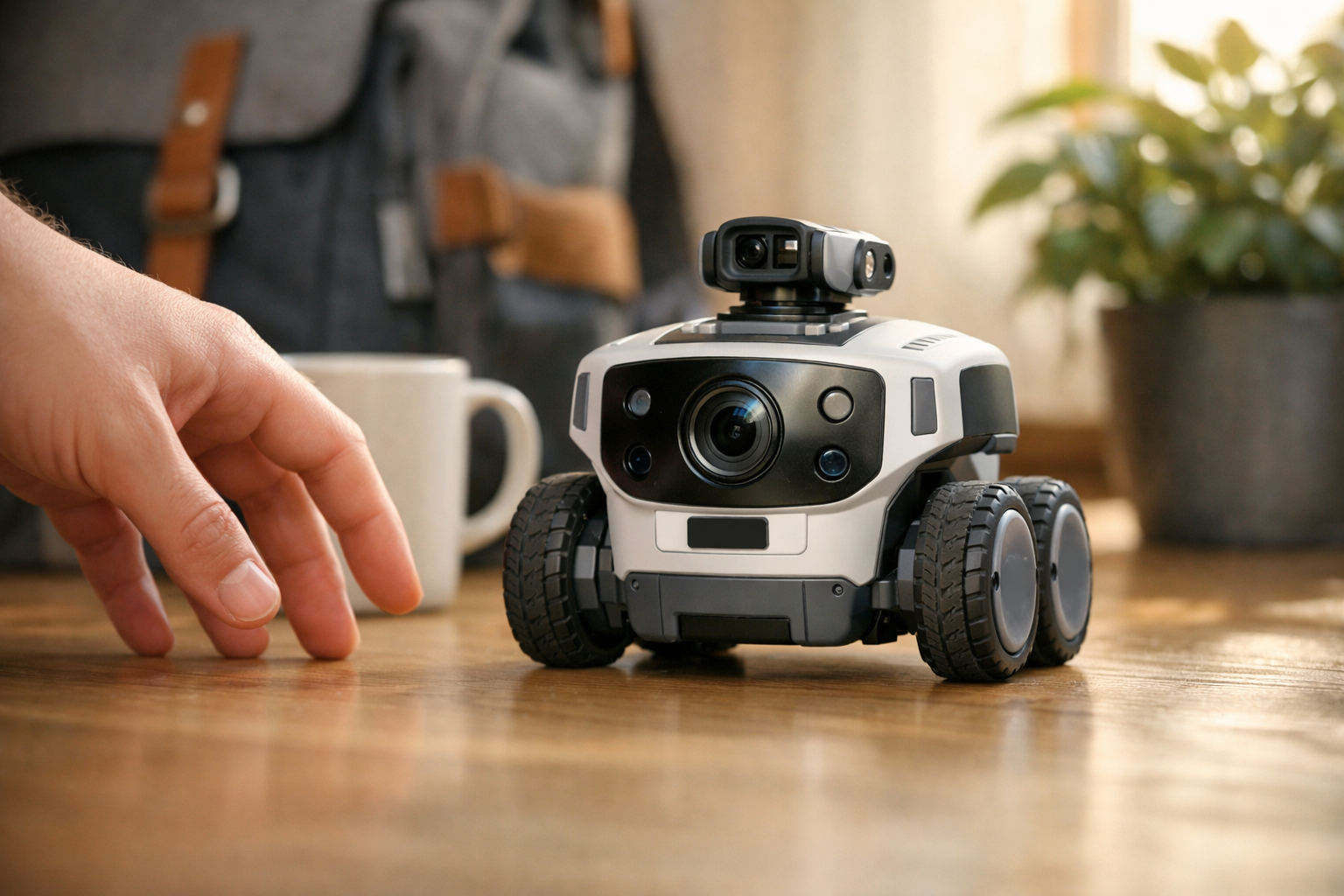
Understand how simple robots perceive, act, and assist
Everyday AI robotics can seem mysterious at first. Many people see robot vacuums, warehouse machines, delivery bots, and robotic helpers in videos or news stories, but they are not always sure how these systems actually work. This beginner course explains the ideas in plain language, starting from zero. You do not need coding skills, engineering knowledge, or a background in artificial intelligence. You only need curiosity about how machines sense the world, move through it, and help people with useful tasks.
This course is designed like a short technical book with six connected chapters. Each chapter builds on the one before it, so you develop a strong foundation step by step. First, you will learn what a robot is and what makes AI robotics different from ordinary automation. Then you will explore the main parts of a robot, including the sensors that gather information and the moving parts that carry out actions. After that, you will see how simple decision-making helps robots choose what to do next.
By the end of the course, you will have a practical mental model of how everyday robots work. You will not be building robots in code, but you will be able to understand the key ideas behind them. This means you will be able to read articles, watch demonstrations, and follow robotics discussions with much more confidence.
Many robotics resources assume too much background knowledge. They may jump quickly into technical terms, programming, or advanced math. This course takes a different approach. It teaches from first principles and uses simple explanations grounded in real-world examples. Instead of treating robotics as an abstract science topic, it connects every concept to familiar situations. If you have ever wondered how a robot avoids bumping into walls, why a machine can recognize an object, or how a delivery robot finds its path, this course will help you understand the basics clearly.
The structure also helps you learn naturally. Chapter 1 gives you the big picture. Chapter 2 focuses on sensing, because robots must gather information before they can act. Chapter 3 explains movement, so you can see how machines turn decisions into physical action. Chapter 4 then shows how simple decision systems connect sensing and movement. Chapter 5 expands into real applications, and Chapter 6 closes with safety, ethics, and future trends. This progression makes the course feel like a guided journey rather than a collection of disconnected topics.
This course is ideal for absolute beginners, curious learners, students, non-technical professionals, and anyone who wants a friendly introduction to AI robotics. It is especially useful if you want to understand the technology shaping homes, healthcare, delivery, retail, and service industries. If you are exploring new learning paths, you can Register free and begin right away.
Even without coding, this course gives you useful technical literacy. You will learn how to ask better questions about robotics products, understand common claims, and spot realistic strengths and limitations. That matters because robots are becoming more common in daily life, and informed people are better prepared to use, evaluate, and discuss them.
If this course sparks your interest, you can also browse all courses to continue learning about AI, automation, and intelligent systems. Everyday AI robotics is no longer a distant future topic. It is already here, and this course will help you understand it with clarity and confidence.
Robotics Educator and Autonomous Systems Specialist
Sofia Chen designs beginner-friendly robotics programs that turn complex ideas into simple, practical lessons. She has worked on autonomous machine projects and now focuses on helping new learners understand how robots sense, decide, and act in the real world.
When many people hear the word robot, they imagine a human-shaped machine walking through a science fiction world. In real life, everyday AI robotics is much broader and much more practical. A robot does not need a face, arms, or a voice. It can be a floor-cleaning device in a home, a delivery platform in a hospital, a warehouse cart that moves shelves, or a vehicle that helps with driving tasks on a street. What makes robotics interesting is not the outer shape. What matters is the combination of sensing, decision-making, and physical action in the real world.
This chapter builds a simple mental model you will use throughout the course. A robot is usually a physical machine that can gather information from its surroundings, process that information through a control system, and then use actuators such as motors to do something in response. In short, robots sense, think, and act. That simple loop explains a surprising amount of what real robots do. A robot may use cameras, microphones, touch sensors, and distance sensors to detect the world; software and controllers to decide what to do next; and wheels, joints, grippers, and balance systems to move safely and usefully.
It is also important to separate robotics from ordinary automation. Many machines repeat fixed actions very well, but they do not adapt when conditions change. AI-driven robotics goes further by helping machines handle uncertainty, recognize patterns, estimate what is around them, and choose among possible actions. That does not mean every robot is deeply intelligent. In fact, good robotics engineering often relies on simple, reliable rules combined with a small amount of AI where it truly adds value.
As you read, keep an engineering mindset. Ask practical questions: What is this machine sensing? What decision is it making? What actuator causes movement? What could go wrong? How does it stay safe near people and obstacles? These questions help you recognize what makes a machine a robot, distinguish AI robotics from basic automation, and understand why robots are becoming common in homes, hospitals, warehouses, shops, and streets.
By the end of this chapter, you should be able to describe robotics in simple words, identify the main parts of a robot, explain how robots perceive and move, and recognize why some robots feel clever while others seem rigid. Most of all, you should begin to see robotics not as magic, but as a practical field built from sensing, control, motion, and useful action.
Practice note for Recognize what makes a machine a robot: document your objective, define a measurable success check, and run a small experiment before scaling. Capture what changed, why it changed, and what you would test next. This discipline improves reliability and makes your learning transferable to future projects.
Practice note for Separate automation from AI-driven robotics: document your objective, define a measurable success check, and run a small experiment before scaling. Capture what changed, why it changed, and what you would test next. This discipline improves reliability and makes your learning transferable to future projects.
Practice note for Identify where robots appear in daily life: document your objective, define a measurable success check, and run a small experiment before scaling. Capture what changed, why it changed, and what you would test next. This discipline improves reliability and makes your learning transferable to future projects.
Practice note for Build a simple mental model of sense-think-act: document your objective, define a measurable success check, and run a small experiment before scaling. Capture what changed, why it changed, and what you would test next. This discipline improves reliability and makes your learning transferable to future projects.
Practice note for Recognize what makes a machine a robot: document your objective, define a measurable success check, and run a small experiment before scaling. Capture what changed, why it changed, and what you would test next. This discipline improves reliability and makes your learning transferable to future projects.
Everyday robots are already around us, although we do not always label them as robots. In homes, robotic vacuum cleaners sense walls, furniture, and stairs, then plan a path to cover the floor. Some lawn-mowing robots do similar work outdoors. In shops, mobile inventory systems scan shelves, while kiosks may use cameras and simple AI to detect products or customer actions. On roads, driver-assistance systems and delivery robots combine sensing and motion to help vehicles or carry goods. In workplaces such as warehouses, hospitals, and factories, robots transport bins, guide carts, lift packages, disinfect rooms, or assist with repetitive movement tasks.
The key idea is that these robots operate in real spaces shared with objects, people, noise, uncertainty, and change. A home robot may encounter toys on the floor that were not there yesterday. A hospital delivery robot may need to pause for a nurse in a hallway. A warehouse robot may reroute because another cart is blocking an aisle. This is why robotics matters: it is about action in the physical world, not just computation on a screen.
A practical way to identify robots in daily life is to look for three signs:
Beginners often make the mistake of thinking only dramatic machines count as robots. In practice, many useful robots are quiet, plain, and specialized. A shelf-moving warehouse robot may not talk or look human, but it is highly robotic because it senses location, decides on routes, and acts through motors. Engineering judgment starts with usefulness: where does the machine help, what environment does it work in, and what level of autonomy is actually needed?
The practical outcome is that robotics is best understood through context. Ask where the system works, what task it performs, and how much variation it must handle. That viewpoint makes everyday robotics easier to recognize and less mysterious.
To understand robotics clearly, it helps to separate three ideas: tools, machines, and robots. A tool is something a person directly uses to apply force or precision, such as a broom, screwdriver, or shopping cart. A machine adds power, structure, or repeated motion, such as a washing machine, elevator, or conveyor belt. A robot goes further by sensing conditions, processing information, and adjusting its actions with some degree of autonomy.
Consider a fan, an automatic door, and a robot vacuum. The fan is a machine. It spins blades, but it does not usually respond to a changing environment in a meaningful way. An automatic door uses a sensor and a rule: if someone approaches, open. This is closer to automation. A robot vacuum senses walls, open floor areas, and stairs; it tracks where it has been; it changes direction when blocked; and it decides how to continue cleaning. That combination of perception, control, and physical action places it in the robotics category.
Not every smart machine is a robot, and not every robot is highly intelligent. This distinction matters because people often confuse automation with robotics. Automation usually follows fixed sequences under known conditions. Robotics usually deals with changing conditions in physical space. If a system can only repeat exactly one task in exactly one setup, it may be automated without being meaningfully robotic.
The main parts of a robot also become clearer here. Most robots include sensors to gather data, a control system to interpret that data and issue commands, and actuators to create movement or force. The actuators might be wheel motors, robotic joints, grippers, brakes, or balancing systems. The control system can be simple firmware, classical control logic, or AI-enhanced software. The practical lesson is to stop asking, "Does it look like a robot?" and start asking, "Can it sense, decide, and act in the world?"
A common mistake is to overuse the word robot for marketing. A device with a timer and one repeated movement is not necessarily a robot. Clear definitions help you evaluate real systems honestly and understand what capabilities they truly have.
Robotics does not automatically mean artificial intelligence. Many robots work well using fixed rules, maps, feedback control, and carefully designed motion routines. AI becomes useful when the world is too messy, varied, or uncertain for hand-written rules alone. In simple terms, AI helps robots recognize patterns, estimate situations, predict outcomes, and select actions more flexibly.
For example, a robot with a camera may use AI-based vision to detect a person, identify a box, or recognize the edge of a sidewalk. A warehouse robot may use learned perception to distinguish pallets from people. A hospital robot may use speech recognition to understand a basic request. A driving system may combine cameras, radar, and machine learning to estimate lane positions and nearby vehicles. In all of these cases, AI adds better interpretation of sensor data and better handling of variation.
However, engineering judgment is critical. AI is not magic, and adding it everywhere can create fragile systems. If a simple distance sensor can reliably stop a robot before it hits a wall, that may be better than using a complex vision model for the same job. Strong robotics design often combines simple methods for safety with AI for tasks that truly need pattern recognition, such as object detection, route selection in clutter, or estimating human activity.
Beginners often imagine that intelligence comes first. In reality, useful robots need dependable basics: sensing, calibration, control, power, and safe motion. AI works best as one part of a larger system. If the wheels slip, the camera is blocked, or the battery runs low, even advanced AI cannot rescue poor hardware and weak control design.
The practical outcome is this: AI-driven robotics is different from ordinary automation because it can adapt more effectively to changing conditions, but the best systems still rely on disciplined engineering. Smart behavior usually comes from a layered design, not from one giant algorithm.
The most useful beginner model in robotics is the loop sense, decide, act. Nearly every robot can be understood through this cycle. First, the robot senses the world. Then it decides what the information means and what to do next. Finally, it acts through motors or other actuators. After acting, it senses again to check the result. This repeating loop is what lets a robot operate in a changing environment.
Sensing can involve many kinds of devices. Cameras detect visual features such as shapes, lines, and motion. Distance sensors such as lidar, sonar, infrared, or radar estimate how far objects are. Touch sensors can detect contact or pressure. Microphones capture sound. Wheel encoders measure how far wheels have turned. Gyroscopes and accelerometers help estimate orientation, speed, and balance. Each sensor has strengths and weaknesses, so robots often combine several.
The decision part happens in the control system. Sometimes this is a simple rule: if an obstacle is close, stop and turn. Sometimes it is more advanced: build a local map, compare routes, predict movement, and choose the safest path. The control system may also check battery level, mission goals, time limits, and safety rules.
Action happens through actuators. Wheels move mobile robots. Motors rotate joints in robot arms. Grippers open and close. Brakes slow motion. Balance systems make sure a machine stays upright. Movement is where digital decisions meet the physical world, and that is why robotics is challenging. Real surfaces are slippery, loads change, and sensors are noisy.
A common mistake is to think of sensing, deciding, and acting as separate blocks that each work perfectly. In reality, they constantly influence one another. Poor sensing leads to poor decisions. Poor motion creates vibration that harms sensing. Good robot design treats the loop as a connected system. The practical benefit of this model is huge: if a robot fails, you can ask whether the problem was in sensing, decision-making, or action, and diagnose it more clearly.
People often judge robot intelligence by appearance or by whether the robot can talk. In engineering, a better measure is how well the robot handles variation while staying safe and useful. A robot seems smart when it can cope with uncertainty: avoid a dropped object, reroute around a person, adjust speed on a slope, or recognize that a shelf location has changed. A robot seems less smart when it gets stuck in simple situations or only works in a narrow, carefully prepared setting.
Several factors shape this impression. First is sensing quality. A robot with limited sensors may miss important details. Second is control quality. If the system cannot turn noisy data into stable decisions, behavior will look clumsy. Third is motion capability. A robot may understand what to do but still fail because its wheels slip, its arm cannot reach, or its balance is weak. Fourth is task design. Some jobs are naturally easy to automate; others require much richer perception and judgment.
Simple decision-making can still create impressive results. For example, a cleaning robot may not understand a room like a human does, but it can still be useful by following practical rules: detect edges, avoid collisions, revisit missed areas, and return to a charging dock. Smart-looking behavior often emerges from many modest choices working together reliably.
A common beginner mistake is to assume more AI automatically means better performance. Sometimes extra complexity creates more points of failure. In safety-critical settings such as hospitals or roads, predictability matters as much as flexibility. Engineers often prefer systems that are understandable, testable, and conservative. A robot that politely stops too often may be more valuable than a bold robot that risks mistakes.
The practical outcome is to evaluate robots by fit, not by hype. Ask whether the robot senses enough, decides safely, and acts effectively for its intended environment. Intelligence in robotics is not a show; it is dependable performance in the real world.
As a beginner, it helps to see robotics as a map made of connected areas rather than one single topic. One area is perception: how robots use cameras, touch, sound, and distance sensing to detect the world. Another is control: how software and feedback systems convert goals into stable movement. Another is mechanics and actuation: wheels, joints, motors, transmissions, grippers, and structures. Then there is planning and decision-making: choosing routes, actions, and safe responses. Finally, there is application design: matching the robot to a real task in a home, shop, hospital, warehouse, or street environment.
This map explains why robotics is both exciting and demanding. A robot is never just software, and it is never just hardware. The camera may be excellent, but if the controller is weak, the robot will still fail. The wheels may be strong, but if the robot cannot estimate distance correctly, it may collide with furniture. Good systems come from balancing all the parts instead of over-optimizing only one.
It also helps to group robots by how they move and help. Some are mobile robots with wheels. Some are robotic arms with joints. Some combine both. Some mostly transport, some inspect, some clean, some assist, and some manipulate objects. Across these categories, the same basic ideas return: sensors, control systems, actuators, and the sense-think-act loop.
If you are building your understanding, focus on practical questions. What information does the robot need? Which sensors can provide it? What decisions must be made in real time? What movement is required? What safety limits must always override other goals? These questions create a solid beginner mindset and prepare you for the rest of the course.
The final lesson of this chapter is that everyday AI robotics is not a distant future technology. It is a field of practical machines designed to sense, move, and help. Once you can recognize the parts and the loop behind the behavior, the field becomes much easier to understand.
1. According to the chapter, what most clearly makes a machine a robot?
2. Which example best shows AI-driven robotics rather than basic automation?
3. What is the simple mental model of robotics introduced in this chapter?
4. Which set of parts matches the chapter’s description of how a robot works?
5. Why does the chapter say robots are becoming common in places like homes, hospitals, warehouses, shops, and streets?
Before a robot can move safely, help a person, or carry an object, it must first gather information about what is around it. Sensing comes before action because action without awareness is just blind motion. A vacuum robot that cannot detect a wall will bump into it. A delivery robot that cannot judge distance may stop too late. A hospital robot that cannot tell whether a person is in its path cannot be trusted in a busy hallway. In everyday AI robotics, sensing is the step that connects the outside world to the robot’s control system.
Robots do not sense the world the way people do. People combine eyes, ears, skin, balance, memory, and experience almost automatically. Robots need separate devices called sensors, and each one measures only part of reality. A camera collects light. A microphone collects sound waves. A touch sensor detects contact or pressure. A distance sensor estimates how far away an object is. A wheel encoder reports how much a wheel has turned. None of these sensors alone gives the full picture. Good robot design comes from combining them so that the machine can build a useful understanding of its surroundings.
This chapter introduces the main kinds of sensing used in practical robots: cameras, touch sensors, sound input, and distance sensing. These match common everyday tasks. A home robot may use a camera to recognize a door, bump sensors to detect furniture, and microphones to hear a wake word. A warehouse robot may rely more heavily on lidar, wheel encoders, and safety sensors to move through aisles. A service robot in a hospital may use cameras and depth sensors to avoid people while also reading labels or signs. The exact sensor set depends on the job, cost, environment, and safety needs.
It is also important to understand that sensors do not hand the robot perfect knowledge. They produce raw signals. A raw signal might be a brightness value from a camera pixel, a voltage from a pressure pad, or a time delay from a sonar pulse. On their own, these numbers are not very meaningful. The robot’s software must turn them into useful information such as “there is a chair 1.2 meters ahead,” “my gripper is squeezing too hard,” or “a person said stop.” This process usually includes filtering, comparing, combining, and interpreting measurements.
Engineering judgment matters at every step. Beginners often ask, “Which sensor is best?” In robotics, that is usually the wrong question. A better question is, “Which sensor is reliable enough for this task, in this environment, at this cost, with this safety requirement?” Cameras are rich in detail but struggle in darkness or glare. Sonar is inexpensive but not very precise. Lidar can measure distance accurately but may cost more. Touch sensing is simple and dependable, but it only works after contact happens. Sound is useful for commands, but noisy rooms cause errors. There is always a trade-off.
In practice, robots often follow a sensing workflow. First, they measure signals from the world. Second, they clean those signals by reducing noise and checking for impossible values. Third, they convert the cleaned measurements into information about objects, surfaces, movement, or people. Fourth, they pass that information to a controller or decision system, which chooses an action. Finally, the robot moves and then senses again. This cycle repeats continuously. Sense, interpret, decide, act, and sense again: this loop is the heartbeat of autonomous behavior.
A useful way to compare sensors is to ask four practical questions:
By the end of this chapter, you should be able to name common robot sensors and explain what they detect, compare camera, touch, sound, and distance inputs, and describe how raw signals become useful information. These ideas support later topics such as movement, navigation, and decision-making. A robot that senses well can choose safer and more useful actions. A robot that senses poorly may still move, but it will not move intelligently.
Another practical lesson is that sensing is never only about hardware. The physical sensor is just the front end. The real capability comes from the combination of sensor, placement, calibration, software, and task design. A low-cost sensor placed well and interpreted carefully can outperform an expensive sensor used badly. For example, a camera mounted too low may see only chair legs. A microphone placed near a motor may hear more machine noise than speech. A distance sensor aimed at a shiny floor may return unstable readings. Good robotics teams think not only about what to buy, but also where to mount it, how often to sample it, and how to check whether it is telling the truth.
As you read the sections that follow, keep one simple idea in mind: robots do not magically understand the world. They measure pieces of it. Then AI and control software turn those pieces into a working picture. That picture is never perfect, but if it is good enough, the robot can do something useful: stop before a collision, follow a person, pick up an item, answer a spoken request, or move through a crowded room with care.
A robot needs sensors for the same reason a person needs eyes, ears, and touch: without incoming information, it cannot react intelligently to the world. A motor can spin without sensing anything, but that does not make the machine smart. An ordinary machine often repeats the same motion again and again in a controlled setting. A robot, especially one working around people or changing conditions, must notice what is happening now and adjust its behavior.
This is why sensing comes before action. If a robot is about to cross a room, it should first check whether the path is clear. If it is about to grasp a cup, it should estimate where the cup is and how firmly to hold it. If it is about to turn, it should know its current position and orientation. In each case, action depends on information. Even a simple wheeled robot benefits from knowing whether it has reached a wall, drifted off course, or become stuck.
There are two broad reasons robots need sensors. First, they need environmental sensing, which tells them about the outside world: obstacles, people, walls, objects, sound, temperature, and floor edges. Second, they need internal sensing, which tells them about themselves: wheel speed, joint angle, battery level, motor current, and tilt. External sensing helps a robot understand where to go and what to avoid. Internal sensing helps it understand what it is currently doing.
In practical engineering, sensors also improve safety. A warehouse robot may use lidar to slow down near a worker. A robot arm may use torque or force sensing to stop if it hits something unexpected. A home robot may use cliff sensors to avoid falling down stairs. These are not luxury features. They are core parts of making robots usable in real environments.
A common mistake is assuming one sensor is enough. In reality, robots are more reliable when they use several kinds of sensing together. A camera may detect a doorway, but a distance sensor can confirm whether the space is open. A wheel encoder may report that the robot moved forward, but a bump sensor may reveal that it actually pushed into a box and did not advance as expected. Combining signals helps reduce false assumptions.
The practical outcome is simple: sensors let robots detect, check, and correct. They detect the world, check whether their actions are working, and correct their behavior when conditions change. Without sensing, there is no real autonomy, only motion.
A camera is one of the most powerful sensors a robot can have because it captures rich visual detail. It measures light and turns it into an image made of pixels. Each pixel stores a value, such as brightness or color. On its own, that image is just raw data. Computer vision is the set of methods that turn the image into useful information such as edges, shapes, objects, faces, labels, floor markings, or free space for movement.
For a robot, a camera can support many tasks. It can help a delivery robot read signs or identify a hallway. It can help a home robot recognize a charging station. It can help a robot arm locate an item on a table. In advanced systems, cameras can estimate depth, track motion, and detect people. Some robots use one camera; others use two cameras for stereo vision, which estimates distance by comparing the two views.
Computer vision often works in stages. First, the robot captures images. Second, software may adjust the image for brightness, blur, or color balance. Third, the robot looks for patterns: lines, corners, textures, or known object features. Finally, AI models or rule-based programs label what is present and where it is. For example, the robot may conclude, “I see a red cup near the table edge,” or “The path ahead is blocked by a person.”
However, cameras have practical limits. Bright sunlight, darkness, shadows, reflective surfaces, and clutter can confuse vision systems. A camera may see a glossy floor reflection and misread it as open space. It may struggle to detect a transparent object like glass. It may fail in low light unless supported by extra illumination. This is why engineering judgment matters: cameras are excellent for detail and recognition, but they should not be trusted alone in every condition.
A common beginner mistake is thinking the camera “understands” the world automatically. It does not. The robot needs software models, training data, and careful tuning. Another mistake is placing the camera in a poor location. If the lens is too high, too low, blocked, or shaky, even the best software will perform badly.
In everyday robotics, cameras are most effective when paired with other sensors. Vision can tell a robot what an object is, while distance sensing tells it how far away it is. That combination is far more practical than vision alone. Cameras give context. Other sensors help verify it.
Distance sensors help robots answer a very practical question: how far away is something? This matters for collision avoidance, navigation, docking, and safe stopping. Three common approaches are sonar, infrared, and lidar. They do similar jobs in different ways and with different trade-offs.
Sonar uses sound waves. The robot sends out a pulse and measures how long it takes for the echo to return. Because sound travels at a known speed, the robot can estimate distance. Sonar is often inexpensive and useful for basic obstacle detection. However, it usually has lower precision than more advanced options. Soft materials may absorb sound, and angled surfaces may reflect the pulse away from the sensor, causing weak or misleading readings.
Infrared sensors use light outside the visible range. Some infrared sensors estimate distance from reflected light intensity, while others use more direct measurement methods. They are compact and common in small robots for short-range detection, such as following a line, sensing a nearby wall, or detecting stairs. Their weakness is sensitivity to surface color, sunlight, and material properties. A dark surface may reflect less light, making the object seem farther away than it really is.
Lidar uses laser light to measure distance, often by timing reflections or comparing phase shifts. It can build detailed maps of surrounding space and is widely used in mobile robots, warehouse systems, and autonomous vehicles. Lidar is usually more accurate and informative than simple sonar or infrared, especially for navigation. It can sweep across a wide area and create a point cloud or 2D scan of the environment. The trade-off is cost, power use, and sometimes reduced performance with rain, fog, dust, or transparent surfaces.
These sensors show why raw signals must become useful information. A lidar does not directly say, “There is a chair ahead.” It returns distance points. Software must group those points into shapes and decide what they mean. A sonar sensor returns echo timing, not object labels. Interpretation is always required.
A practical rule is to match the sensor to the task. For simple near-obstacle detection, sonar or infrared may be enough. For precise mapping and path planning, lidar is often a better choice. A common mistake is over-trusting distance readings without considering material, angle, and environment. Good robots compare multiple measurements over time and combine them with other sensors before acting.
Not all robot sensing is about looking outward. Some of the most useful sensors tell the robot what is happening at its surface or inside its own body. Touch sensors detect contact. Pressure sensors measure how much force is being applied. Motion and position sensors track movement, angle, speed, and orientation. Together, these sensors help robots interact safely and move accurately.
Touch sensing is common in mobile robots and robot grippers. A bump switch on a cleaning robot can detect when it has reached furniture. A touch sensor on a gripper can confirm that an object has actually been grasped. Pressure sensing goes a step further by measuring how hard the robot is pressing. This is essential in delicate tasks. A robot handling fruit, medical items, or glass cannot simply squeeze with maximum force. It must apply enough pressure to hold the object, but not enough to damage it.
Motion and position sensing are equally important. Wheel encoders count wheel rotation and help estimate how far a robot has traveled. Joint encoders measure the angle of robot arms and legs. Gyroscopes and accelerometers detect turning, acceleration, tilt, and vibration. These sensors help the robot keep balance, drive straight, and know whether it has changed direction. Without them, movement would be guesswork.
These internal sensors are critical because commands do not guarantee results. Telling a motor to turn does not prove the wheel actually moved across the floor. The wheel might slip. The robot might be blocked. The battery might be weak. Sensing lets the robot compare intention with reality.
A common engineering mistake is relying only on external sensors and ignoring body feedback. For example, a robot arm may use a camera to locate an object, but without joint position sensing it cannot place its gripper accurately. Another mistake is failing to calibrate encoders or force sensors, which leads to small errors that grow over time.
In everyday robots, touch and motion sensing often make the difference between rough behavior and careful behavior. They give the robot a basic sense of contact, effort, and self-movement. That is how machines begin to act with control instead of just power.
Sound gives robots another way to receive information, especially when people want hands-free interaction. The main sound sensor is the microphone, which converts air pressure changes into electrical signals. A robot can use these signals for simple sound detection, direction finding, voice commands, or full speech recognition. In everyday settings, this is how users might say, “Start cleaning,” “Come here,” or “Call for help.”
From an engineering point of view, sound input is useful because it works even when the speaker is not directly in front of the robot. It can also be more natural than pressing buttons. In hospitals or homes, spoken input may be easier for people with limited mobility. In service robots, sound can add accessibility and convenience.
But microphones do not hear meaning directly. They capture raw waveforms. Software must process those waveforms by removing background noise, separating speech from other sounds, and matching patterns to words. Some systems also estimate where a sound came from by comparing the timing across multiple microphones. That helps the robot turn toward a speaker or focus on the correct person.
Sound sensing has clear limitations. Real environments are noisy. Fans, motors, traffic, televisions, alarms, and multiple speakers can confuse the system. A robot may mishear a command, especially if its own motors are loud. Accents, speech speed, and room echo also affect performance. For this reason, robust systems often combine sound with other inputs, such as a wake word, a touch button, or visual confirmation.
A common mistake is assuming speech recognition is either perfect or useless. In reality, it works well for narrow tasks with clear commands and careful design. Problems grow when the robot is expected to understand unrestricted conversation in difficult environments. Good engineering narrows the problem. It chooses a limited command set, uses confirmation steps for important actions, and falls back to safer behavior when uncertain.
The practical outcome is that sound helps robots become more helpful and human-friendly, but only when designers respect its limits. Robots should listen, but they should also verify before acting on critical commands.
No sensor is perfect. Every measurement contains some level of noise, uncertainty, delay, or distortion. Noise is unwanted variation in the signal. A distance sensor might flicker between nearby values even when nothing moves. A camera image may contain blur or glare. A microphone may capture both speech and background hum. If a robot treats every raw reading as perfect truth, it will behave badly.
This is why robots must convert raw signals into useful information carefully. They often smooth data over time, compare sensor readings with one another, reject impossible values, and estimate the most likely state of the world. For example, if a lidar briefly reports an obstacle in an empty hallway, the robot may wait for a second confirming scan before braking hard. If wheel encoders report movement but the robot’s body tilt and camera view remain unchanged, the software may detect wheel slip.
Sensor limits come from many sources: poor lighting, reflective surfaces, soft materials, dust, clutter, vibration, electrical interference, and even temperature changes. Placement also matters. A well-chosen sensor can still fail if mounted badly. A camera hidden behind a dirty cover, a sonar unit pointed at the wrong angle, or a microphone placed beside a noisy fan will all produce weak results.
Another major issue is calibration. Sensors need reference settings so that their outputs match reality. If a position sensor is slightly off, a robot arm may miss its target. If a force sensor drifts, a gripper may squeeze too hard. Good robotic systems include routine checks, test cases, and fallback behavior when sensor confidence is low.
A practical principle is not to ask whether a sensor is correct, but how confident the robot should be in the reading. That shift in thinking leads to safer decisions. When uncertainty is high, the robot can slow down, ask for help, or gather more data before moving.
The most common beginner mistake is trusting a single measurement too much. The best habit is to expect errors and design around them. Reliable robots are not the ones with magical sensors. They are the ones built to handle imperfect sensing gracefully, using redundancy, filtering, and cautious decision-making.
1. Why does sensing come before action in everyday AI robotics?
2. Which sensor is correctly matched with what it detects?
3. What is the main reason robots often use multiple sensors together?
4. What must robot software do with raw sensor signals?
5. Which statement best compares common robot sensors?
A robot becomes useful when it can turn energy into action. Sensing the world matters, and decision-making matters, but movement is what allows a robot to bring medicine to a patient, carry a box through a warehouse, vacuum a floor, or pick up a dropped object. In this chapter, we look at the practical side of robotic motion: what makes motors and actuators so important, how different robot bodies are chosen for different jobs, and why safe movement is harder than it first appears.
At a simple level, movement in robotics is about three connected questions. First, what kind of motion is needed: rolling, lifting, bending, gripping, or balancing? Second, what hardware creates that motion: wheels, joints, gears, motors, cylinders, grippers, and control systems? Third, how does the robot keep that motion accurate and safe when the world is messy, slippery, crowded, and unpredictable? These questions connect directly to everyday engineering judgment. A robot is not designed by asking what looks impressive. It is designed by asking what job must be done reliably, repeatedly, and safely.
Motors and actuators are the parts that create movement. Wheels, legs, arms, and grippers are the structures that shape that movement into useful work. Sensors such as encoders, cameras, touch sensors, and gyroscopes help the robot correct itself as it moves. Software then coordinates everything. For example, a warehouse robot may use wheel motors to drive, lifting actuators to raise a shelf, and onboard sensors to avoid collisions. A hospital robot may move more slowly but with smoother stopping and more careful turning because people are nearby. In both cases, movement is not just about speed. It is about control, stability, and matching the machine to the task.
New learners often make a common mistake: they imagine that one movement design is best for all robots. In reality, each style has trade-offs. Wheels are efficient on flat floors. Legs can step over obstacles but are mechanically and computationally harder to control. Robotic arms can place objects precisely, but only within their reach and payload limits. Grippers must match the shape, weight, and fragility of objects. Engineers constantly choose between simplicity, cost, speed, energy use, safety, and flexibility.
This chapter connects movement choices to real tasks. By the end, you should be able to describe how robots move with motors and actuators, compare wheels with arms and grippers, explain how direction and balance are maintained, and understand why movement in the real world demands careful design rather than guesswork.
Practice note for Understand the role of motors and actuators: document your objective, define a measurable success check, and run a small experiment before scaling. Capture what changed, why it changed, and what you would test next. This discipline improves reliability and makes your learning transferable to future projects.
Practice note for Compare wheels, legs, arms, and grippers: document your objective, define a measurable success check, and run a small experiment before scaling. Capture what changed, why it changed, and what you would test next. This discipline improves reliability and makes your learning transferable to future projects.
Practice note for Learn how robots keep direction and balance: document your objective, define a measurable success check, and run a small experiment before scaling. Capture what changed, why it changed, and what you would test next. This discipline improves reliability and makes your learning transferable to future projects.
Practice note for Connect movement choices to real tasks: document your objective, define a measurable success check, and run a small experiment before scaling. Capture what changed, why it changed, and what you would test next. This discipline improves reliability and makes your learning transferable to future projects.
Practice note for Understand the role of motors and actuators: document your objective, define a measurable success check, and run a small experiment before scaling. Capture what changed, why it changed, and what you would test next. This discipline improves reliability and makes your learning transferable to future projects.
Every moving robot begins with a basic conversion: electrical power becomes physical motion. The parts that do this are called actuators. In many everyday robots, the main actuators are electric motors. A motor spins when electricity flows through it, and that spinning can then be used directly or passed through gears, belts, screws, or linkages to create the motion a robot needs. For example, a wheel motor creates rotation for driving, while a joint motor in a robotic arm may rotate only a few degrees but with much more force and precision.
It helps to separate two ideas that are often mixed together. A motor is a device that creates motion. An actuator is the complete motion-producing unit, which may include the motor, gearbox, feedback sensor, and mechanical output. This distinction matters because a bare motor is rarely enough in robotics. Many jobs need reduced speed, increased torque, and precise control. That is why gearboxes are common. A small fast motor can be geared down to move a heavy arm more slowly and with greater strength.
Another practical idea is that different tasks need different motion qualities. A vacuum robot wants efficient continuous wheel motion. A robotic hand may need delicate finger movement. A hospital bed assistant may require smooth, quiet actuation. Engineers choose actuators by considering torque, speed, accuracy, energy use, noise, cost, and reliability. A powerful motor that drains the battery quickly may be a poor choice for a mobile robot. A cheap actuator without position feedback may be unsuitable for tasks that require repeatable placement.
Control systems complete the picture. A robot usually does not just power a motor on and off. It measures how far the motor has turned, how fast it is moving, or how much load it is carrying, then adjusts the command. Encoders are often used for this purpose. Without feedback, even a strong robot can behave clumsily. With feedback, the same robot can start gently, move accurately, and stop where intended.
A common beginner mistake is assuming that the strongest motor is automatically the best motor. In practice, oversized actuators add weight, consume more power, and can make a robot less safe. Good engineering means selecting enough capability for the job, with margin for real-world variation, but not unnecessary excess.
For many everyday environments, wheels are the simplest and most effective way for a robot to move. On flat indoor floors, wheels are energy-efficient, mechanically simple, and relatively easy to control. That is why delivery robots, warehouse robots, floor cleaners, and many educational robots use them. A wheel converts a motor's rotation directly into forward or backward movement. By changing the speed of wheels on different sides, the robot can turn.
One popular design is differential drive, where the robot has left and right wheels powered independently. If both sides move at the same speed, the robot travels straight. If one side moves faster, the robot turns. If one side moves forward while the other moves backward, the robot can spin in place. This design is simple and useful, but it depends on traction. On slippery floors, the robot may think it has turned one amount while actually turning another.
Tracks are another option. They spread weight over a larger area, which helps on rough ground, dirt, or soft surfaces. A tracked robot can handle terrain that would stop a small wheeled robot. The trade-off is that tracks are often less efficient, can wear surfaces, and may be harder to maintain. In everyday indoor service work, wheels usually win. In outdoor inspection or rescue work, tracks may be worth the extra complexity.
Engineering judgment appears in the details. A robot that carries heavy loads may need larger wheels or more traction. A robot that works near people may need slower top speed and smoother acceleration. A robot in narrow hallways may need a turning design that fits small spaces. The best movement system is the one that meets the real constraints of the environment, not the one that looks most advanced.
Simple mobile robots also depend on practical sensor feedback. Wheel encoders estimate distance traveled. Distance sensors help avoid obstacles. Cameras can detect lanes, shelves, or people. But movement decisions must still account for imperfect data. If a wheel slips on dust or a floor changes from tile to carpet, the robot's path estimate may drift.
A common mistake is to overtrust wheels on surfaces they were not designed for. Small wheels struggle with thresholds, cables, deep carpet, and uneven outdoor ground. Good robot design starts by asking where the robot will actually drive every day.
Moving through space is only part of robotics. Many robots must also move objects. That is where robotic arms become important. A robotic arm is built from links connected by joints. Each joint adds a controlled kind of movement, such as rotation or bending. Together, the joints allow the arm to place a tool or gripper at different positions and angles. This is how robots pick items from shelves, assist in factories, and help with repetitive handling tasks.
Arms are useful because they create reach and precision. A mobile base can bring the robot near a task, but an arm performs the final positioning. For example, a warehouse robot may drive to a rack, then use an arm to access a specific bin. A kitchen helper robot may need to reach over a counter without moving its whole body into the workspace. In both cases, arm design is a compromise between reach, payload, speed, and stability.
More joints usually mean more flexibility, but also more control complexity. A simple two-joint arm is easier to understand and control, but it may not reach around obstacles or orient an object correctly. A six-joint arm can place tools more freely, yet demands more careful software and calibration. Engineers must also think about where the weight sits. A heavy object held far from the robot body creates large forces on the joints and can make the whole machine unstable.
Reach is not just about maximum distance. It is about useful workspace. An arm may technically reach a point but only awkwardly, slowly, or with limited force. Practical designs look at common tasks, not only extreme positions. If a robot mostly picks small boxes from waist-height shelves, the arm should be optimized for that zone rather than a dramatic but rarely used extension.
Common mistakes include ignoring cable routing, underestimating joint loads, and assuming that precise motion comes from software alone. In reality, good arm performance requires rigid mechanics, proper sensors, reliable actuators, and careful control. Software cannot fully compensate for a weak mechanical design. The best robotic arms are not simply flexible. They are predictable, stable, and matched to the job they are meant to do.
Once a robot reaches an object, it still has to hold it. That seems simple until we remember how varied everyday objects are. Some are heavy, some fragile, some slippery, some soft, and some oddly shaped. This is why end effectors, the devices at the end of robotic arms, come in many forms. The two most common are grippers and suction systems.
A gripper usually works like a robotic hand with two or more fingers. It can pinch, clamp, or cradle an item. Grippers are useful when the object has a shape that can be grasped reliably, such as a box, bottle, tool, or part. Suction uses air pressure to attach to smooth surfaces such as sealed packages, flat cartons, or glass. In warehouses, suction cups are often excellent for lifting regular packages quickly. In homes, a gripper may be better for picking up varied items such as a cup, remote control, or towel.
Good object handling depends on matching the tool to the object and the task. A soft fruit should not be squeezed like a metal component. A porous fabric bag may not work with suction. A thin object may require careful finger geometry to avoid slipping. Engineers think about friction, weight distribution, surface texture, and how the object will be released afterward. Picking up an item is only half the task. The robot must also place it where it belongs without dropping, crushing, or misaligning it.
Sensors improve handling. Force sensors can detect when the grip is too strong or too weak. Vision can help estimate object position and orientation. Touch feedback can confirm contact. Without feedback, a robot may close its gripper on empty space or apply inconsistent pressure. This is a common mistake in simple prototypes: the motion looks correct, but the actual grasp fails because the object is slightly different than expected.
Practical engineering often favors reliability over human-like appearance. A simple two-finger gripper may outperform a complex hand if the task is repetitive and well defined. In robotics, elegance often means doing the job consistently, not copying the human body exactly.
Movement is not only about getting from one place to another. A robot must stay stable, keep its direction, and stop safely when conditions change. This is especially important around people. A fast robot that cannot stop reliably is not a good robot, even if its navigation software seems impressive.
Direction control often depends on combining actuators with sensors. Wheel encoders estimate how much each wheel has turned. Gyroscopes and inertial measurement units help track rotation and body motion. Cameras and landmarks can correct long-term drift. Together, these systems help the robot know whether it is still traveling where it intended. If one wheel slips, sensor fusion can reduce the resulting error.
Balance matters in different ways for different robots. A four-wheeled cart-like robot is usually statically stable because it can stand still without falling. A two-wheeled self-balancing robot is dynamically stable, meaning it must continuously adjust to remain upright. Legged robots face an even harder problem because they repeatedly shift support from one foot to another. In all cases, the robot's center of mass and base of support are key ideas. If the center of mass moves too far outside the support area, the robot may tip.
Turning also introduces risk. Sharp turns can cause payload shift, wheel slip, or collision in narrow spaces. Good controllers limit turning speed based on load, floor condition, and nearby obstacles. Stopping safely requires planning for momentum. A heavy robot carrying supplies needs more stopping distance than a lightweight toy robot. Engineers therefore set speed limits, braking profiles, and emergency stop behavior according to real-world conditions.
A frequent mistake is to test movement only in ideal conditions. Real robots must turn on imperfect floors, stop near people, and remain stable while carrying uneven loads. Safety comes from conservative design choices and repeated testing, not from optimism.
On paper, robotic movement can look straightforward. A motor turns, a wheel rolls, an arm reaches, and a gripper closes. In the real world, every one of those actions meets uncertainty. Floors are uneven. Objects are not exactly where the camera estimated. Batteries weaken over time. People step unexpectedly into the robot's path. Lighting changes. Dust affects traction. Cables and thresholds catch small wheels. This is why robotics is not just about motion, but about robust motion.
Real environments expose trade-offs quickly. A robot optimized only for speed may struggle with safe stopping. A robot built only for strength may waste energy and shorten battery life. A robot with very precise motion may still fail if its gripper cannot handle item variation. Good design therefore considers the whole workflow. How does the robot approach the task, sense the target, move into position, act, verify success, and recover if something goes wrong?
Recovery is especially important. Useful robots do not assume every action will work perfectly the first time. If a package shifts, the robot may regrip. If a corridor is blocked, it may wait or reroute. If wheel slip causes drift, it may use visual landmarks to correct position. This connection between movement and simple decision-making is what makes AI robotics different from ordinary machines. An ordinary machine may repeat one motion well in a fixed setup. An AI-enabled robot adjusts that motion based on changing conditions.
In homes, hospitals, warehouses, and streets, movement choices are tightly linked to tasks. A home robot needs gentle interaction and compact turning. A hospital robot needs predictable paths and quiet operation. A warehouse robot needs efficiency and repeatability. A street robot needs stronger sensing, better obstacle handling, and more caution because the environment changes constantly. No single movement system is perfect everywhere.
The practical lesson of this chapter is simple: robot movement is an engineering balance. Motors and actuators provide force. Wheels, arms, and grippers shape that force into useful action. Sensors and control systems keep the motion accurate. Careful judgment turns all of that into safe, helpful behavior. The hardest part is not making a robot move once. It is making it move well every day in the real world.
1. What is the main reason movement is so important in robotics?
2. Which statement best describes the role of motors and actuators?
3. Why might an engineer choose legs instead of wheels for a robot?
4. How do robots help maintain direction and balance while moving?
5. According to the chapter, how should movement choices be made when designing a robot?
A robot becomes useful when it can connect what it senses to what it does next. This is the heart of simple decision-making. A robot may detect a wall with a distance sensor, identify a person with a camera, feel pressure through a touch sensor, or notice a spoken command through a microphone. None of these signals matter by themselves unless the control system turns them into action. In everyday robotics, this often means choosing a safe, helpful response such as stopping, turning, slowing down, picking up an object, or asking for help.
People sometimes imagine robot decisions as mysterious or human-like. In practice, many robot decisions are ordinary engineering choices. The robot gathers input, compares it with a goal, checks safety conditions, and selects an action. A vacuum robot might decide whether to continue forward, turn away from stairs, or return to its charging dock. A hospital delivery robot may decide whether a hallway is clear enough to continue or whether it should pause for a person to pass. These decisions are simple, but they must be dependable.
Engineers often describe robot behavior as a chain: sense, decide, act, check, and repeat. This loop runs again and again, sometimes many times each second. The repeated checking is important because the world changes. A path that was clear one moment may be blocked the next. A wheel may slip. A package may shift in the robot's gripper. Good robots do not make one decision and forget about it. They keep updating.
There are several ways robots make these choices. Some robots use direct rules, such as if an obstacle is closer than a safety limit, then stop. Other robots use learned patterns, where software has been trained to recognize images, sounds, or situations from many examples. In many real systems, both approaches are used together. Rules are excellent for safety and clear procedures. Learning is useful when the robot must handle messy real-world signals, such as recognizing a cup on a cluttered table or understanding where people usually walk.
Simple decision-making also includes planning. A robot often must do more than react in the moment. It may need to choose a route, avoid blocked areas, and reach a destination efficiently. At the same time, it must use feedback to correct mistakes. If it turns too far, it should adjust. If it drifts away from the center of a hallway, it should steer back. This feedback makes robot behavior look smooth and purposeful instead of clumsy and random.
Engineering judgment matters at every step. Designers must decide which sensor should be trusted most in each situation, how cautious the robot should be, when it should ask for human help, and what to do when information conflicts. A camera may suggest the path is clear while a bumper says something was touched. A wise design treats uncertain situations carefully. In everyday environments, the best decision is often not the fastest one but the safest one.
In this chapter, we examine how robots move from sensor input to action, how rule-based behavior differs from learning, how simple path planning works, and how feedback helps robots stay on track. We also look at common failures, because practical robotics is not about pretending nothing goes wrong. It is about building systems that notice problems early and respond in useful ways.
Practice note for Understand how robots link sensing to action: document your objective, define a measurable success check, and run a small experiment before scaling. Capture what changed, why it changed, and what you would test next. This discipline improves reliability and makes your learning transferable to future projects.
Every robot decision starts with information from sensors. A home robot may use a camera to detect objects, a distance sensor to estimate how far away a wall is, wheel sensors to estimate movement, and bump sensors to detect contact. The control system combines these signals into a picture of the current situation. That picture does not need to be perfect. It only needs to be good enough for the robot to choose a useful next step.
A practical workflow is simple: read sensors, clean the data, compare it with the task goal, check safety limits, then choose an action. For example, imagine a delivery robot moving down a corridor. If the path ahead is open, it keeps rolling. If a person appears close in front, it slows down. If the person stops, the robot may wait or choose a different route. This is decision-making from sensor input in plain language: notice what is happening, then act in a way that fits the situation.
Engineering judgment is important because sensors are imperfect. Cameras can be confused by shadows. Distance sensors may give noisy readings on shiny surfaces. Microphones may hear echoes. A robot should not trust a single reading too quickly. Good systems often look for confirmation across repeated readings or combine multiple sensors. If both the camera and distance sensor suggest an obstacle is present, confidence rises. If they disagree, the robot may switch to a cautious mode.
A common mistake is to design decisions that are too brittle. For instance, if a robot stops only when a measured distance is less than exactly 20 centimeters, tiny sensor noise may cause it to start and stop repeatedly. A better design uses ranges and margins. It may slow down at 40 centimeters, stop at 25, and only resume when the path is clearly open again. These small choices make robot behavior feel calmer and safer.
Practical outcomes come from matching sensor input to meaningful actions. Touch may trigger an immediate stop. Sound may trigger a voice response. Vision may trigger object pickup. Distance may trigger steering correction. The key lesson is that robot decisions are grounded in real signals from the world, not in abstract ideas alone. When sensing is linked clearly to action, the robot becomes dependable and easier to understand.
One of the simplest and most useful ways to make a robot act is rule-based logic. This means the robot follows clear instructions such as if the floor edge is detected, then stop and turn. If the battery is low, then return to the charger. If the storage bin is full, then pause cleaning and notify the user. These rules are easy to explain, test, and adjust, which is why they remain common in practical robotics.
Rule-based behavior works best when the situation is well understood and the correct response is clear. In a warehouse, a robot may be programmed with rules for intersection behavior: if another robot has right of way, then wait. In a hospital, a service robot may use rules to reduce speed near doorways and patient areas. The advantage here is predictability. Engineers and operators can often say exactly why the robot behaved as it did.
Good rule systems are organized in layers. Safety rules usually come first and can override everything else. A robot may have a task rule that says continue to the delivery point, but a higher-priority safety rule says stop if a child runs in front of it. This priority structure prevents dangerous conflicts. It also reflects good engineering judgment: not all goals are equally important, and safety must win when there is uncertainty.
A common mistake is to keep adding more and more rules until the system becomes tangled. One rule says turn left around an obstacle. Another says stay close to the right wall. A third says avoid sunlight on the camera. Soon the robot behaves strangely because the rules interact in unexpected ways. Practical teams avoid this by documenting priorities, testing edge cases, and simplifying when possible. Clear rules beat clever but confusing logic.
Rule-based systems are not a sign of weak AI. They are often the right tool for routine decisions, especially where reliability matters more than flexibility. Even advanced robots still rely on if-then logic for emergency stops, speed limits, battery protection, and movement boundaries. In everyday robotics, rules provide the backbone of trustworthy behavior.
Rules are useful, but some situations are too messy to describe with a long list of if-then statements. This is where learning can help. In simple terms, a learning system improves by seeing many examples. Instead of being told every detail of what a cup looks like, the system is shown many cups in different colors, sizes, and lighting conditions. Over time, it becomes better at recognizing the pattern.
In robotics, learning is often used for perception more than for basic safety. A robot may learn to identify doors, people, tools, packages, or spoken words. It may learn the difference between carpet and tile from sensor signals, or it may learn which grip works best for certain objects. This does not mean the robot is thinking like a human. It means the software has become better at matching inputs to likely interpretations or actions based on experience.
The practical difference between rules and learning is important. Rules are explicit: engineers write them directly. Learning is indirect: engineers prepare examples, training data, and evaluation tests, and the system forms patterns from those examples. Because of this, learned systems can be powerful but also less transparent. If the robot mistakes a shadow for an obstacle or fails to recognize an unusual object, the reason may not be obvious at a glance.
Good engineering practice uses learning carefully. A learned model might help a robot recognize a person, but a separate rule still controls safe stopping distance. A learned model might suggest the best route through a crowded space, but hard limits still cap speed near people. This combination is common because it balances flexibility with control.
A common mistake is expecting learning to solve everything. Learning needs good examples, realistic testing, and close monitoring in the real world. If the robot was trained mostly in bright rooms, it may struggle in dim ones. If it learned from tidy shelves, it may perform poorly in clutter. Practical robotics teams treat learning as one tool among many, not as magic. When used wisely, it helps robots handle the variety of everyday environments without needing a separate hand-written rule for every possible case.
Robots often need to do more than react to nearby objects. They need to move from one place to another in a useful way. This requires some combination of mapping, navigation, and path planning. A map is the robot's picture of the space. Navigation is the skill of knowing where it is and where it wants to go. Path planning is the process of choosing a route that is safe and efficient.
Consider a robot in a home. It may build a simple map of rooms, walls, and furniture. Then it plans a path from the kitchen to the living room while avoiding the sofa and table legs. In a warehouse, the map may include shelves, pickup stations, and one-way lanes. In both cases, planning means more than drawing a straight line. The robot must consider turning space, narrow passages, moving people, and battery use.
A practical planning workflow often looks like this: estimate current location, identify destination, check known obstacles, generate a path, start moving, and continuously update the plan as new obstacles appear. This last part is essential. Real environments change. A cart may block an aisle. A door may be closed. A pet may wander into the robot's route. Good robots do not cling blindly to the original plan. They revise it.
Engineers must make judgment calls about how cautious the planner should be. A robot that cuts too close to obstacles may be efficient but risky. A robot that leaves wide safety margins may be safer but slower. The right balance depends on the setting. In a factory with fixed barriers, tighter planning may be acceptable. In a hospital or home, wider margins are often the wiser choice because people move unpredictably.
A common mistake is confusing a map with certainty. Just because the robot has seen the hallway before does not mean the hallway is clear now. Another mistake is planning only globally and forgetting local avoidance. The robot may know the best route to a room, but it still needs short-range decisions to avoid the chair that was moved five minutes ago. Practical navigation combines long-range planning with close-up obstacle avoidance so the robot can reach goals without losing awareness of the present moment.
Feedback is how a robot checks whether its action is producing the result it wanted. Without feedback, a robot would simply issue commands and hope for the best. With feedback, it can correct errors while they are still small. If a robot tells its wheels to move forward one meter but wheel slip causes it to drift sideways, sensors can detect that drift and the control system can adjust.
A plain-language way to understand feedback is this: compare what should be happening with what is actually happening, then reduce the difference. A line-following robot does this constantly. If its sensor sees the line drifting to the left, the robot steers left a little. If it drifts too far, it steers more. The same idea appears in robotic arms, self-balancing robots, elevators, drones, and automatic doors.
Feedback loops are everywhere in everyday robotics because the world is not perfectly predictable. Floors have different traction. Loads vary in weight. Motors warm up. People bump into machines. Small disturbances add up unless the robot keeps checking itself. This is why even simple robots often feel alive: they are continuously correcting their movement rather than following a rigid one-time command.
Good engineering judgment is needed when setting the strength of correction. If the robot corrects too weakly, it stays off course. If it corrects too aggressively, it may wobble, overshoot, or shake. This is a common mistake in beginner designs. The robot sees a small error, turns too sharply, crosses past the target, then turns back too sharply again. Smooth performance comes from measured correction, not panic.
Practical outcomes of feedback include straighter driving, safer stopping, steadier carrying, and more accurate docking for charging. It also supports self-correction in tasks beyond movement. A robot gripper can feel whether it is squeezing too hard. A cleaning robot can notice that dirt remains and pass over the area again. Feedback makes robot behavior more reliable because it turns action into a conversation with the real world rather than a one-sided command.
Real robots fail in ordinary ways. Sensors become blocked, wheels slip, batteries run low, maps go out of date, and software misreads the environment. A practical robot is not one that never encounters trouble. It is one that can detect trouble and recover safely. This is an important part of decision-making because deciding what to do when things go wrong is just as valuable as deciding what to do when everything works.
One common failure is bad sensor input. A camera lens may be dirty, or a distance sensor may bounce off a shiny surface. Recovery may involve slowing down, checking another sensor, cleaning the sensor if possible, or asking for human attention. Another common problem is navigation failure. The robot may think it is in one place when it is actually somewhere else. In that case, it may stop, scan its surroundings again, and rebuild its position estimate before moving.
Mechanical problems also matter. A wheel may jam on a rug edge, or a gripper may fail to grasp an item securely. Recovery steps should be simple and safe: stop forceful motion, back away if possible, try one limited retry, and then escalate to a human if the problem continues. Unlimited retries are a common mistake. They waste power, cause wear, and may make a small issue worse.
Battery-related failures are especially important in everyday robotics. If a robot waits too long to recharge, it may stop in a poor location. Good systems monitor battery state early and plan a return trip with reserve power. If the charger is blocked, the robot may choose a safe waiting area and send an alert rather than wandering until power runs out.
The most useful recovery strategies share a pattern: detect, pause, assess, attempt a limited safe fix, and if needed request help. Engineers should design these steps before deployment, not after failures begin. This improves trust because users can see that the robot behaves calmly under stress. In real-world robotics, graceful recovery is part of intelligence. A robot that knows when to stop, retry carefully, or call for help is often more valuable than one that tries to push through every problem.
1. What is the main idea behind simple robot decision-making in this chapter?
2. Which example best shows a rule-based robot decision?
3. How is learning different from rules in robot systems?
4. Why do robots use a repeated loop of sense, decide, act, check, and repeat?
5. What does feedback allow a robot to do while moving or working?
Robots are most useful when they do work that is repetitive, physically tiring, time-sensitive, or risky, while still being simple enough to perform safely in a changing real-world setting. This is where everyday AI robotics becomes practical. A service robot is not just a machine that moves. It senses what is around it, chooses actions based on goals and safety rules, and carries out tasks with motors, wheels, grippers, or other actuators. In daily life, this often means cleaning floors, moving supplies, guiding people, delivering items, or helping workers complete routine steps more reliably.
A helpful way to judge robot usefulness is to ask four questions. First, is the task repeated often? Second, does the task happen in a place that can be mapped or structured? Third, does success depend on steady attention rather than deep human judgment? Fourth, is there value in reducing strain, delay, or danger? If the answer to several of these is yes, a robot may be a good fit. If the task is rare, highly unpredictable, emotionally sensitive, or full of exceptions, a robot may struggle or require too much setup to be worth it.
Engineering judgment matters because people often imagine robots as general-purpose helpers, when in reality the best robots are narrow specialists. A robot vacuum does not need to cook dinner. A hospital delivery robot does not need to diagnose illness. A warehouse picker does not need to understand every object in a store. Good robot design starts by limiting the task, choosing the right sensors, defining safety boundaries, and planning for handoff to humans when the robot reaches uncertainty. This is also how human-robot teamwork works in practice: the robot handles the repeatable part, and the person handles exceptions, care, communication, and final decisions.
Common mistakes appear when organizations buy robots for the wrong reasons. One mistake is choosing a robot because it looks advanced rather than because it solves a real workflow problem. Another is ignoring the environment. Shiny floors, clutter, poor lighting, narrow doorways, or people stepping unpredictably can reduce performance. A third mistake is forgetting maintenance, charging, software updates, and staff training. A useful robot is not only one that can do a task once in a lab. It is one that can do the task every day with acceptable speed, safety, and cost.
In this chapter, you will see where everyday robots help in homes, hospitals, warehouses, farms, and public-facing workplaces. You will also see an important theme: robots rarely replace all human work. Instead, they often remove dull, dirty, heavy, or repetitive steps so people can focus on supervision, care, communication, and problem-solving. Understanding where a robot is useful and where it is not is a key skill in robotics. It helps us evaluate technology realistically, design better systems, and choose tools that truly help people.
Practice note for Identify the best tasks for service robots: document your objective, define a measurable success check, and run a small experiment before scaling. Capture what changed, why it changed, and what you would test next. This discipline improves reliability and makes your learning transferable to future projects.
Practice note for Explore robot use in homes, health, and logistics: document your objective, define a measurable success check, and run a small experiment before scaling. Capture what changed, why it changed, and what you would test next. This discipline improves reliability and makes your learning transferable to future projects.
Practice note for Understand human-robot teamwork: document your objective, define a measurable success check, and run a small experiment before scaling. Capture what changed, why it changed, and what you would test next. This discipline improves reliability and makes your learning transferable to future projects.
Practice note for Judge when a robot is useful and when it is not: document your objective, define a measurable success check, and run a small experiment before scaling. Capture what changed, why it changed, and what you would test next. This discipline improves reliability and makes your learning transferable to future projects.
The home is one of the hardest robot environments because it looks simple to humans but is full of variation. Floors change from wood to carpet. Chairs move. Pets wander. Toys appear suddenly. Lighting changes throughout the day. Because of this, the most successful home robots usually perform narrow tasks. Robot vacuums are a clear example. They use distance sensors, bump sensing, wheel encoders, and sometimes cameras or lidar to move around rooms, avoid stairs, detect obstacles, and return to a charging dock. Their job is not to understand the whole home like a person does. Their job is to cover the floor efficiently and safely.
The best task for a home service robot is one that happens often, can be broken into repeatable steps, and does not require delicate judgment. Floor cleaning fits well. Carrying small items may fit in some homes. Reminding a person about medication or appointments may also fit if a simple interface is enough. However, folding laundry, loading mixed dishwashers, or preparing food is harder because object shapes, placement, and safety needs vary too much. Engineering judgment means matching the robot to the task instead of expecting one machine to solve every household need.
A practical workflow for a home robot often includes mapping, scheduling, sensing obstacles, doing the task, and reporting status. For example, a vacuum may map rooms, clean while the family is away, pause if it detects a blocked brush, and send a phone alert if it needs help. That sounds simple, but reliability depends on many details: cables on the floor, thick rugs, low furniture, and battery life. Common mistakes include buying a robot without preparing the environment, expecting perfect corner cleaning, or forgetting that the dust bin and brushes need regular care.
Personal helper robots can also support people with limited mobility. A simple robot cart that follows a user and carries groceries may provide more value than a complex humanoid machine. In real life, usefulness comes from reducing effort in everyday routines. A good home robot saves time, lowers physical strain, and works quietly and safely around people. It is not useful if setup takes longer than the task itself, if it gets stuck often, or if family members stop trusting it. That is the practical test of service robotics in the home.
Hospitals and care facilities are places where robots can provide real value because many tasks are repetitive, time-sensitive, and physically demanding. Delivery robots can carry linens, meals, medicines, and lab samples through hallways. Disinfection robots can move through rooms using mapped routes and safety controls. Lifting aids and mobility-support devices can reduce strain on nurses and caregivers. In elder care, simple robotic assistants may remind patients, monitor movement patterns, or help bring items from one room to another. These uses work best when the task is clearly defined and safety is treated as the top design rule.
Healthcare is also a strong example of human-robot teamwork. A robot can transport supplies, but a nurse decides what a patient needs. A robot can support walking practice, but a therapist observes balance, confidence, and pain. A robot can remind a person to take medication, but a clinician handles diagnosis and changing treatment. The robot extends human capacity; it does not replace empathy, trust, and judgment. This distinction is essential in care settings, where emotional understanding and ethical responsibility matter as much as physical task completion.
From an engineering view, care robots need dependable navigation, obstacle avoidance, secure access control, and clear communication. A hospital corridor is not empty like a factory lane. People stop, stretchers turn, and doors open unexpectedly. The robot must move carefully, announce itself when needed, and fail safely if a path becomes blocked. In elder care, designers must also consider comfort. A machine that is technically capable but noisy, confusing, or intimidating may be rejected by the people it is supposed to help.
Common mistakes include over-automating sensitive interactions, underestimating infection-control requirements, or assuming all patients can use the same interface. Practical outcomes improve when robots handle support work that frees staff time. If a robot saves nurses many walking trips each shift, the benefit is clear. If it creates extra troubleshooting work, the value drops. In care settings, a useful robot is one that fits clinical workflow, protects privacy, supports dignity, and reduces physical and mental burden without making people feel ignored or replaced.
Warehouses are among the most successful environments for service robots because the tasks are frequent, measurable, and connected to business value. Mobile robots can move shelves, totes, or carts from storage areas to packing stations. Picking systems may use cameras and grippers to identify products. Inventory robots can scan shelves and compare what they see with database records. Delivery robots in campuses or neighborhoods can transport meals or parcels over short distances. Retail robots may check stock levels, guide customers, or clean floors after hours.
These settings show why robots do well when the workflow is structured. A warehouse can mark traffic lanes, standardize shelf sizes, define pickup points, and connect the robot to software that assigns jobs. This reduces uncertainty and lets the robot focus on navigation and transport. The robot does not need human-like intelligence for every situation. It needs good localization, route planning, battery management, and safe behavior around workers. A strong robotics system also connects sensing to operations: where to go next, what to carry, when to recharge, and when to ask for human help.
Human-robot teamwork is very visible here. The robot brings items; the person checks quality, handles damaged goods, or solves exceptions. In retail, a robot may scan for missing products, but staff decide what to restock first. In last-meter delivery, the robot may carry a package to a building entrance, but a person still may be needed for stairs, identity checks, or unusual customer requests. This division of labor is efficient because robots are good at steady repetition, while people are better at flexible judgment.
Common mistakes include choosing robots without redesigning workflow, ignoring bottlenecks at handoff points, or expecting robots to work well in spaces with constant layout changes. A useful logistics robot shortens travel time, reduces injuries from lifting or walking, and increases consistency. It is less useful if workers must wait on it, rescue it from blocked aisles, or constantly fix mapping errors. In this field, success comes from matching robot capability to process design, not from automation alone.
Some of the most valuable everyday robots work outside the spotlight. Farming robots, industrial cleaning machines, and inspection robots may not look like science fiction, but they solve important problems. In agriculture, robots can monitor crop rows, identify weeds, spray only where needed, or assist with harvesting in controlled cases. In large buildings, autonomous floor scrubbers clean airports, schools, and malls by following mapped areas and adjusting to obstacles. Inspection robots can travel through pipes, climb structures, or move into unsafe spaces to collect images and sensor readings. These tasks are good fits because they are repetitive, physically demanding, and sometimes hazardous.
The engineering challenge in these systems is often the environment. Farms have mud, dust, changing weather, uneven terrain, and plants that grow and change shape. Cleaning robots face reflective floors, people crossing pathways, and the need for reliable docking and water management. Inspection robots may lose communication, face low light, or need to operate where GPS is unavailable. As a result, robot usefulness depends not only on AI decision-making but also on rugged mechanical design, power management, and sensor choice. A perfect algorithm is not enough if wheels slip or cameras get dirty.
Workflow also matters. A farm robot may first map rows, then detect target plants, then decide where to apply treatment, and finally log data for later review. An inspection robot may capture video, mark anomalies, and send a human expert a report. This shows a practical pattern: robots gather consistent data and perform repeated actions, while humans interpret complex findings and decide what to do next. The partnership is often about speed and coverage rather than full autonomy.
A common mistake is assuming that if a robot works once in a demonstration, it is ready for everyday deployment. Real operation means surviving weather, dirt, changing seasons, and long schedules. Another mistake is failing to compare the robot with simpler tools. Sometimes a better brush, a smarter route plan, or improved manual equipment is enough. A robot is useful when it lowers cost, improves safety, or increases consistency in a way that simpler methods cannot match. That practical comparison is a key part of good robotics judgment.
Not all useful robots work alone. Many are designed to work beside people, sharing space and supporting a task. These are often called collaborative robots, or cobots. In workshops, labs, kitchens, pharmacies, and small production spaces, a cobot may hold an item steady, load a tray, move parts from one station to another, or help with packaging. The reason collaboration matters is simple: people are flexible and observant, while robots are steady and tireless. When the task is divided well, the combined system can be safer and more productive than either working alone.
Good collaboration begins with task design. The robot should handle the part that is repetitive, precise, or physically tiring. The person should handle setup, exception cases, quality judgment, and communication. For example, a pharmacy robot might sort or retrieve items, while a pharmacist verifies prescriptions and counsels patients. In a meal service area, a robot may transport trays, while staff manage dietary questions and timing changes. In each case, the robot is not trying to imitate the full human role. It is supporting the workflow.
Safe collaboration requires careful engineering. Sensors may detect nearby people, limit speed, or stop movement on contact. The robot arm, mobile base, and software must all be designed with safety zones and clear behavior. Predictability is important. People trust robots more when motion is smooth, visible, and easy to understand. A machine that starts suddenly, blocks paths, or behaves inconsistently creates stress even if it rarely fails. Good design therefore includes user training, clear signals, emergency stops, and simple procedures for takeover.
Common mistakes include giving the robot too much authority, ignoring worker feedback, or placing the robot into a process that changes every hour. Collaboration works best when the robot role is stable and clearly understood. The practical outcome is not just labor savings. It can also mean less repetitive strain, fewer errors, more consistent pacing, and better use of human skill. A useful collaborative robot makes the human worker more capable, not more frustrated.
The final test for any everyday AI robot is not whether it is impressive, but whether it is worth using in the real world. Usefulness comes from the balance between cost, reliability, safety, speed, maintenance, and human acceptance. A robot can fail this test in many ways. It may be too expensive for the time it saves. It may require constant supervision. It may work well only in ideal conditions. Or it may create new workflow problems that cancel out its benefits. That is why judging robots requires practical thinking rather than excitement alone.
A simple evaluation method is to compare the robot with the current process. How many minutes or physical steps does it save each day? How often does it fail? What training is needed? What changes must be made to the environment? What happens when the robot reaches an uncertain case? These questions reveal whether the robot fits the job. They also show when not to use one. If a task is rare, deeply interpersonal, highly creative, or constantly changing, a robot may add complexity instead of value.
There are also hidden costs. Batteries wear out. Sensors need cleaning. Maps must be updated after layout changes. Software needs support. Staff must learn how to work with the robot without fear or confusion. On the other hand, there are hidden benefits too. Reduced lifting injuries, fewer missed deliveries, cleaner floors, and better data about operations can matter a great deal. In many cases, the best result is not replacing workers but making their day safer and less repetitive.
In everyday robotics, wise engineering means knowing both the power and the limits of machines. The most successful service robots are not magical. They are carefully matched to tasks where sensing, movement, and simple decision-making create clear value. When we judge robots with this mindset, we can see where they truly help people: not everywhere, but in many meaningful places where safety, routine, and support matter most.
1. Which task is the best fit for an everyday service robot?
2. According to the chapter, what is a good way to judge whether a robot is useful for a task?
3. What does effective human-robot teamwork usually look like?
4. Which choice describes a common mistake when organizations adopt robots?
5. Why might a robot struggle with a task even if it worked in a lab?
Robots become truly useful only when people can live and work around them with confidence. In earlier chapters, we looked at how robots sense the world, move through it, and make simple decisions. This final chapter brings those ideas together and asks a practical question: when robots leave the lab and enter homes, hospitals, warehouses, sidewalks, and public buildings, what makes them safe enough, trustworthy enough, and helpful enough to belong there?
Everyday robotics is not only a story about motors, cameras, or software. It is also a story about engineering judgment. A robot may have excellent sensors and clever control, yet still fail in the real world if it startles people, invades privacy, blocks a hallway, misidentifies an object, or acts without clear human approval. In other words, a successful robot must do more than function. It must behave in ways that fit human spaces, human rules, and human expectations.
Safety comes first because robots are physical systems. They move, carry weight, open doors, cross floors, and sometimes operate near children, older adults, or patients. Trust comes next because many robots collect information through cameras, microphones, maps, and cloud connections. Fairness matters too because AI systems can make uneven or mistaken judgments if they are trained on poor data or designed without enough testing. Finally, human control matters because a robot should assist people, not remove their authority.
This chapter gives you a practical way to think about everyday robots. We will examine the main risks of moving machines, the privacy concerns that come with sensing, the design choices that reduce bias and mistakes, the role of oversight and emergency stops, and the likely direction of future home and service robots. By the end, you should be able to look at almost any new robot and ask the right questions: Is it physically safe? What data does it collect? How does it fail? Who remains in control? And what real problem is it solving well?
Practice note for Understand the main risks of everyday robots: document your objective, define a measurable success check, and run a small experiment before scaling. Capture what changed, why it changed, and what you would test next. This discipline improves reliability and makes your learning transferable to future projects.
Practice note for Recognize privacy and fairness concerns: document your objective, define a measurable success check, and run a small experiment before scaling. Capture what changed, why it changed, and what you would test next. This discipline improves reliability and makes your learning transferable to future projects.
Practice note for Learn how humans stay in control: document your objective, define a measurable success check, and run a small experiment before scaling. Capture what changed, why it changed, and what you would test next. This discipline improves reliability and makes your learning transferable to future projects.
Practice note for Finish with a clear view of future robot trends: document your objective, define a measurable success check, and run a small experiment before scaling. Capture what changed, why it changed, and what you would test next. This discipline improves reliability and makes your learning transferable to future projects.
Practice note for Understand the main risks of everyday robots: document your objective, define a measurable success check, and run a small experiment before scaling. Capture what changed, why it changed, and what you would test next. This discipline improves reliability and makes your learning transferable to future projects.
Practice note for Recognize privacy and fairness concerns: document your objective, define a measurable success check, and run a small experiment before scaling. Capture what changed, why it changed, and what you would test next. This discipline improves reliability and makes your learning transferable to future projects.
Practice note for Learn how humans stay in control: document your objective, define a measurable success check, and run a small experiment before scaling. Capture what changed, why it changed, and what you would test next. This discipline improves reliability and makes your learning transferable to future projects.
The first and most obvious risk of everyday robotics is physical harm. A robot is not just software on a screen. It has mass, speed, momentum, and moving parts. Even a small home robot can bump ankles, catch cables, or knock over a pet bowl. A larger delivery or warehouse robot can create more serious hazards by pinning feet, striking shelves, or blocking emergency paths. Because of this, designers begin with a simple rule: if a robot moves near people, the robot must assume that people may behave unpredictably.
That assumption changes engineering decisions. A safe robot does not simply follow its planned path. It slows down near people, leaves extra space around children and wheelchairs, detects obstacles early, and behaves cautiously in narrow or crowded spaces. Sensors such as cameras, lidar, sonar, bump sensors, and wheel encoders work together to estimate what is nearby and whether motion is safe. If sensor data becomes uncertain, good systems do not become bold; they become conservative. They pause, reduce speed, or ask for help.
Mechanical design matters as much as software. Rounded edges, lightweight arms, low-force grippers, padded surfaces, limited motor torque, and stable bases all reduce harm during contact. This is why many service robots look softer and slower than industrial machines. They are built for shared spaces. A robot in a hospital hallway should not behave like a factory robot inside a protected cage.
Common safety mistakes often come from testing in ideal conditions only. Floors may be slippery, lighting may change, bags may be left in hallways, and people may step suddenly into the robot's route. Engineers therefore test edge cases: dark rooms, reflective surfaces, crowded doorways, battery drain, network loss, and partial sensor failure. Practical safety is about graceful failure. If something goes wrong, the robot should fail in a way that minimizes danger.
For everyday users, the practical outcome is simple: the safest robot is not the fastest or the smartest-looking one. It is the one that behaves predictably, leaves room for people, and turns uncertainty into caution rather than risk.
Many everyday robots sense the world by collecting data, and that creates privacy concerns. A robot vacuum may map a home. A delivery robot may record sidewalks and doorways. A care robot may hear conversations or observe routines in a bedroom or kitchen. Even when the robot is trying only to navigate safely, the data it gathers can reveal personal habits, visitors, room layouts, work schedules, and health information.
This is why trust depends on more than good navigation. People need to know what the robot records, why it records it, where it stores it, and who can access it. Clear communication matters. If a robot uses a camera only to avoid furniture and does not save video, that should be stated plainly. If speech is processed in the cloud, users should know that too. Hidden data collection erodes trust quickly, even if the robot performs its task well.
Responsible design often follows a principle called data minimization: collect only what is necessary for the task. If a robot can avoid obstacles with local depth sensing, it may not need to upload full video. If it needs a map, perhaps it can store a simplified map rather than detailed images. Local processing, short data retention, user controls, and visible recording indicators all improve privacy in practice.
A common mistake is treating privacy as a legal checkbox instead of a design feature. In real homes and services, privacy is emotional as well as technical. People may accept a robot carrying groceries in a lobby but reject one that constantly watches their living room. Engineers must match sensing to context. A hospital robot may need strict logging and access control. A family robot may need obvious mute and camera-off options.
The practical lesson is that sensing power must be balanced by respect. A robot that helps with daily tasks should not quietly turn the home into a surveillance system. Trust grows when people can see, understand, and control how the robot handles their information.
Robots that use AI do not only make motion errors. They can also make judgment errors. A service robot may fail to detect a person with darker clothing in poor lighting. A reception robot may understand one accent better than another. A home assistant robot may identify objects accurately in one style of kitchen but poorly in another. These problems are often grouped under bias and reliability, and they matter because unfair or uneven performance affects who gets helped well and who gets ignored or inconvenienced.
Bias usually begins upstream, in data and testing. If an object recognition model is trained mostly on certain homes, faces, voices, languages, body types, or mobility patterns, it may perform worse outside those examples. That is not always malicious; often it is a result of narrow development. But the effect in the real world is still serious. A robot should not be dependable only for a limited group of users.
Responsible design means measuring performance across varied conditions, not just average accuracy. Engineers ask: does the robot work in different lighting, layouts, heights, speech patterns, clothing styles, and mobility situations? Does it behave safely when it is unsure? Can users correct it easily? Good design also avoids giving robots more authority than their AI deserves. If recognition is uncertain, the robot should ask for confirmation rather than pretend confidence.
Common mistakes include overpromising capabilities, hiding uncertainty, and blaming users for model failure. A practical team does the opposite. It documents known limits, watches error reports, updates models carefully, and keeps fallback behaviors simple and safe. In many systems, a boring but reliable rule-based backup is better than a flashy but fragile AI choice.
The practical outcome is fairness through design discipline. A trustworthy robot should not only perform well in demonstrations. It should perform consistently across the messy diversity of everyday life, and it should make its mistakes recoverable rather than harmful.
No matter how capable robots become, humans must remain in control of important outcomes. This does not mean a person must steer every wheel movement. It means the robot's role, authority, and limits should be clear. In daily use, oversight can take many forms: approval before executing a task, alerts when the robot is uncertain, logs of what the robot did, and immediate ways to pause or stop action.
The most direct control is the emergency stop, often called an e-stop. This is a fast, reliable way to cut motion when something goes wrong. In physical robotics, an e-stop is not optional theater. It is a core safety feature. The stop control should be easy to reach, easy to understand, and fast enough to matter. If a user must search through an app menu while a robot rolls toward a stair edge, the design has failed.
But oversight is broader than emergency stops. Good systems support layers of control. There may be speed limits set by supervisors, virtual boundaries that the robot cannot cross, permissions for certain rooms, and human review for unusual situations. In healthcare and public settings, oversight may also include policy rules, maintenance checks, and operator training. A robot that is technically safe can still be unsafe in practice if staff do not know how to intervene.
A common mistake is assuming autonomy means removing humans from the loop entirely. In reality, practical autonomy means handling routine tasks while handing uncertainty, conflict, or exceptional cases back to people. This is a sign of maturity, not weakness. The robot should know what it knows, know what it does not know, and communicate that clearly.
The practical lesson is that trust increases when people can interrupt, inspect, and redirect robot behavior. A helpful robot supports human authority instead of competing with it.
The future of everyday robotics will probably be gradual rather than dramatic. We are more likely to see many specialized robots doing narrow tasks well than one perfect general robot doing everything. In homes, robots may become better at cleaning corners, carrying laundry, monitoring for falls, fetching simple items, or assisting with meal preparation steps. In hospitals and care settings, robots may transport supplies, guide visitors, disinfect spaces, support lifting tasks, and help staff by handling repetitive movement. In stores, hotels, offices, and warehouses, they may continue taking over routine delivery, inventory scanning, and escort duties.
Several trends make this likely. Sensors are improving, batteries are becoming more practical, and AI models are getting better at understanding language and visual scenes. Robots may be able to receive a spoken request such as "bring the first-aid kit from the hall closet" and combine mapping, object recognition, and safe manipulation to complete it. At the same time, future robots will need stronger safety and trust features because more capability means more opportunity for error.
One important trend is collaboration. Instead of replacing people, many future robots will work as assistants. A nurse may direct a transport robot. A parent may ask a home robot to watch the oven timer and bring ingredients. A building worker may use a mobile robot to inspect distant areas. These systems will be most successful when they reduce routine physical burden while leaving judgment and responsibility with humans.
Another likely trend is context awareness. Future robots may adjust behavior based on location and time: moving quietly at night, yielding more space in a pediatric ward, or changing routes during school pickup hours. This sounds advanced, but the practical test remains ordinary: does the robot help without creating new problems?
The future will reward robots that are modest, reliable, and useful. The winning designs may not look like science fiction. They will likely be the machines that fit naturally into daily life, respect boundaries, and solve specific tasks with consistent safety.
When you encounter a new robot, it helps to use a repeatable framework instead of being impressed by appearance or marketing claims. Start with purpose. What exact problem is this robot trying to solve? A robot that only looks advanced is less valuable than one that reliably saves time, reduces strain, or improves safety on a specific task. Next, identify the core parts you learned throughout this course: what sensors does it use, how does it decide, and what actuators or movement systems carry out the action?
Then evaluate safety. How fast can it move? What happens if a person steps in front of it? Does it have redundant sensing, safe stopping behavior, and clear recovery steps after failure? After physical safety, examine trust and privacy. Does it collect camera, sound, or location data? Is the collection necessary? Can users understand and control it? Then examine fairness and reliability. Has it been tested across different users and environments, or only in polished demonstrations?
Finally, ask about human control. Who can interrupt the robot? Who is responsible when it makes a mistake? Is there a clear emergency stop and a sensible escalation path? These questions turn robotics from a mysterious topic into an understandable system analysis.
A practical checklist looks like this:
This framework is the final practical outcome of the course. AI robotics is not magic and not just machinery. It is the combination of sensing, movement, decision-making, and human-centered design. If you can analyze those pieces clearly, you can understand not only today's everyday robots but also the next generation that will enter homes, hospitals, warehouses, and streets.
1. According to the chapter, what is the first priority when everyday robots operate around people?
2. Why does the chapter say trust is an important issue for everyday robots?
3. What can cause fairness problems in robot AI systems?
4. How does the chapter describe the role of human control in robotics?
5. Which question best reflects the chapter’s recommended way to evaluate a new robot?

- Learning Evolved.
- Intelligence Amplified.


