Economics — April 10, 2026 — Edu AI Team
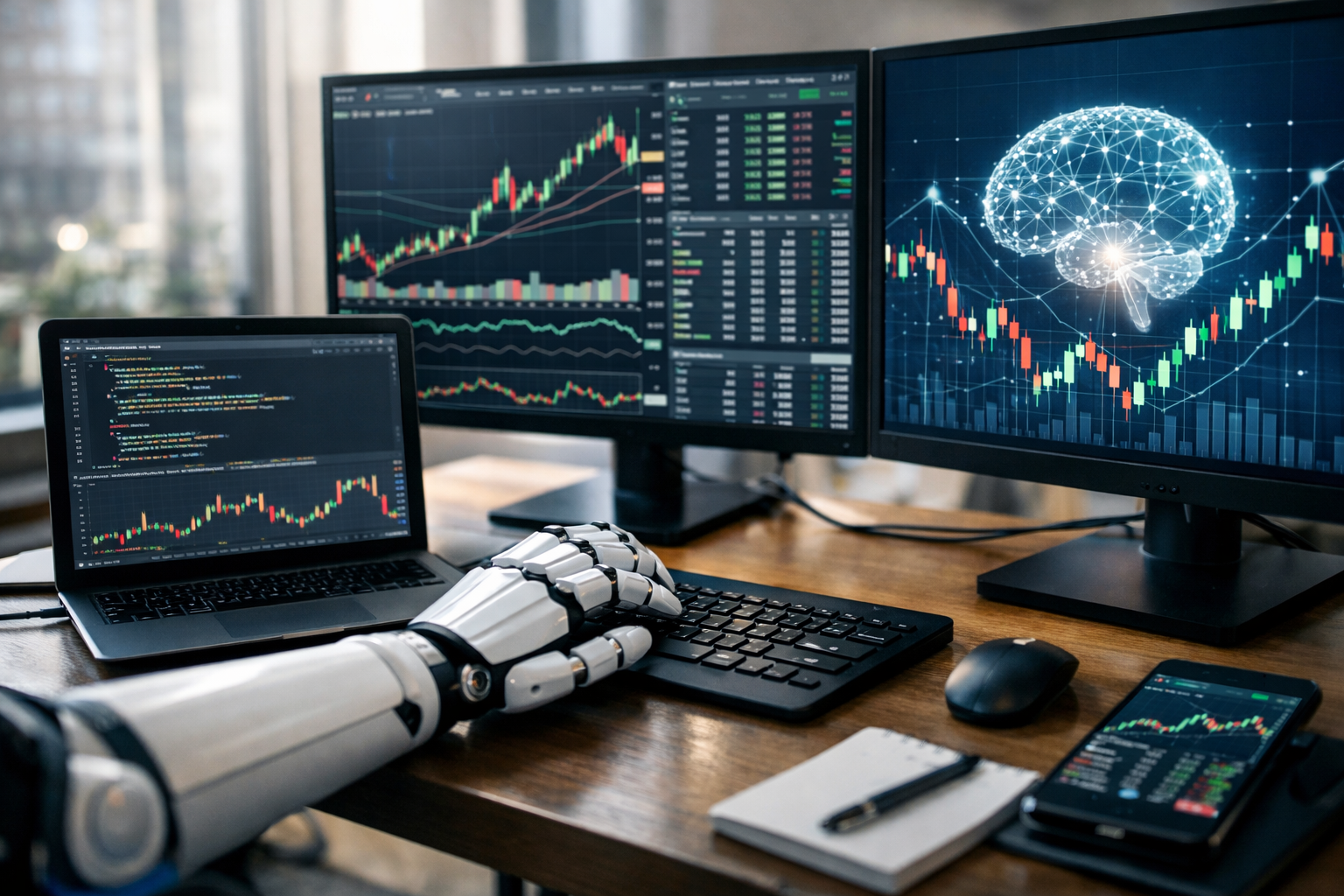
Algorithmic trading means using computer programs to buy and sell stocks automatically based on pre-set rules. When people say AI trades stocks automatically, they usually mean software looks at market data such as price, trading volume, and news, then makes decisions faster than a human can. In simple terms, a trader creates a system, the system watches the market, and if certain conditions are met, it places trades without needing someone to click a button each time.
For beginners, this can sound futuristic or even mysterious. But the core idea is straightforward: instead of a person saying, “I think I’ll buy this stock now,” a computer follows clear instructions such as “buy if the price rises above its average for the last 20 days” or “sell if losses reach 2%.” AI can make these systems more flexible by learning from large amounts of past data, but it does not guarantee profit, and it does not remove risk.
Imagine you are watching a shop that changes prices every second. A human shopkeeper might miss a quick discount. A computer would not. That is the basic advantage of algorithmic trading: speed, consistency, and automation.
In the stock market, prices can move in milliseconds. A human trader may take 10 to 30 seconds to notice a move, think, and place an order. A computer can do the same job in a tiny fraction of a second. It also does not get tired, distracted, or emotional.
Algorithmic trading can be very simple or very advanced:
The key point is this: algorithmic trading is not magic. It is just decision-making turned into code.
To understand how AI trading works, it helps to break the process into small steps.
An AI trading system starts with data, which simply means information. This can include:
For example, if a stock usually trades 1 million shares a day but suddenly trades 5 million, that unusual activity may matter.
This is where machine learning may enter the picture. Machine learning is a type of AI that learns from examples instead of following only fixed rules written by hand. A model might study 5 or 10 years of stock data and try to learn what conditions often come before a rise or fall.
For example, it may notice that when a stock moves above its recent average price and volume jumps by 50%, the stock has historically risen another 2% within the next two days. That does not mean it will always happen, but the model can estimate the probability.
Once the program sees a pattern, it compares the current market to what it learned before. If the match is strong enough, it may decide to buy, sell, or do nothing.
This decision is usually based on a threshold. For instance:
If all conditions are met, the software sends an order to a broker. A broker is the company or platform that actually executes the trade in the market. This can happen automatically in real time.
Good systems do not just chase profits. They also control losses. Common protections include:
Without these controls, a fast system can make bad decisions very quickly.
Let us say a beginner creates a simple strategy for a stock trading at $100.
If the stock moves from $100 to $101 and the volume condition is also true, the algorithm buys automatically. If the stock then rises to $104, it may sell and lock in profit. If it falls to $99.50, it may exit to reduce loss.
Now imagine that instead of one stock, the system watches 500 stocks at once. A human would struggle to do that well. A computer can do it all day.
This is an important distinction because many people mix the two together.
Rule-based trading follows exact instructions written by a person. Example: “Buy when the 10-day average moves above the 50-day average.”
AI trading uses models that learn from historical data and may adjust to new patterns. Example: “Based on 200 market signals, this stock has a high chance of rising in the next 24 hours.”
In practice, many real systems combine both. A machine learning model may generate the signal, while fixed rules handle trade size and risk limits.
For beginners interested in understanding these ideas from scratch, it helps to build strong foundations in coding, data, and finance before trying live trading. You can browse our AI courses to explore beginner-friendly learning paths in machine learning, Python, and finance-related topics.
There are several practical reasons:
This last point is called backtesting. Backtesting means seeing how a strategy would have performed in the past. For example, if a strategy was tested on 8 years of historical data and produced an average annual return of 9%, that may sound promising. But it still does not prove future success, because markets change.
Algorithmic trading is powerful, but it is not a shortcut to easy money. Beginners should understand the main risks clearly.
A model may perform well on old data but fail in new market conditions. This problem is often called overfitting, which means the system learned the past too perfectly and became poor at handling the future.
Patterns that worked last year may stop working after interest rates change, major news breaks, or investor behaviour shifts.
Internet outages, coding mistakes, delayed data, and broker problems can all damage performance.
Even if a strategy looks profitable, fees, taxes, and slippage can reduce returns. Slippage means you expected one price, but the trade happened at a slightly worse one. A small difference like 0.1% may not sound serious, but across hundreds of trades it can add up quickly.
AI finds patterns and estimates probabilities. It does not know the future. If someone claims their AI bot “always wins,” that is a red flag.
To understand the basics, no. To build real systems, yes, at least eventually. Many people begin by learning Python, a beginner-friendly programming language widely used in data science, finance, and machine learning.
You do not need to become an expert on day one. A smart path is:
If you are changing careers or starting from zero, structured study can save a lot of confusion. Edu AI offers beginner-first courses designed to explain complex topics in simple language, and many learning paths align with widely recognised frameworks from AWS, Google Cloud, Microsoft, and IBM where relevant.
It can be a great learning project if your goal is education, not quick profit. It teaches you how data, programming, probability, and finance connect in the real world.
A realistic beginner project might be:
This kind of project helps you think critically. For example, if your strategy makes 6% per year but the stock itself rose 12% by doing nothing, your system may not be useful.
Algorithmic trading explained simply is this: a computer follows rules or uses AI models to analyse market data and place stock trades automatically. It can be faster and more consistent than human trading, but it still involves uncertainty, losses, and careful risk control.
If you want to learn the skills behind AI trading step by step, from Python and machine learning to finance fundamentals, you can register free on Edu AI and start exploring beginner-friendly lessons. If you are comparing options before committing, you can also view course pricing and choose a path that fits your goals.




- Learning Evolved.
- Intelligence Amplified.