Economics — April 12, 2026 — Edu AI Team
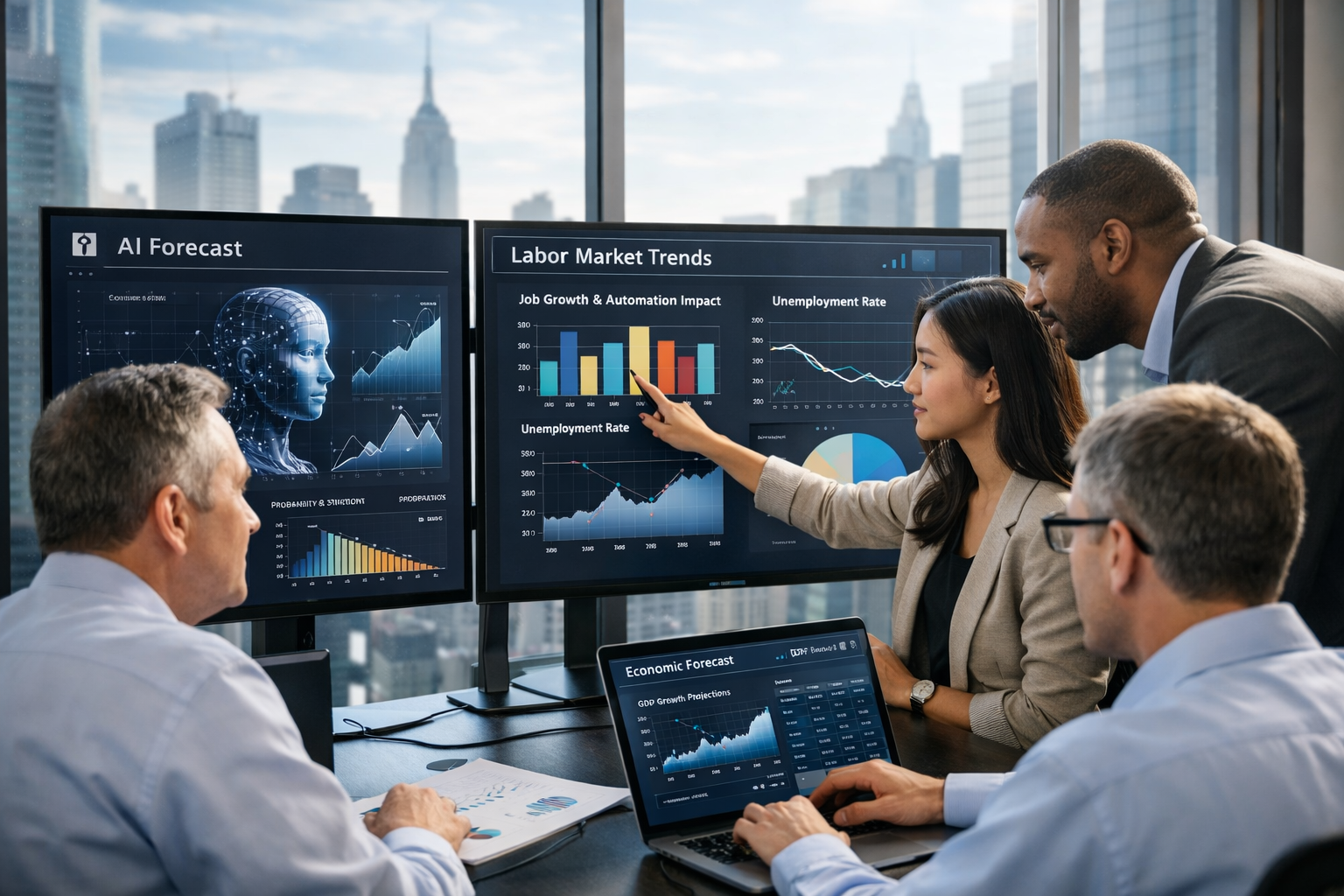
The future of AI in economics in 2026 will be shaped by three big changes: more routine analysis will be automated, new jobs will grow around data and decision support, and governments and businesses will face serious risks around bias, privacy, and unequal access. For beginners, the short answer is simple: AI will not “replace economics,” but it will change how economists, analysts, finance teams, and policy workers do their jobs. People who can understand basic data, ask good questions, and use AI tools responsibly will have a clear advantage.
That matters because economics affects everyday life: prices, wages, jobs, inflation, housing, public spending, and business decisions. If AI can help people study these areas faster, it can improve decisions. If used badly, it can also spread mistakes faster. That is why 2026 looks less like a total takeover and more like a transition period.
Before going further, let’s define the term in plain English. Artificial intelligence, or AI, means computer systems that can spot patterns, make predictions, generate text, or support decisions using data. In economics, that could mean:
You do not need to be a programmer to understand the basic idea. Think of AI as a very fast assistant that looks through huge amounts of information and finds useful patterns. It can save time, but it still needs human oversight.
AI has been discussed for years, but 2026 is important because many organizations are moving from experiments to real use. In the early stage, companies tested chatbots, dashboards, and forecasting tools in small teams. By 2026, more banks, consulting firms, government departments, research groups, and large employers are expected to build AI into normal workflows.
That means AI in economics will become less of a “future concept” and more of a daily tool. For example, instead of one analyst spending three days cleaning spreadsheet data, an AI-assisted workflow may reduce that task to a few hours. Instead of reading 200 pages of reports manually, teams may use AI to produce a first draft summary and then check it carefully.
This shift is especially important for beginners and career changers. Entry-level work is often made up of repetitive tasks. If AI reduces some of those tasks, employers may start expecting junior staff to bring more judgment, communication, and tool literacy from day one.
Most economics-related jobs will not disappear in 2026, but many will change. Roles that rely on repetitive reporting, data collection, and simple forecasting are the most likely to be reshaped. These include:
For example, if a junior analyst currently spends 60% of the week collecting and formatting data, AI tools may take over much of that work. The human worker may then focus more on interpreting results, checking errors, and presenting findings.
At the same time, AI creates new demand. In 2026, employers are likely to value people who can combine basic economics knowledge with practical AI skills. Growth areas may include:
In simple terms, the opportunity is moving from “do everything manually” to “work well with smart tools.” That is good news for beginners because many of these roles do not require advanced mathematics at the start. They require clear thinking, digital confidence, and a willingness to learn.
Forecasting means predicting what may happen next, such as inflation, consumer spending, or unemployment. AI can process more data than a human can handle alone. It may compare wage trends, energy prices, shipping data, weather effects, and consumer sentiment all at once.
That does not guarantee perfect forecasts, but it can make analysis faster and sometimes more responsive. In a fast-changing economy, speed matters.
In the past, advanced analysis was often limited to large institutions with big budgets. AI tools may lower that barrier. A small business, local government office, nonprofit, or startup may gain access to forecasting and reporting tools that were once too expensive or too complex.
This could make economic decision-making more accessible, especially in developing regions or smaller firms.
Another opportunity is educational. AI tools can help beginners learn economics and data skills faster. A learner with no coding background can now start with beginner-friendly dashboards, guided exercises, and AI-supported explanations. If you want to build those foundations, you can browse our AI courses to explore beginner options in AI, Python, and economics-related learning.
Many modern learning paths also connect well with major industry certification frameworks from AWS, Google Cloud, Microsoft, and IBM, which can be useful if you later want to show employers structured, job-relevant skills.
One of the biggest risks is bias. Bias means a system produces unfair or misleading results because the data used to train it reflects past inequalities or poor-quality information. If an AI model learns from incomplete labor market data, it may underestimate job conditions in certain regions or groups.
In economics, that is dangerous because decisions based on bad analysis can affect real people’s wages, access to credit, investment decisions, and public policy.
AI works best when it has lots of data. But more data collection can threaten privacy. If companies or governments rely too heavily on personal transaction data, location patterns, or online behavior, the line between analysis and surveillance can become blurry.
In 2026, stronger rules and public pressure are likely to push organizations toward more careful data use. Still, this remains a major concern.
AI systems can sound confident even when they are wrong. A beginner should remember this clearly: AI is not a truth machine. It predicts patterns based on data, but it can still misread context, miss sudden shocks, or generate plausible-sounding errors.
Imagine an AI system that predicts stable food prices because it learned from older data, while missing a new supply shock caused by extreme weather. If decision-makers trust that output without question, the consequences can be costly.
Another risk is inequality. Large firms with strong digital infrastructure may benefit more quickly, while small firms, low-income regions, and workers without digital training may fall behind. That could widen gaps in wages and opportunity.
This is why learning basic AI literacy now matters. Even a simple understanding of data, automation, and responsible use can help people stay competitive.
If you are new to this field, focus on practical beginner skills rather than trying to become an expert overnight. The most useful skills are likely to be:
These skills are valuable across economics, finance, public policy, business, and research. You do not need to master everything at once. Start with one step, such as understanding how data is used in decision-making or learning basic Python for beginners.
The honest answer is: it depends on the sector, the country, and the speed of adoption. In the short term, some routine tasks will disappear faster than new roles appear. That can feel disruptive, especially for entry-level workers. But over time, history suggests technology often changes jobs more than it destroys all work.
The strongest workers in 2026 will probably be those who combine human strengths with AI support. Human strengths include judgment, ethics, creativity, empathy, negotiation, and understanding real-world context. AI is helpful with speed and pattern recognition. The best results usually come from both working together.
If this topic feels overwhelming, keep it simple. You do not need a degree in computer science to get started. A practical beginner plan could look like this:
If you are considering a career transition, this is a good time to build foundations. You can view course pricing and compare learning options before committing to a full path.
The future of AI in economics in 2026 is not just about machines taking over jobs. It is about work changing, new roles appearing, and responsible learners gaining an edge. For absolute beginners, the smartest move is to start early, learn the basics, and build confidence with simple tools before the field becomes even more competitive.
If you want a beginner-friendly place to start, you can register free on Edu AI and explore courses in AI, Python, economics, and data-focused skills at your own pace.



- Learning Evolved.
- Intelligence Amplified.