Economics — April 11, 2026 — Edu AI Team
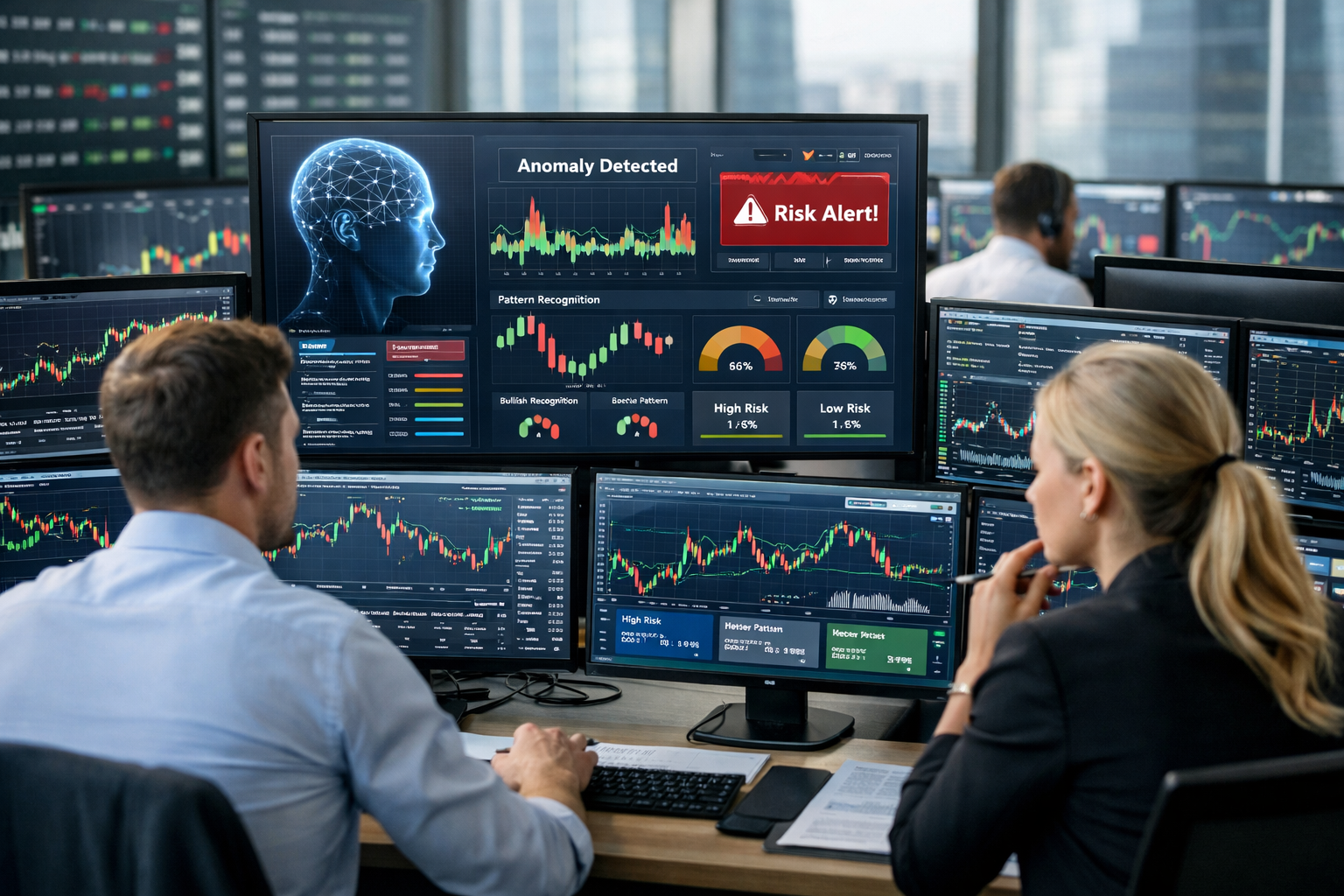
Hedge funds use machine learning to beat the market by finding tiny patterns in huge amounts of financial data, making faster decisions, and managing risk more precisely than traditional investing methods. In simple terms, machine learning helps computers learn from past market behaviour so they can spot opportunities humans might miss. It does not guarantee profits, and it does not magically predict every price move, but it can give professional investors a speed and data advantage.
If you are new to both finance and AI, think of it like this: a human analyst might study 50 company reports, news stories, and price charts in a week. A machine learning system can scan millions of data points in minutes, compare them with years of history, and flag patterns that could matter. That is one reason hedge funds invest heavily in AI tools.
A hedge fund is an investment firm that pools money from investors and tries to earn strong returns using a wide range of strategies. Unlike a simple index fund, which may just track the stock market, hedge funds often aim to outperform the market by using advanced research, fast trading systems, and flexible tactics.
For example, a hedge fund may:
Because competition is intense, hedge funds are always looking for an edge. Machine learning has become one of the most important tools in that search.
Machine learning is a type of artificial intelligence where a computer learns patterns from data instead of following only fixed rules written by a programmer.
Here is a simple example outside finance. Imagine you show a computer 10,000 photos of cats and dogs. Over time, it learns what visual patterns often belong to cats versus dogs. Then, when it sees a new photo, it can make a prediction.
In finance, instead of cat photos, the model studies things like:
The goal is not just to describe what happened before. The goal is to make useful predictions, such as whether a stock may outperform over the next week or whether market risk is rising.
Markets create enormous amounts of data every second. Prices move, orders come in, news gets published, and economic indicators change. Humans can study some of this, but not all of it at once.
Machine learning models can look across thousands of stocks and many years of history to find patterns that are too small or complex for people to notice. For example, a model may learn that certain groups of stocks tend to move in a similar way after interest rate announcements, or that some price patterns only matter when trading volume is unusually high.
Even a tiny edge can matter. If a hedge fund improves its prediction accuracy from 50% to 52% over millions of trades, that small gain may become valuable over time.
Many hedge funds use machine learning to estimate the probability that an asset will go up or down. This is not fortune telling. It is more like weather forecasting. A weather app does not say with perfect certainty that it will rain at 3:17 p.m. It gives a probability based on data. Finance models work in a similar way.
For instance, a model might say:
Traders can then use these signals to decide what to buy, sell, or avoid.
Some hedge funds use a branch of AI called natural language processing, which means teaching computers to understand human language. These systems scan news articles, earnings call transcripts, central bank statements, and sometimes social media posts.
Why does this matter? Because markets often react to words as much as numbers. If a company says demand is "stronger than expected," that may be a positive signal. If executives use more cautious language than usual, that may worry investors.
A machine learning system can compare current language with years of past statements and ask: does this wording usually come before rising prices, falling prices, or no clear change?
Beating the market is not only about making money. It is also about avoiding large losses. This is where machine learning can be especially useful.
A hedge fund may use AI models to detect signs of unusual risk, such as:
If the model detects rising danger, the fund can reduce position sizes, hedge exposure, or move into safer assets.
A portfolio is simply a collection of investments. Hedge funds use machine learning to decide not just which assets to pick, but how much money to allocate to each one.
For example, two stocks may both look attractive, but one may be much riskier. A model can estimate potential return alongside potential downside, then help build a mix that aims for better overall performance. This can be more effective than relying on simple rules alone.
Imagine a hedge fund wants to predict whether a stock will beat the market over the next month.
Its machine learning system might use inputs such as:
The model studies thousands of past examples. It learns which combinations of signals often came before strong performance and which came before weakness. Then it scores current stocks from most promising to least promising.
The hedge fund does not blindly trust the model. Usually, professionals test it, compare it with other models, and monitor how it performs in real markets.
There are four main reasons machine learning is attractive in investing:
This does not mean machines always win. Markets change, competitors copy good ideas, and patterns can disappear. Still, machine learning gives hedge funds a practical advantage when used carefully.
It is important to keep expectations realistic. If machine learning made market-beating easy, every hedge fund would be rich all the time. That is not how finance works.
Here are some common challenges:
That is why strong hedge funds combine machine learning with human judgment, careful testing, and risk controls.
In principle, yes, but usually on a smaller scale. Large hedge funds may have teams of data scientists, expensive data feeds, and powerful computing systems. Most individual investors do not.
However, beginners can still learn the ideas behind these strategies. Understanding how data, prediction, and risk management work can make you a smarter investor or open the door to a career in AI-driven finance.
If this topic interests you, a helpful next step is to browse our AI courses and look for beginner-friendly learning paths in machine learning, Python, and finance fundamentals.
If you are thinking about a future in quantitative finance, algorithmic trading, or financial analytics, you do not need to learn everything at once. Start with the basics.
A good beginner roadmap includes:
These skills also connect with wider career paths in data science and AI. Many learning routes today are designed for complete beginners, so you do not need a computer science degree to get started.
At Edu AI, our beginner courses are built to explain difficult topics in plain English and align with major industry learning frameworks from AWS, Google Cloud, Microsoft, and IBM where relevant. If you want a structured path, you can also view course pricing to compare options before committing.
The big lesson is simple: hedge funds use machine learning to beat the market by turning data into faster, smarter decisions. They use AI to find patterns, predict price moves, read news, manage risk, and build better portfolios.
But the real story is not "AI prints money." The real story is that machine learning is a tool. Powerful, yes. Magical, no. Success still depends on good data, careful testing, smart risk management, and clear thinking.
If you are curious about how AI works in investing, now is a great time to learn the basics. You do not need prior coding experience to begin. A simple first step is to register free on Edu AI and explore beginner-friendly courses in machine learning, Python, and economics and finance. Start small, build your confidence, and let your understanding grow one concept at a time.




- Learning Evolved.
- Intelligence Amplified.