AI Education — April 29, 2026 — Edu AI Team
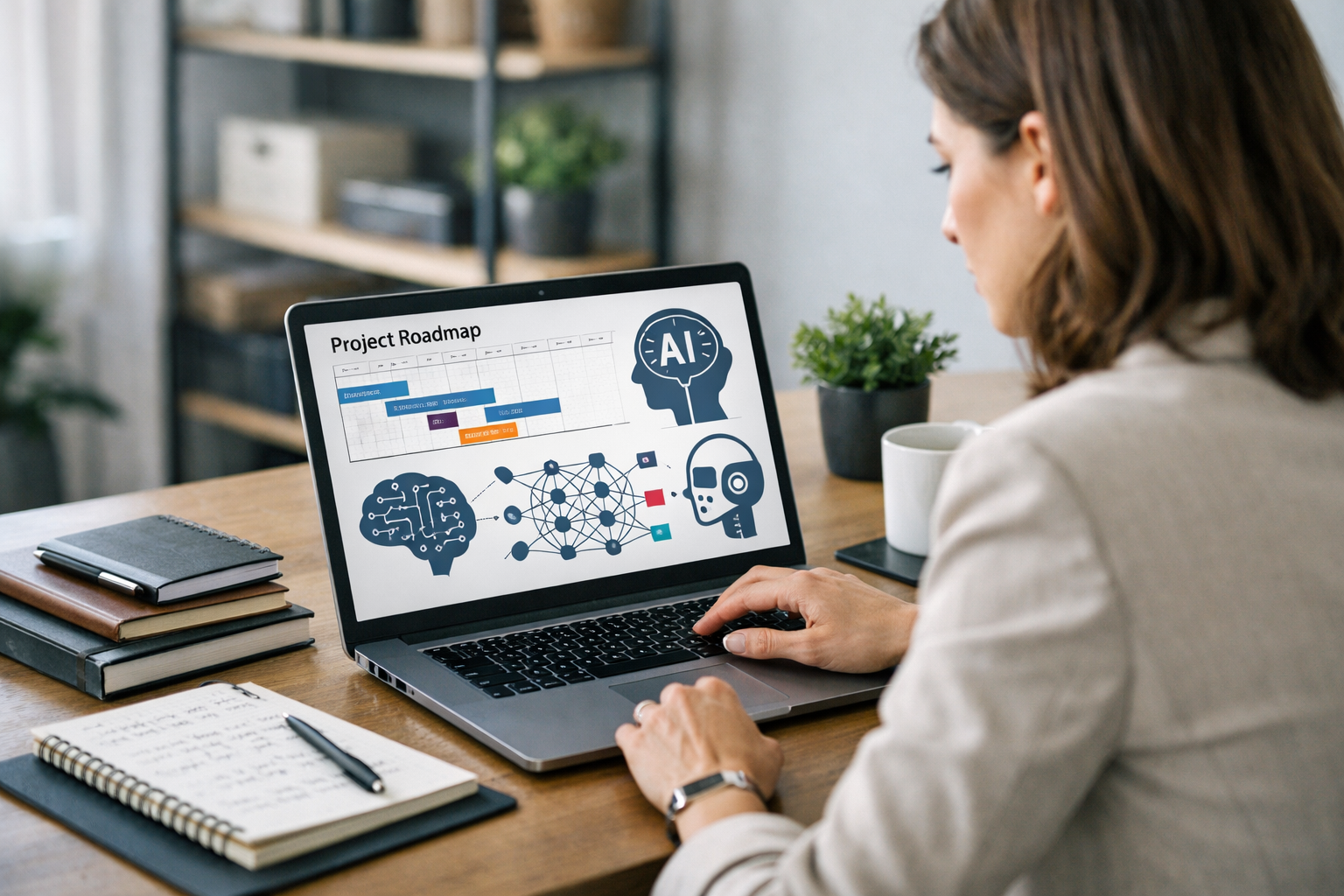
Yes, you can move into AI from project management as a beginner—and in many cases, you do not need to become a full-time software engineer first. The smartest path is usually to build a basic understanding of AI, learn a little Python and data literacy, and then aim for roles where your planning, stakeholder management, delivery, and communication skills already matter. In simple terms, you are not starting from zero. You are adding technical understanding to a strong business and execution background.
If you have managed deadlines, budgets, risks, teams, vendors, or product roadmaps, you already have skills that AI teams need. The gap is mainly technical confidence. The good news is that this gap is much smaller than most beginners think.
AI projects still need people who can define goals, organise work, align teams, and keep delivery on track. A machine learning engineer can build a model, but someone still needs to answer basic business questions such as:
These are project management questions. That is why many companies hire for roles such as AI project manager, AI product coordinator, data project manager, business analyst in AI, or technical program manager.
Think of AI as a new toolset, not a completely separate universe. If traditional project management is about getting people and processes to work together, AI project work adds one more layer: understanding how data and machine learning affect planning and decisions.
Before planning a career move, it helps to understand the terms.
Artificial intelligence, or AI, is a broad term for computer systems that can do tasks that usually need human-like judgment. Examples include writing text, recognising images, recommending products, or detecting fraud.
Machine learning is a part of AI. It means teaching a computer to find patterns in data so it can make predictions or decisions. For example, a system might learn from past customer data to predict which customers may cancel a subscription.
Data is simply information. It can be numbers, text, images, clicks, sales records, or customer feedback. AI systems learn from data, so understanding basic data concepts is important.
Python is a beginner-friendly programming language widely used in AI and data science. You do not need to master it overnight, but learning the basics can make you much more useful and confident.
You do not need to target only one job title, but these are common entry points.
This is the most direct transition. You manage timelines, team coordination, budgets, risks, and communication for AI-related projects. You need enough AI knowledge to speak with technical teams and explain progress to non-technical stakeholders.
This role often focuses on dashboards, reporting systems, and data workflows. It can be an easier first step than a highly technical AI role.
If you enjoy shaping features and user outcomes, AI product support or AI operations roles can be a strong fit. These jobs often combine business thinking with technology understanding.
This path suits project managers who are strong at requirements gathering, process mapping, and stakeholder interviews. You help turn business problems into clear tasks for technical teams.
Many project managers underestimate how valuable their current experience is. These skills transfer directly:
In AI, these skills are important because projects often fail not because the model is weak, but because goals are unclear, data is messy, or teams are misaligned.
You do not need to learn everything. Start with the foundations that give you confidence and credibility.
Learn the difference between AI, machine learning, deep learning, and generative AI. For a beginner, the goal is not advanced math. The goal is being able to follow conversations and ask smart questions.
Understand rows, columns, datasets, trends, accuracy, and bias. For example, if a team says a model is 92% accurate, you should know to ask, “92% accurate on what data, and does that result matter in the real world?”
Learn simple Python topics like variables, lists, loops, and reading a file. This helps you understand how AI workflows are built. Even 20 to 30 hours of practice can make technical discussions less intimidating.
Understand the typical stages: define the problem, collect data, clean data, train a model, test it, deploy it, and monitor results. As a project manager, this lifecycle is where your experience becomes highly valuable.
Here is a realistic plan for someone working full-time.
This is a good stage to browse our AI courses and choose one beginner path instead of jumping randomly between topics.
You are not trying to become an expert. You are building working familiarity.
If you want structure, guided learning helps a lot. Many beginner-friendly courses also align with major industry certification frameworks from AWS, Google Cloud, Microsoft, and IBM, which can make your learning more relevant to employer expectations.
You do not need to say, “I am now an AI expert.” A stronger message is:
“I am a project manager building practical AI literacy so I can lead data and AI initiatives effectively.”
This is honest, credible, and attractive to employers. Companies often need people who can bridge business and technical teams, not just write code all day.
For example, instead of saying:
“Managed general business projects.”
Say:
“Led cross-functional digital projects involving process improvement, reporting systems, stakeholder coordination, and adoption planning—experience now being extended into AI and data-focused delivery.”
AI is a huge field. You do not need deep learning, computer vision, reinforcement learning, and cloud engineering all at the start.
For many transition roles, you do not. A basic understanding of data and logic is enough to begin.
Your project background is an advantage. Do not throw it away. Build on it.
Most people never feel fully ready. Start learning, build a small portfolio of understanding, and apply for adjacent roles sooner than you think.
For entry-level transition candidates, employers usually look for three things:
That means you can become competitive even before you are highly technical. A hiring manager may choose a project manager with solid AI literacy and strong delivery experience over a beginner coder with no business or leadership background.
If you want to move into AI from project management, the best first step is not to overthink it. Pick one beginner-friendly learning path, build basic technical confidence, and connect it to the strengths you already have.
You can register free on Edu AI to start learning at your own pace, or view course pricing if you want to compare options before committing. The goal is simple: take your project management experience, add practical AI knowledge, and turn it into a realistic new career direction.




- Learning Evolved.
- Intelligence Amplified.