AI Education — July 14, 2026 — Edu AI Team
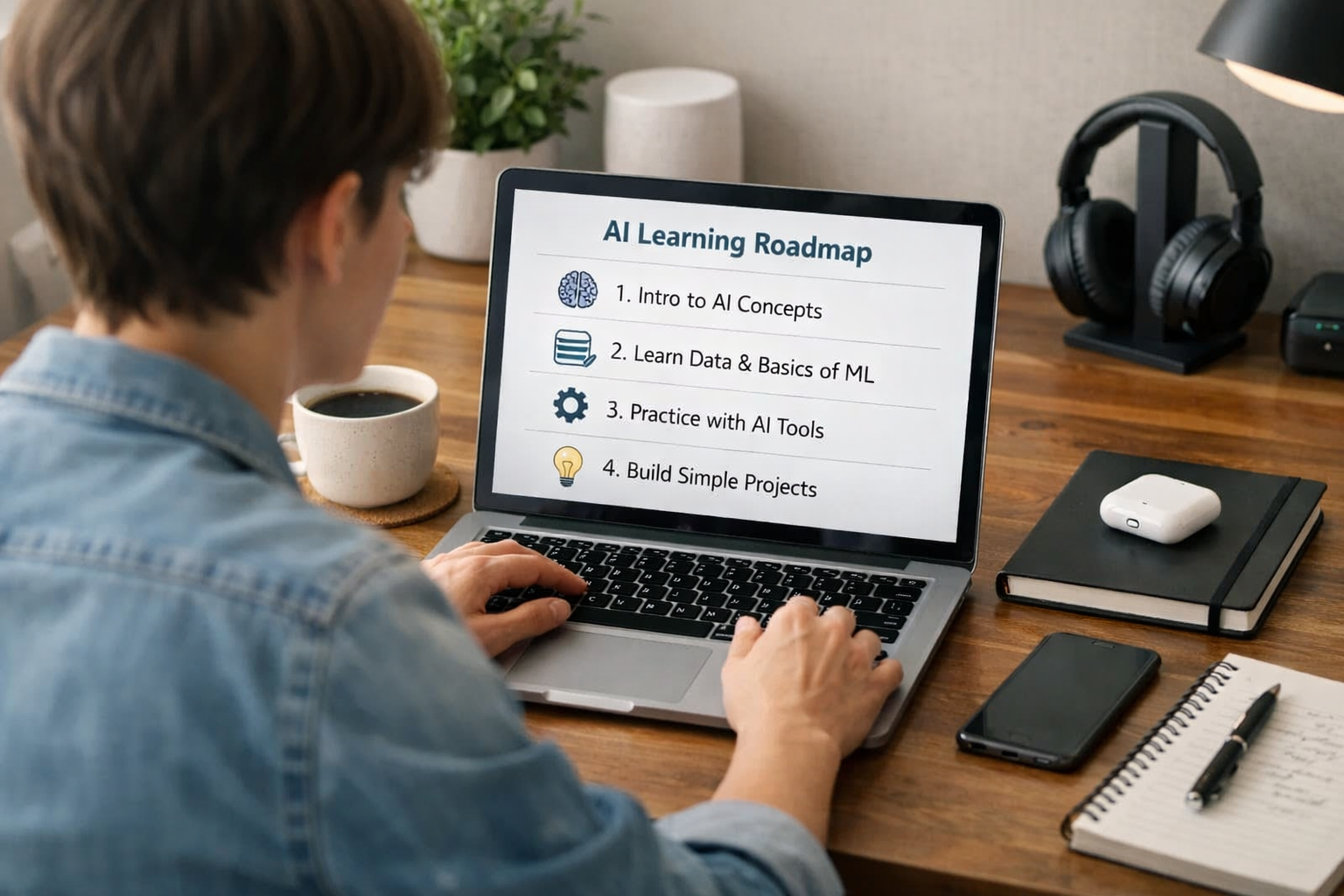
Yes, you can retrain for AI without going back to school. Most beginners do not need a second degree, a computer science background, or years of formal study to get started. What you do need is a clear learning plan, a few practical skills, and consistent weekly practice. If you can set aside even 5 to 7 hours a week, you can begin learning the foundations of AI, build small projects, and prepare for entry-level opportunities in a matter of months rather than years.
For many adults, going back to university is too expensive, too slow, or simply unrealistic alongside work and family life. The good news is that modern AI learning is much more flexible. Online courses, guided projects, and beginner-friendly platforms now make it possible to learn from home, at your own pace, and focus only on the skills employers actually look for.
AI is a broad field, but at beginner level, employers and hiring managers usually care less about where you studied and more about whether you can understand basic concepts, use simple tools, and show proof of learning. In plain English, that means they want to see that you can learn new technology, solve simple problems, and explain what you built.
Let us define AI from scratch. Artificial intelligence means computer systems doing tasks that normally need human judgment, such as recognising images, understanding text, making predictions, or answering questions. A common branch of AI is machine learning, which means training computers to find patterns in data so they can make decisions or predictions. For example, a machine learning system might learn from past customer purchases to predict what someone may buy next.
You do not need to become a top researcher to enter this space. Many beginners start with practical pathways such as:
That is why a skills-first route often works better than another degree. It is faster, lower cost, and easier to fit around real life.
If you are starting from zero, do not try to learn everything at once. Focus on a small stack of beginner skills that build on each other.
Before AI, you need comfort with files, spreadsheets, web apps, and simple digital workflows. This sounds basic, but it matters. If you can organise folders, follow instructions, and work calmly with online tools, you already have a useful foundation.
Python is a beginner-friendly programming language widely used in AI and data science. A programming language is simply a way to give instructions to a computer. Python is popular because its syntax, or writing style, is relatively readable. For example, a beginner can write a few lines of Python to sort numbers, analyse a table, or automate a repetitive task.
AI systems learn from data, which means information such as numbers, text, images, or records in a spreadsheet. At beginner level, you should learn how to read tables, clean messy data, and understand simple ideas like averages, trends, and categories.
Once you know a little Python and data handling, you can move into core machine learning ideas. Start with simple concepts like:
You do not need heavy maths at the start. You need intuitive understanding first.
Many career changers begin with generative AI, meaning AI systems that create new content such as text, images, code, or summaries. Learning how to use these tools safely and effectively can help you become productive quickly, even before you build complex models yourself.
The biggest mistake beginners make is trying to learn AI in a random order. A simple roadmap is more effective. Here is a practical 6-month path for someone studying part-time.
At this stage, your goal is not mastery. It is familiarity.
A good first project might be predicting house prices from simple property data or sorting customer reviews into positive and negative categories.
By month 6, many learners are not experts, but they are no longer complete beginners either. That is enough to start conversations with employers.
This depends on your goals. If you want to become an advanced AI engineer, the journey is longer. But if your aim is to gain practical AI skills for work, support a career shift, or enter a junior technical path, the barrier is lower than many people think.
A realistic beginner estimate looks like this:
Compare that with a full degree, which may take 2 to 4 years and cost thousands. For many adults, online retraining is the more practical option.
Not every AI-related job has “AI” in the title. That is important. Many learners move into roles where AI is one part of the work rather than the entire job.
Possible pathways include:
For example, someone in marketing might learn AI tools to analyse customer feedback faster. Someone in finance might use Python to automate reporting. Someone in operations might use machine learning ideas to improve forecasting. In other words, retraining for AI does not always mean changing your whole identity. Sometimes it means upgrading your current role with high-value digital skills.
As a beginner, you should look for courses that explain ideas from first principles, use hands-on examples, and avoid assuming prior coding knowledge. A good beginner course should answer questions like “What is a model?” or “What is data?” before asking you to build anything.
It also helps to choose learning that is aligned with real industry expectations. Many employers value practical knowledge that connects with major technology ecosystems and certification pathways. Where relevant, beginner-friendly AI learning can support preparation that aligns with widely recognised frameworks from AWS, Google Cloud, Microsoft, and IBM.
If you want a structured place to start, you can browse our AI courses to compare beginner-friendly options in machine learning, deep learning, generative AI, Python, data science, and more.
You do not need to start with difficult formulas. Learn the practical meaning of concepts first. Theory makes more sense once you have seen real examples.
Picking 10 different tutorials often creates confusion. One guided path is usually better than many random ones.
Many adults delay applying for opportunities because they think they need to know everything first. You do not. You need enough understanding to discuss your learning clearly and show a few projects.
Your background still matters. A teacher, salesperson, accountant, or operations manager brings domain knowledge that can combine powerfully with AI skills.
If you want to retrain for AI without going back to school, start small and stay consistent. Pick one beginner path, give yourself 6 months, and focus on practical progress instead of perfection. A flexible online learning route can help you build useful skills without pausing your life.
To take the next step, you can register free on Edu AI and begin exploring beginner lessons at your own pace. If you want to compare plans before committing, you can also view course pricing and choose an option that fits your schedule and goals.




- Learning Evolved.
- Intelligence Amplified.