AI Education — July 3, 2026 — Edu AI Team
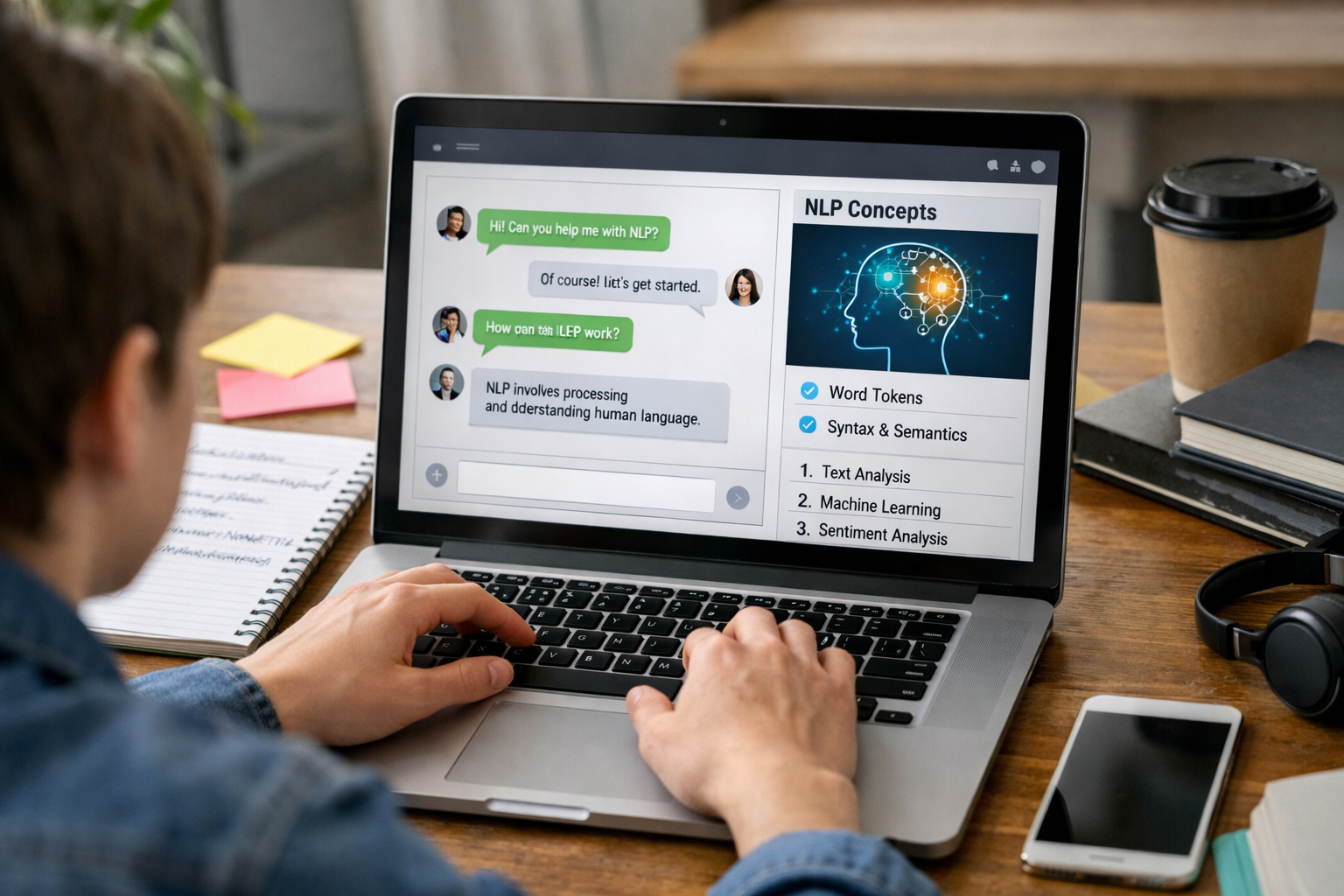
The simplest way to start learning AI for a new job with no experience is to begin with three basics in this order: computer confidence, beginner Python, and simple machine learning concepts explained in plain English. You do not need a computer science degree, advanced maths, or previous coding work to begin. Most beginners can build real momentum in 8 to 12 weeks by studying a few hours each week, following a step-by-step plan, and practising small projects instead of trying to learn everything at once.
If you are changing careers, the good news is that AI is a broad field. There are technical roles, but there are also beginner-friendly paths in data analysis, AI support, prompt-based tools, automation, product operations, and business-facing roles that use AI every day. The key is to build useful foundation skills first and then connect them to the type of job you want.
For beginners, AI means teaching computers to do tasks that normally need human thinking, such as recognising images, understanding text, making predictions, or answering questions. One major part of AI is machine learning, which means the computer learns patterns from data instead of being told every rule by a human programmer.
Here is a simple example. Imagine you want a computer to tell whether an email is spam. In older software, a programmer might write many exact rules. In machine learning, the computer looks at many examples of spam and non-spam emails and learns the pattern for itself.
As a beginner, you do not need to master every branch of AI. You only need to understand:
That is enough to start building job-relevant skills.
Yes, but it helps to be realistic. You are unlikely to jump straight into a senior machine learning engineer role with zero background. However, you can absolutely start learning AI from scratch and work toward entry-level opportunities or AI-adjacent jobs.
Many employers value practical ability more than perfect theory. If you can show that you understand basic concepts, can use beginner tools, and have completed a few small projects, you are already in a better position than someone who has only watched videos without practising.
People who often make a successful transition into AI-related work come from:
Why? Because they already understand business problems, communication, and workflows. AI skills then become an extra layer on top.
If you are completely new, begin with the basics: using files, spreadsheets, web apps, and simple logic. AI learning becomes much easier when you feel comfortable with everyday computer tasks.
Think of this as learning to drive before entering a motorway. It is not glamorous, but it matters.
Python is a beginner-friendly programming language widely used in AI, data science, and automation. It is popular because the syntax is relatively simple, which means the code is easier to read than many other languages.
At the start, you only need to learn:
Do not worry about becoming an expert programmer immediately. Your first goal is simply to understand how to give clear instructions to a computer.
Data is information. In AI, data might be customer records, house prices, images, voice clips, or written text. Machine learning uses this data to find patterns.
For example, if a model sees thousands of past house sales, it may learn that bigger homes often cost more than smaller ones. That pattern can then help predict future prices.
Beginners should understand that better data usually leads to better results. AI is not magic. It depends heavily on the quality of the examples it learns from.
You do not need advanced equations to understand the basics. Focus on plain-English ideas like:
Once these ideas make sense, more advanced topics become much less intimidating.
One small project teaches more than many hours of passive reading. A beginner project could be:
The project does not need to be original. It only needs to prove that you can follow a process and explain what you built.
This depends on your target role and weekly study time. For a complete beginner, a practical timeline often looks like this:
If you study 5 to 7 hours a week, you can make meaningful progress in about three months. Reaching a stronger entry-level standard may take 4 to 6 months, especially if you want to apply for more technical roles.
The important point is this: you do not need to wait until you know everything. You need enough skill to solve beginner-level problems and show employers you can keep learning.
A good beginner course can help you avoid these problems by giving you a clear order, guided exercises, and realistic milestones. If you want a structured starting point, you can browse our AI courses to find beginner-friendly lessons in AI, Python, machine learning, and related topics.
Not every AI-related job requires deep research knowledge. As your skills grow, you may be able to target roles such as:
These jobs often combine technical basics with communication, organisation, and problem-solving. That is good news for career changers, because your previous work experience still matters.
It also helps to know that many modern learning pathways align with major industry certification frameworks from providers such as AWS, Google Cloud, Microsoft, and IBM. That means the basics you learn can support future certification goals if you later want to deepen your skills for cloud, data, or AI roles.
If you feel overwhelmed, use this 6-hour weekly plan:
After 8 weeks, you should understand the core ideas. After 12 weeks, you should have enough confidence to describe what AI is, write basic code, and show one or two examples of your work.
That is a strong base for a new job search, especially when paired with a clear CV and honest explanation of your learning journey.
Look for a course that:
You do not need the most expensive option. You need one that is clear, practical, and designed for true beginners. Before choosing, it can help to view course pricing and compare the learning path against your budget and goals.
If you want to start learning AI for a new job with no experience, keep it simple. Begin with Python, learn the meaning of data and machine learning, and build one small project at a time. Small weekly progress beats big plans that never begin.
A structured platform can make that first step much easier, especially if you want beginner-friendly lessons without confusing jargon. When you are ready, you can register free on Edu AI and explore practical courses designed to help complete newcomers build confidence, useful skills, and a realistic path into AI-related work.




- Learning Evolved.
- Intelligence Amplified.