Languages — April 15, 2026 — Edu AI Team

Short answer: in 2026, AI language tutors usually help beginners improve faster in the first 30 to 90 days because they are available 24/7, give instant feedback, and cost much less than weekly live lessons. But human tutors are still better for advanced speaking, natural conversation, confidence, and cultural nuance. For most learners, the fastest path to real fluency is not AI or human tutoring alone. It is a hybrid approach: use AI every day for practice, then add a human tutor for live correction and real conversation.
If you are wondering which option deserves your time and money, this guide breaks it down in plain English. No technical background is needed. We will compare AI tutors and human tutors on speed, price, speaking practice, motivation, and long-term fluency so you can choose what works best for your goals.
Let us start from the beginning.
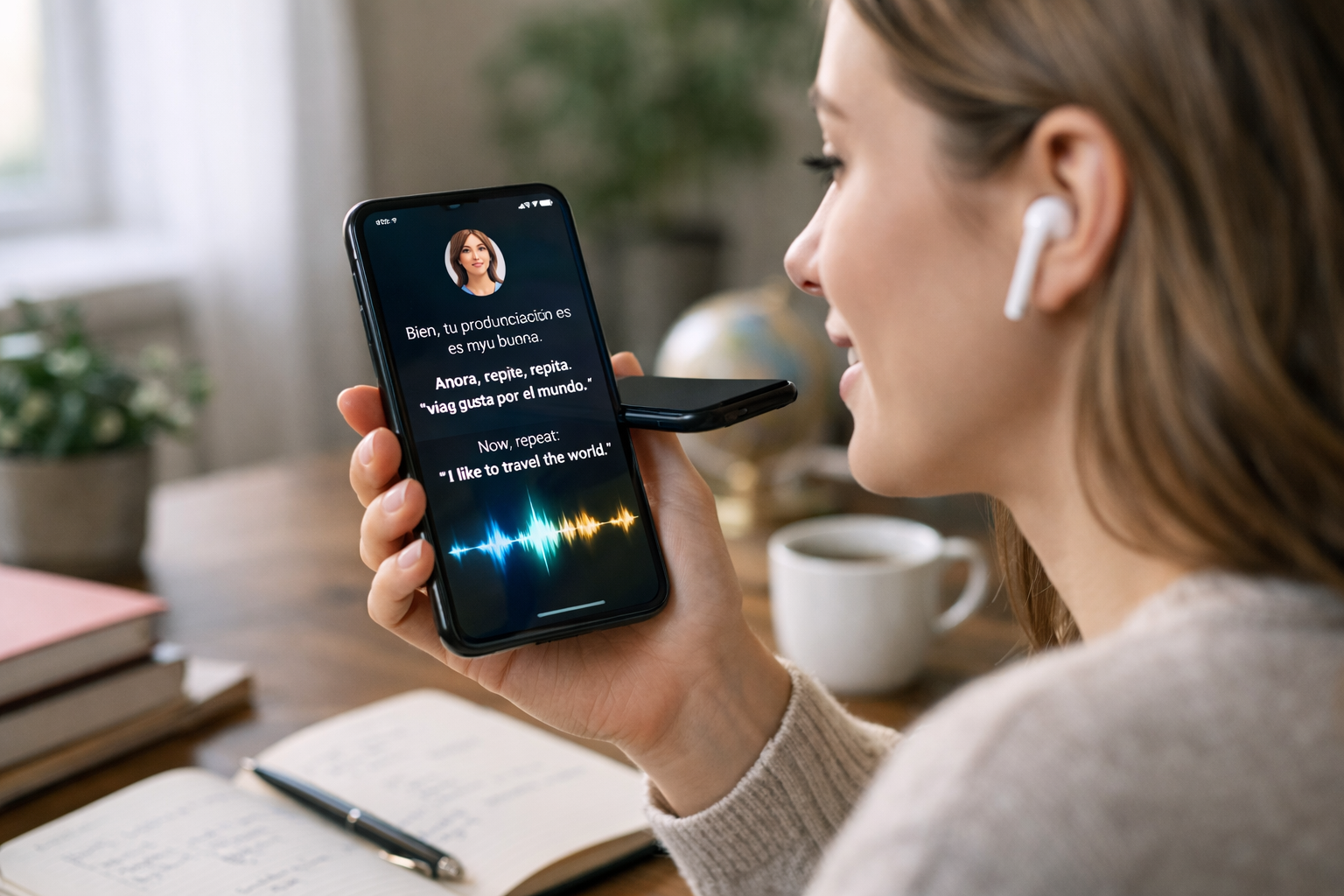
An AI language tutor is a software tool that uses artificial intelligence to help you learn. Artificial intelligence, or AI, means computer systems designed to do tasks that normally need human thinking, such as understanding speech, correcting grammar, or answering questions. In language learning, AI tools can:
A human tutor is a real teacher or language coach who works with you in live sessions, usually one-to-one or in a small group. A human tutor can explain ideas, notice emotional blocks, encourage you, and guide real conversation in a natural way.
The answer depends on what fluent means to you.
For many beginners, fluency means “I can hold a simple conversation without freezing.” For others, it means “I can work, study, or live in another country using this language every day.” Those are very different goals.
Here is the simple comparison:
If you only have 15 to 30 minutes a day and a small budget, AI often wins early. If you need job interviews, exam speaking scores, or business communication, a human tutor becomes much more important.
Language learning improves with hours of active use, not just good intentions. A human tutor might meet you once or twice a week. An AI tutor can work with you every day.
For example, imagine two beginners learning Spanish for 12 weeks:
Even if the human lesson is excellent, Learner B gets almost three times more contact with the language. That extra exposure matters.
When you mispronounce a word or choose the wrong verb, AI can often correct you immediately. That helps beginners avoid repeating mistakes many times. Fast feedback is especially useful when you are learning basic sentence patterns such as “I am going,” “I went,” and “I will go.”
Many beginners feel embarrassed speaking in front of another person. AI feels lower-pressure. You can repeat the same sentence five times without worrying that someone is judging you. That means more speaking attempts, which often leads to faster early progress.
In 2026, many AI language platforms cost less per month than a single live tutoring session. That makes daily practice realistic for more people. Lower cost does not automatically mean better quality, but it does make consistency easier.
Real people interrupt, joke, change topic, speak quickly, and use slang. Human tutors can train you for that unpredictability in a way AI still struggles to match fully.
If you say something confusing, a human tutor can ask, “Do you mean yesterday or next week?” and then explain why your sentence sounded unclear. That kind of live repair is powerful.
A good tutor notices when you are frustrated, bored, or losing confidence. They can slow down, change method, and encourage you. AI can simulate support, but it does not truly understand your emotions in the same human way.
Language is not only grammar and vocabulary. It is also tone, politeness, humor, body language, and social expectations. A human tutor can explain why one phrase sounds friendly and another sounds rude, even if both are grammatically correct.
Once you move beyond beginner level, you need debate, storytelling, negotiation, and spontaneous discussion. AI is improving quickly, but advanced fluency still grows faster when real humans challenge you in unpredictable ways.
The fastest learners do not ask, “Which one is perfect?” They ask, “How can I practice more often without burning out?” In most cases, that leads to a blended routine.
This method works because AI gives you volume, while the human session gives you correction, pressure, and realism.
AI-only learning may be enough for you right now if:
If this sounds like you, it can help to start with beginner-friendly digital learning habits first, then expand later. If you also want to understand the technology behind modern learning tools in simple language, you can browse our AI courses and explore beginner options designed for newcomers.
A human tutor should come earlier in your plan if:
In these cases, AI is still useful, but it should support live conversation rather than replace it.
If you only read corrections and never speak out loud, progress slows down. Language is a skill, not just information.
One strong lesson helps, but fluency needs repeated contact. Think in days, not just weeks.
Beginners often wait until they can speak perfectly. That delays progress. Fast learners aim for understandable communication first, then improve accuracy over time.
You cannot become fluent if you only study words on a screen. You must hear the language often enough to recognize it in real life.
For most beginners, AI gets you started faster and helps you improve faster at the beginning. It is cheaper, easier to access, and better for building a daily habit. For deeper fluency, human tutors still play a critical role. They help you think on your feet, sound natural, and communicate with confidence.
The best answer is practical: use AI for frequency and use humans for depth. If you can only choose one today, pick the option that you will actually use consistently for the next 8 to 12 weeks. Consistency beats the “perfect” method.
If you are curious about how AI-powered learning works, a beginner-friendly platform can make the first step much easier. Edu AI offers simple, structured courses for newcomers in AI, technology, and language learning, so you do not need a technical background to begin. You can register free on Edu AI to explore the platform, or view course pricing if you want to compare your learning options before committing.
The fastest route to fluency is the one you can stick with. Start small, practice often, and add human support when you are ready.



- Learning Evolved.
- Intelligence Amplified.