Languages — April 13, 2026 — Edu AI Team
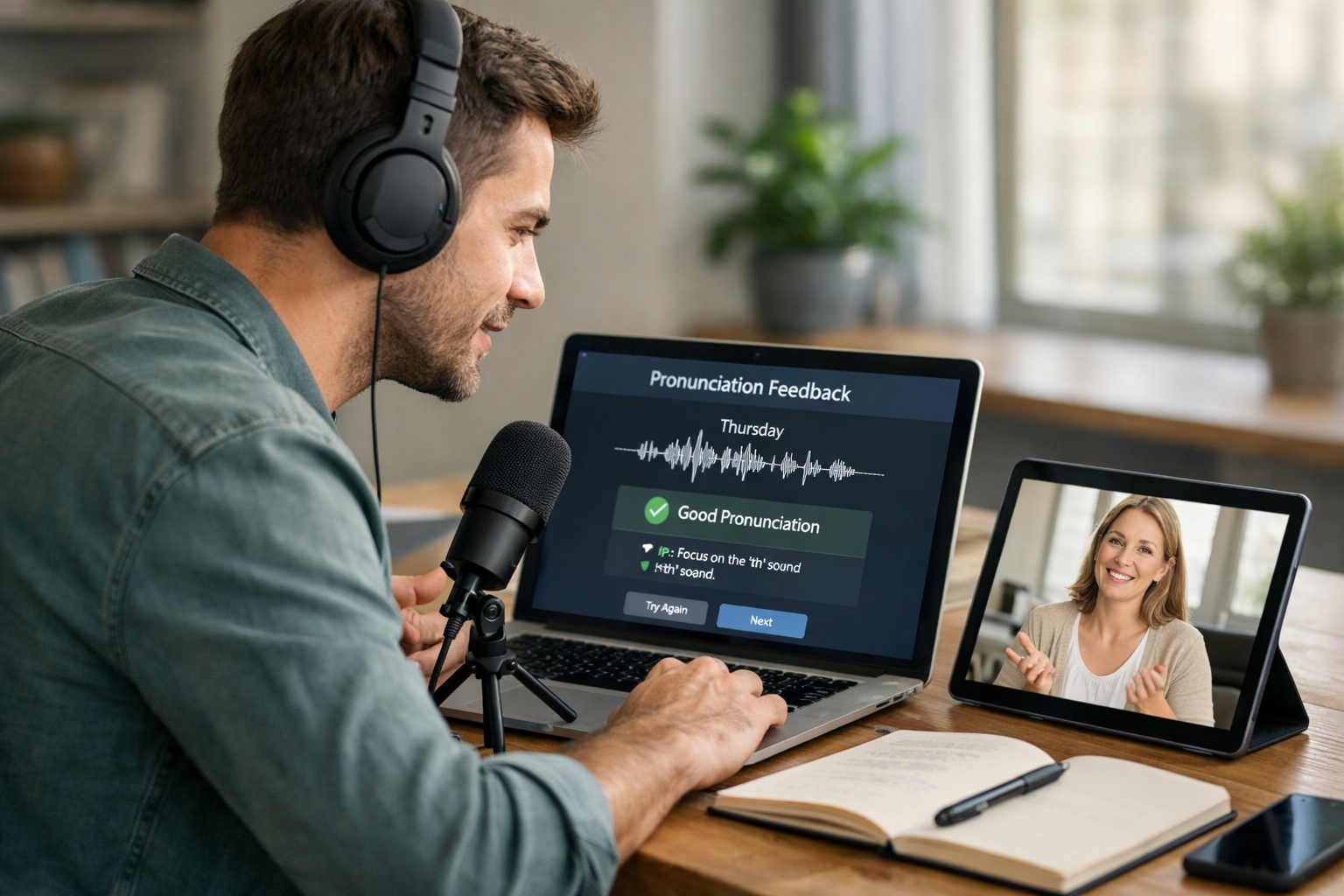
AI-powered pronunciation coaching can work better than a human teacher for some tasks—especially instant feedback, daily practice, and repeating the same sound as many times as you want. But it is not automatically better overall. A human teacher is usually stronger at understanding context, emotion, confidence, and the real reason you are mispronouncing words. For most beginners, the best answer is simple: AI is excellent for regular pronunciation drills, while a human teacher is better for deeper correction and natural speaking advice.
If you are new to this topic, do not worry. You do not need to know anything about artificial intelligence to understand how these tools work. In plain English, AI means computer systems designed to perform tasks that normally need human-like judgment, such as listening to speech, comparing sounds, and spotting mistakes. In pronunciation coaching, AI listens to your voice, compares it with a model of correct speech, and gives feedback like “your stress is on the wrong syllable” or “your vowel sound is too short.”
Most AI pronunciation tools use speech recognition, which means software turns spoken words into data it can analyze. The tool listens for things like:
Many apps score your pronunciation on a scale such as 0 to 100. Some highlight exactly which word sounded wrong. Others show visual feedback, like sound waves, mouth positions, or colored syllables. This can be very useful for beginners because it turns an invisible problem—how your speech sounds—into something you can see and improve step by step.
A human teacher may only meet you once or twice a week. AI can respond in seconds, any time of day. If you want to repeat one word 30 times, AI will not get tired or impatient. That makes it especially helpful for building a daily habit.
For example, if you struggle with the English “th” sound in “think,” an AI tool can let you practice “think,” “thought,” and “three” again and again until your score improves. A teacher can do this too, but not as cheaply or as often.
Private pronunciation lessons can cost anywhere from $15 to $80 per hour depending on the teacher and country. Many AI tools cost far less per month, and some basic versions are free. For beginners who need frequent repetition, AI can offer much better value.
Many people feel nervous speaking in front of another person, especially when they know their pronunciation is weak. AI removes that social pressure. You can make mistakes privately, which often leads to more practice and faster improvement.
Good AI tools track your scores over time. That matters because pronunciation improvement is often slow and hard to notice day by day. Seeing your score move from 62 to 78 over a few weeks can keep you motivated.
AI can often tell you what is wrong. A human teacher is usually better at explaining why. For example, if a Spanish speaker says “beach” in a way that sounds like another English word, a teacher may recognize that the learner is carrying over a vowel pattern from their first language. That kind of diagnosis is harder for many apps.
Real speech is not just about sounds. It includes timing, emotion, politeness, humor, and confidence. A human teacher can tell you, “Your pronunciation is technically correct, but the sentence sounds too flat,” or “Native speakers would soften that phrase in this situation.” AI is improving here, but humans still lead in real-world communication.
Different learners want different outcomes. One person wants to pass an English interview. Another wants to sound clear in customer service. Another simply wants family members abroad to understand them better. A teacher can adjust lessons in a flexible way based on your life, your job, and your motivation.
Pronunciation can be emotional. Some learners feel frustrated, embarrassed, or afraid of sounding “wrong.” A good teacher can build confidence in a way software cannot fully match. That emotional support can make a real difference, especially for adult beginners.
The honest answer is: it depends on the task.
AI is often better for:
Human teachers are often better for:
If your main goal is to make your speech clearer through regular short practice, AI may be enough to produce noticeable results. If your goal is to sound natural in conversations, presentations, interviews, or exams, a human teacher usually adds value that AI alone cannot replace.
Studies in computer-assisted language learning have repeatedly shown that learners can improve pronunciation with automated feedback, especially when they practice consistently. The key word is consistently. Even a very smart tool cannot help much if you only use it once a week.
In real life, many learners improve fastest when they combine both methods. Think of AI as your daily gym and the teacher as your coach. The gym gives you unlimited reps. The coach corrects your form and helps you avoid bad habits.
A practical routine might look like this:
This blended method is often more realistic and more effective than relying on only one approach.
Not all AI tools are equally useful. A beginner-friendly tool should offer:
If a tool only gives a score without explaining what to fix, it may not help much. The best systems tell you what went wrong and what to try next.
Pronunciation coaching is also a helpful example of how AI supports learning more broadly. It shows that AI is not magic. It is a tool that works well when the task is clear, measurable, and repeatable. That is why AI is becoming useful in many beginner-friendly learning areas, from language practice to coding support to data analysis.
If you are curious about how these systems work behind the scenes, you can browse our AI courses to explore beginner-friendly lessons on artificial intelligence, natural language processing, and practical digital skills. Everything is designed for learners starting from zero.
So, does AI-powered pronunciation coaching work better than a human teacher? For repetition, convenience, and low-cost daily feedback, yes—often it does. For nuance, confidence, and real conversation coaching, human teachers still have an edge. For many beginners, the smartest path is to use AI for regular practice and add human support when needed.
If you want to learn more about AI in simple, beginner-friendly language, you can register free on Edu AI and start exploring practical courses at your own pace. If you are comparing options before committing, you can also view course pricing and choose a learning path that fits your goals and budget.



- Learning Evolved.
- Intelligence Amplified.