Languages — April 11, 2026 — Edu AI Team
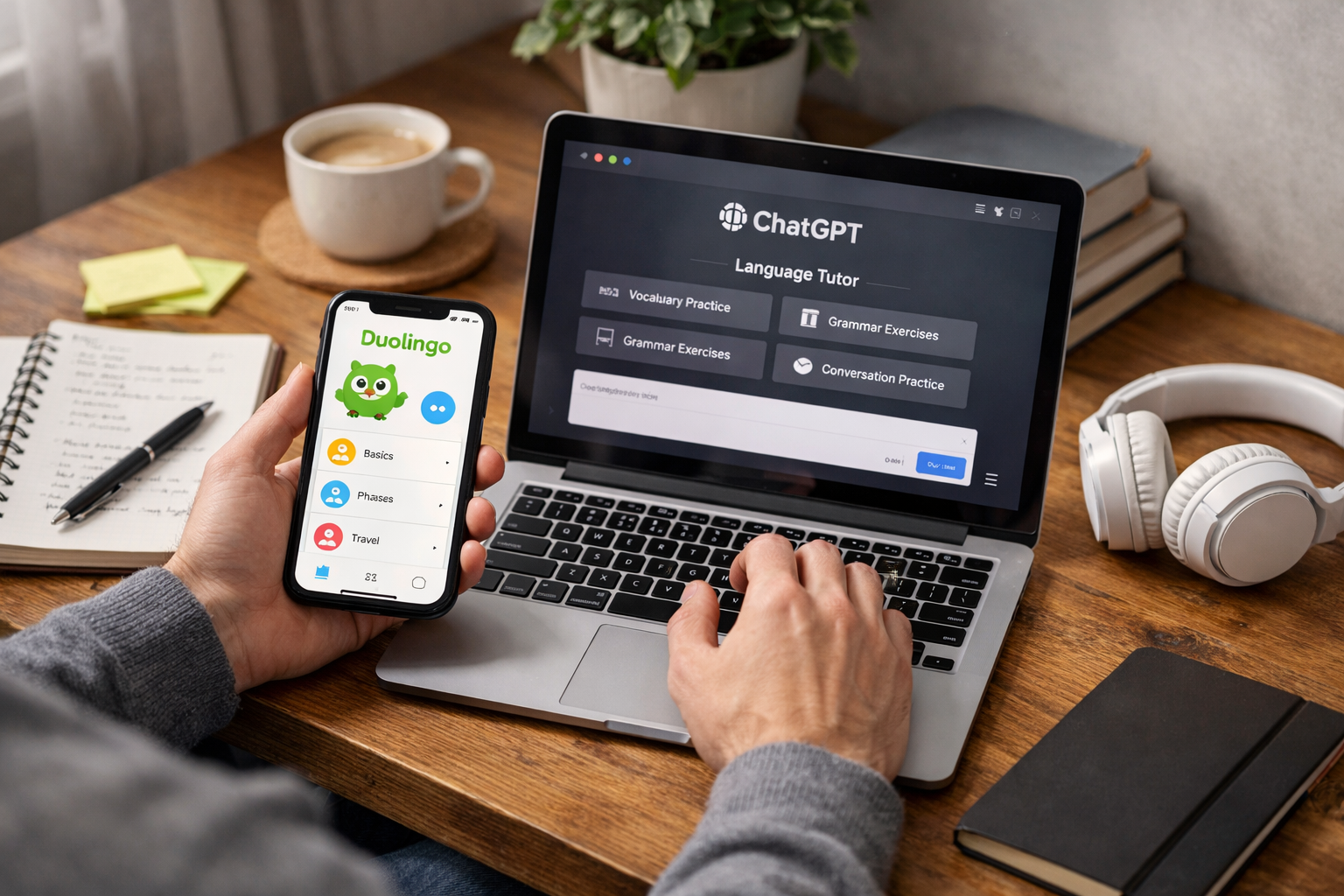
The best AI language learning app depends on what you need most. If you want a structured, game-like beginner path, Duolingo is often the easiest starting point. If you want flexible conversation practice, instant explanations, and custom roleplay, ChatGPT is one of the most useful tools available. Other apps like Babbel, Busuu, Memrise, and Speak can be better if you want clearer grammar lessons, feedback on speaking, or more realistic dialogues. For most beginners, the smartest choice is not “one winner,” but the right mix: one app for structure and one AI tool for practice.
In this guide, we compare Duolingo vs ChatGPT vs other popular AI-powered language learning apps in plain English. We will look at price, strengths, weaknesses, and who each tool is best for, so you can pick the best option without wasting time or money.
Before comparing apps, it helps to know what “AI” means here. Artificial intelligence, or AI, is software that can respond in a smart-looking way. In language learning apps, AI is often used to:
A good AI language app should do more than feel impressive. It should help you improve in real skills: reading, listening, speaking, writing, vocabulary, and grammar.
For complete beginners, the best app usually has four things:
If you only want the short version, here it is:
Duolingo is easier to start. ChatGPT is more powerful, but only if you know how to ask good questions and build your own study routine.
Duolingo is popular for a reason. It breaks language learning into tiny lessons, often taking less than 10 minutes. The design is playful, and features like streaks, points, and reminders can help you stay consistent.
For someone learning Spanish, French, German, or another major language for the first time, Duolingo makes the first step feel easy. You open the app, answer a few questions, match words, repeat short phrases, and build a daily habit.
Main strengths:
Duolingo can feel productive even when you are mostly tapping words on a screen. That is useful at first, but it does not always mean you can hold a real conversation. Grammar explanations can be light, and speaking practice may feel limited depending on the course.
So Duolingo is excellent for starting, but often not enough on its own if your goal is real-world speaking confidence.
ChatGPT is different from a normal language app. It is a conversational AI tool, which means it can chat with you in a natural way. You can ask it to act like a tutor, a waiter in a restaurant, an airport worker, or a language partner. That makes it powerful for practice.
For example, you can say:
This flexibility is ChatGPT’s biggest advantage. It can explain, quiz, translate, rewrite, and simulate dialogue in one place.
ChatGPT is not a full course by default. It does not automatically give you a perfect learning path, track your progress clearly, or guarantee that every answer is correct in every language case. You need to guide it.
That means beginners may enjoy it most as a helper, not as their only teacher. It works best when paired with a more structured app or course.
Babbel is often better than Duolingo for learners who want more direct teaching. Lessons usually focus on useful phrases, grammar, and realistic situations. The style is less game-like, but many adults prefer that.
Best for: learners who want clear lessons and practical dialogues.
Busuu offers structured courses and often includes opportunities for feedback from native speakers. It combines self-study with some community features, which can make learning feel more real.
Best for: learners who want structure plus outside correction.
Memrise is known for helping learners build vocabulary with spaced repetition. Spaced repetition means reviewing words at smart intervals so they stay in your memory longer. Some courses also include video clips of native speakers, which can help listening skills.
Best for: learners who want to remember words and hear natural speech.
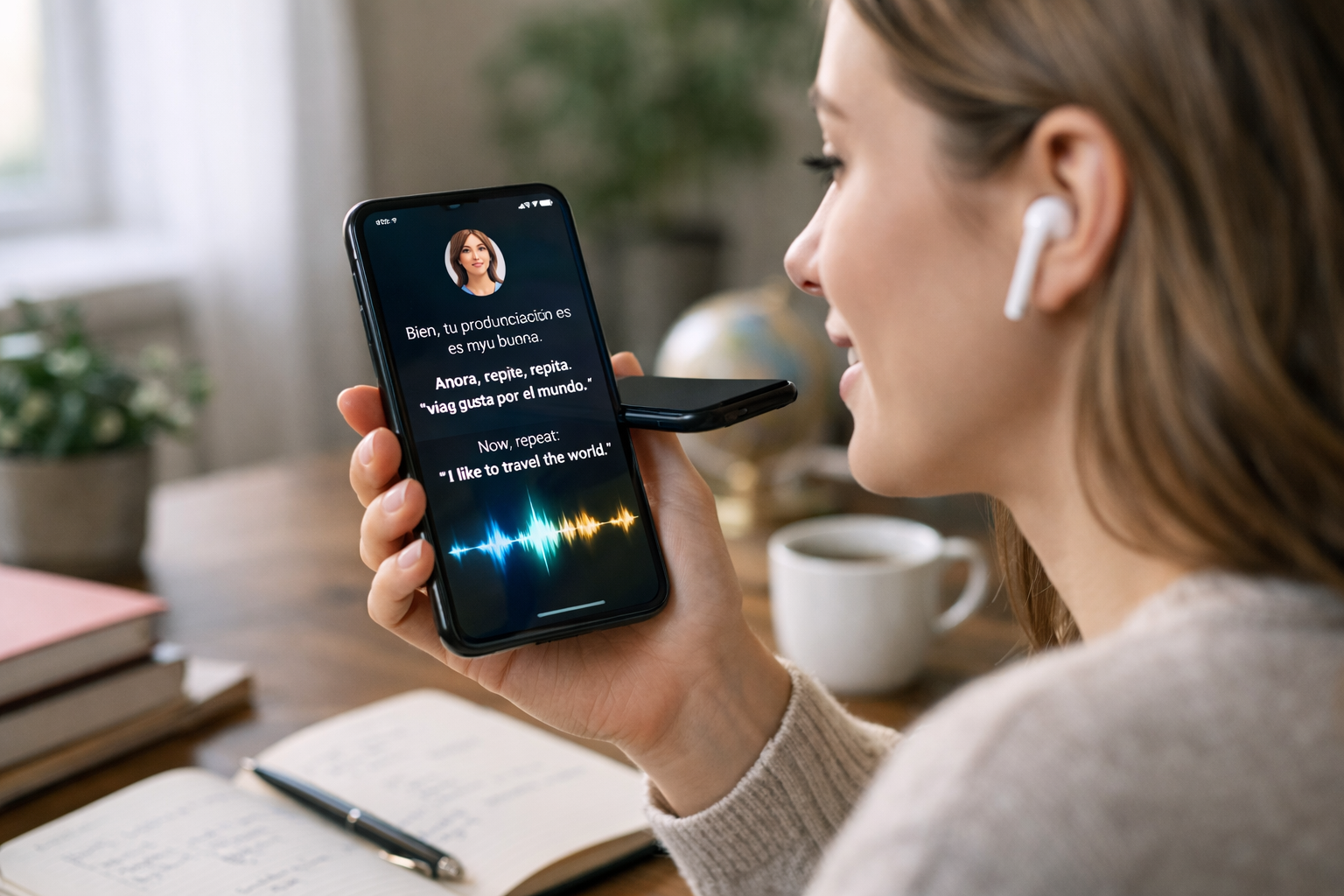
Speak focuses heavily on speaking aloud with AI conversation practice. If your biggest fear is actually talking, this kind of app can be very helpful because it pushes active use, not just passive review.
Best for: shy learners who want speaking confidence fast.
Here is the simplest way to compare the main tools:
In terms of cost, Duolingo has a free version, which makes it attractive for new learners. ChatGPT also has a free version, though premium features may improve the experience. Babbel, Busuu, Memrise, and Speak usually rely more on paid plans. Prices change often, so always check the latest plan details before subscribing.
Start with Duolingo or Babbel. Add ChatGPT to practise real travel situations like ordering food, asking directions, or checking into a hotel.
Use ChatGPT or Speak regularly. Ask for roleplay, corrections, and short dialogues. Do not just read the answers silently. Say them out loud.
Babbel and ChatGPT are strong options. ChatGPT is especially useful if you like asking “why?” You can ask for simple explanations, examples, and mini quizzes until a rule makes sense.
Duolingo usually wins. Its game-style design keeps many beginners coming back daily, even when motivation drops.
The mistake many learners make is expecting one app to do everything. In reality, language learning works better when you combine tools.
A simple beginner plan looks like this:
That is only 25 minutes a day, but it covers guided lessons, active practice, and memory review. Over a week, that adds up to nearly 3 hours of focused learning.
If you are curious about how AI tools like ChatGPT actually work behind the scenes, you may also enjoy beginner-friendly learning beyond languages. You can browse our AI courses to explore simple introductions to AI, machine learning, and practical tools without needing a technical background.
They can help a lot, but they are usually not enough by themselves if fluency is your goal. Fluency means being able to understand and respond naturally in real situations. Apps are great for building the foundation, but real progress also comes from listening to native content, reading simple material, and speaking with real people when possible.
Still, AI apps are better than ever for getting started because they remove fear. You can make mistakes privately, ask beginner questions without embarrassment, and practise as often as you want.
Duolingo is the best first app for most complete beginners. It is simple, motivating, and easy to stick with. ChatGPT is the best AI tool for personalised practice. It shines when you want natural conversation, explanations in plain English, and roleplay built around your goals.
But if you want the strongest overall learning system, the winner is a combination:
In short, there is no perfect single app. The best app is the one you will actually use consistently, in a way that matches your goal.
If learning with AI has sparked your interest, a good next step is understanding the tools behind it. At Edu AI, we create beginner-friendly courses that explain AI in simple language, including how smart systems can personalise learning and communication. You can register free on Edu AI to get started, or view course pricing if you want to plan your learning path. Whether you are exploring language tools or broader AI skills, the goal is the same: start simple, stay consistent, and keep building confidence one step at a time.



- Learning Evolved.
- Intelligence Amplified.