Languages — April 14, 2026 — Edu AI Team
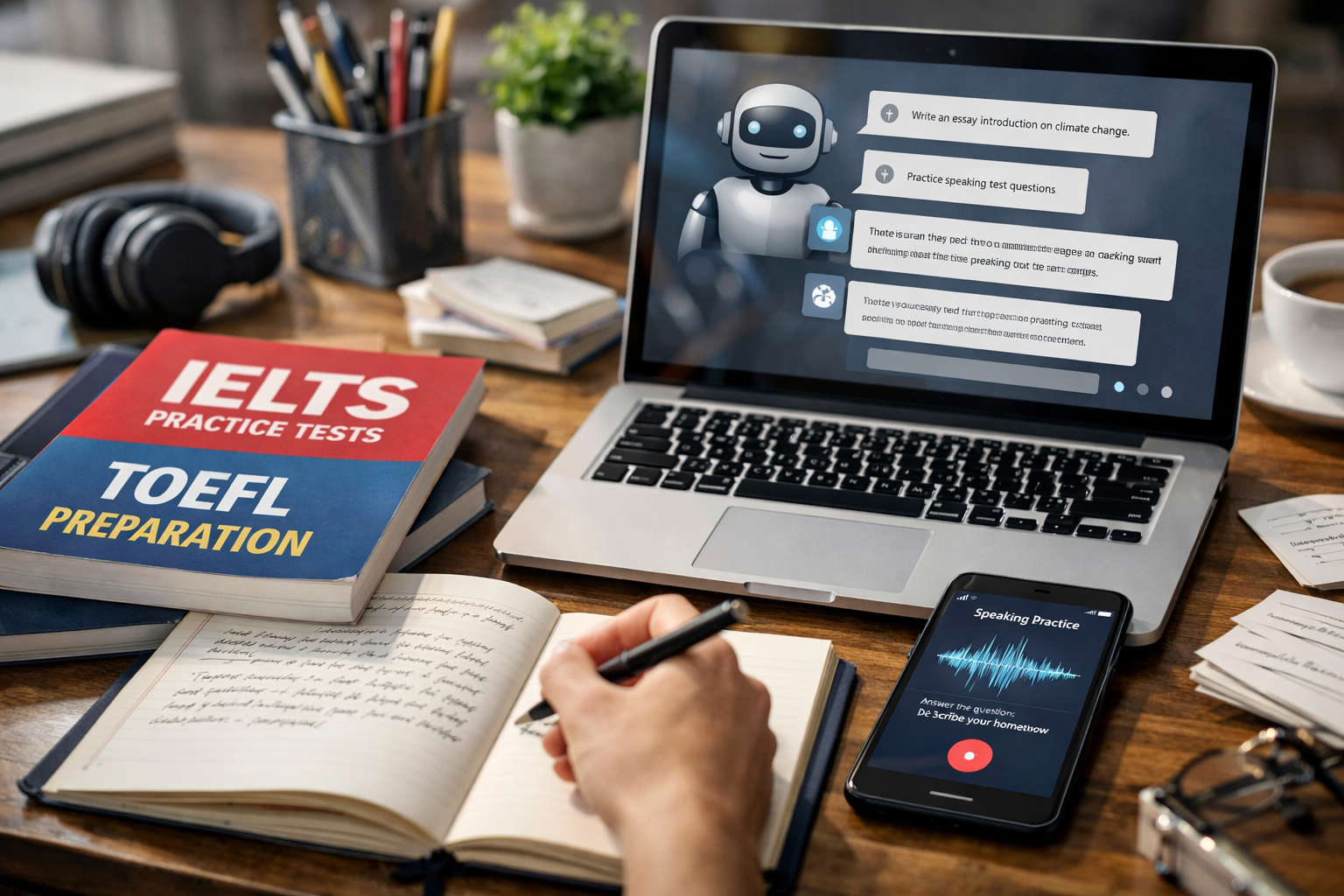
AI is making IELTS and TOEFL preparation faster and smarter by giving students instant feedback, personalised practice, and study plans that adapt to their weak areas. Instead of waiting days for a teacher to mark an essay or trying to guess why a speaking answer sounds unnatural, learners can now use AI tools to get help in minutes. For busy students, that means less wasted time, more targeted practice, and a clearer path to a higher score.
If you are new to this topic, do not worry. You do not need to understand coding or advanced technology to benefit from AI. In simple terms, artificial intelligence, or AI, means software that can look at patterns in data and make useful suggestions. In IELTS and TOEFL preparation, that often means checking grammar, evaluating pronunciation, recommending vocabulary, or building a study plan based on your progress.
Before looking at AI, it helps to understand the old problem. IELTS and TOEFL test four main skills: reading, listening, writing, and speaking. Many students improve slowly because they face three common issues.
For example, a student might write three Task 2 essays in a week, but if no one explains the repeated problems, such as unclear topic sentences or incorrect verb forms, the extra practice does not lead to much improvement. AI helps solve that by shortening the feedback loop.
One of the biggest time savers is AI-based writing review. Instead of waiting for a human tutor, students can paste an essay into a tool and quickly receive comments on grammar, sentence clarity, vocabulary choice, and structure.
This matters because strong test writing is not only about having ideas. It is also about organising those ideas clearly. AI can point out issues such as:
Imagine a learner writing a 300-word TOEFL essay. A human teacher may take 20 to 30 minutes to review it carefully. An AI tool can provide first-round feedback almost immediately. That means the student can revise the same day while the mistakes are still fresh in memory.
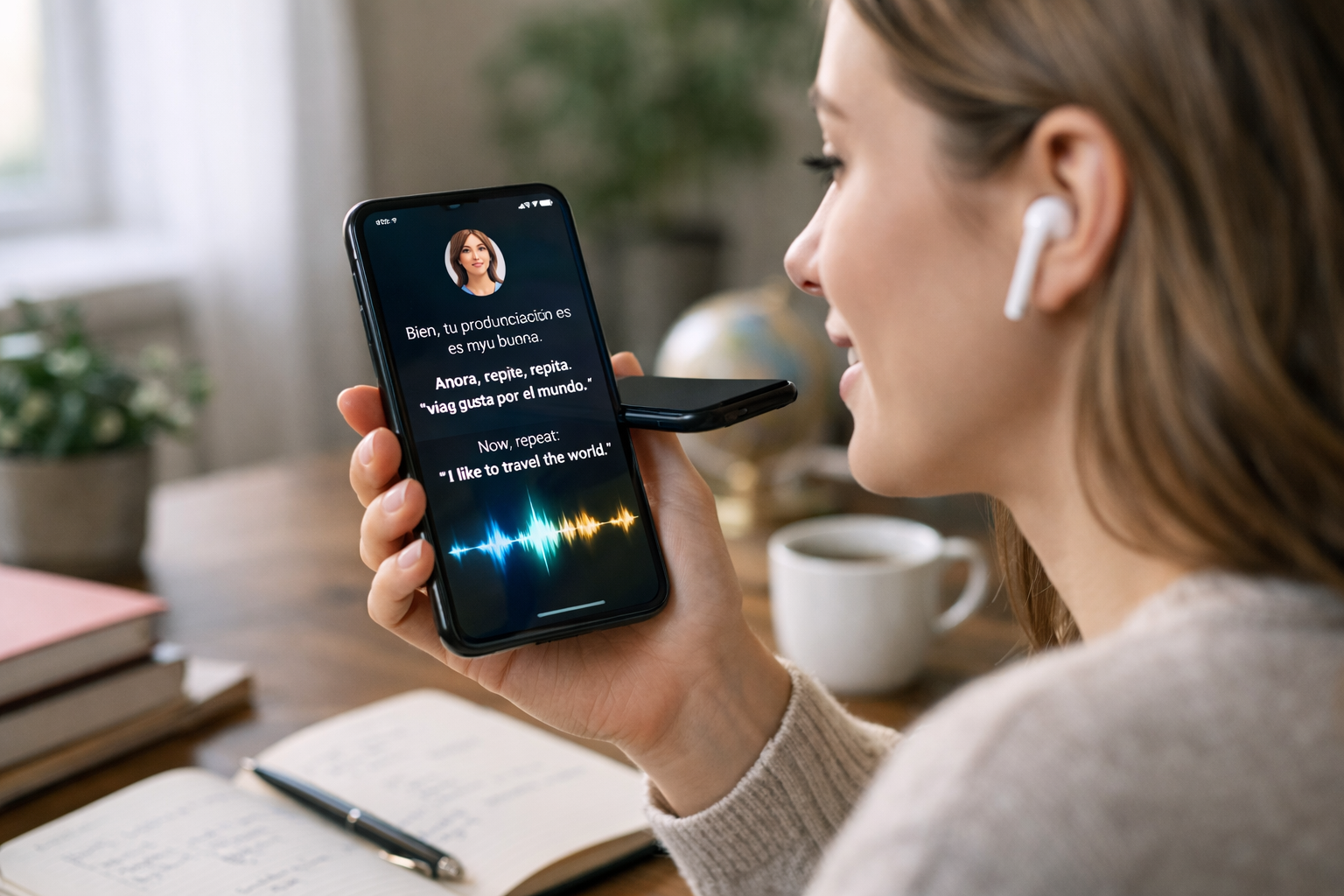
Speaking is one of the hardest parts of IELTS and TOEFL because many learners do not have a partner to practise with every day. AI-powered speaking tools can listen to your voice, compare it with common pronunciation patterns, and highlight words or sounds that need work.
In simple terms, the system hears how you speak and checks whether your pronunciation, speed, and pauses are close to natural spoken English. It can also suggest better phrasing. This is useful for shy learners who want private, low-pressure practice before speaking with a real examiner or tutor.
For example, if you often pause too long in IELTS Speaking Part 2, AI may notice that your fluency drops after 20 seconds and recommend timed speaking drills. That is much more useful than simply being told, "practise more."
Many students try to memorise long word lists, but that is not always efficient. AI can track which words you already know and which words you keep forgetting. Then it can recommend practice based on your level.
This is often done through adaptive learning. That means the system changes the difficulty of tasks depending on your performance. If you easily understand academic reading passages but struggle with listening to fast conversations, the AI can give you more listening-focused exercises instead of wasting time on skills you already control.
A student with only one hour a day needs a different plan from someone who can study three hours. AI tools can create a realistic weekly schedule based on your target test date, current level, and weak points. This is one of the clearest ways AI makes preparation faster: it reduces guesswork.
Instead of asking, "What should I study today?" you get a more useful answer, such as:
That kind of structure is especially helpful for beginners.
Smart preparation is not only about speed. It is about doing the right work. Two students may both want an IELTS Band 7, but one may need grammar support while the other needs better time management in reading. AI can detect those differences and respond accordingly.
This personalised approach is important because IELTS and TOEFL are not simple memory tests. They measure how well you use English in practical situations. A one-size-fits-all plan often misses the real problem.
Humans are not always good at spotting repeated errors in their own work. AI tools can track patterns over time. For example, they may notice that:
When you can see these patterns clearly, your preparation becomes more strategic.
Consistency is often more important than intensity. Studying 45 minutes a day for eight weeks is usually more effective than cramming for eight hours on a weekend. AI helps by making practice easier to start and easier to repeat. Quick feedback creates momentum, and momentum helps learners stay motivated.
AI is useful, but it is not magic. It works best as a study partner, not a complete replacement for human support. There are still areas where human teachers, tutors, or conversation partners are valuable.
The smartest approach is often a mix: use AI for fast daily practice and use human guidance for deeper correction and confidence building.
Here are a few beginner-friendly examples of what AI-based preparation can look like in daily life:
These small adjustments can save many hours over a full preparation cycle.
If you are new to both AI and exam preparation, keep it simple. You do not need ten apps or a complicated system. Start with these steps:
Take a level check. Find out whether your biggest challenge is reading, listening, writing, or speaking.
Use one AI tool for one purpose. For example, use it only for essay feedback or only for pronunciation practice at first.
Review the feedback carefully. Do not just accept corrections. Try to understand why they were suggested.
Track repeated mistakes. Keep a small notebook or digital list of common errors.
Combine AI with real practice. Read articles, listen to English podcasts, and speak out loud every day.
If you are curious about the wider ideas behind modern learning technology, you can browse our AI courses to explore beginner-friendly lessons in AI, language learning, and related topics in plain English.
Preparing for IELTS or TOEFL is not only about a test date. It is often connected to a larger goal: studying abroad, moving for work, applying for a visa, or building confidence in academic English. AI can make that journey less stressful because it gives learners more control.
It also helps students build digital learning habits that are increasingly valuable in education and work. Understanding how smart tools support learning can be useful long after the exam is over. As AI becomes more common in classrooms, workplaces, and online platforms, even basic familiarity can be an advantage.
For learners who want to understand these tools more deeply, especially how AI powers feedback, recommendations, and personalised study systems, it may be worth taking time to view course pricing and compare beginner-friendly learning options.
So, how is AI making IELTS and TOEFL preparation faster and smarter? By giving instant feedback, adapting practice to your level, and helping you spend more time on the skills that truly need work. For beginners, that can mean less confusion, more confidence, and a more efficient path to improvement.
If you want a simple next step, start by using one AI-powered study method this week, such as writing feedback or speaking analysis. And if you would like to build your understanding of AI and modern learning tools in a beginner-friendly way, you can register free on Edu AI and explore courses designed for complete newcomers.



- Learning Evolved.
- Intelligence Amplified.