Languages — April 11, 2026 — Edu AI Team
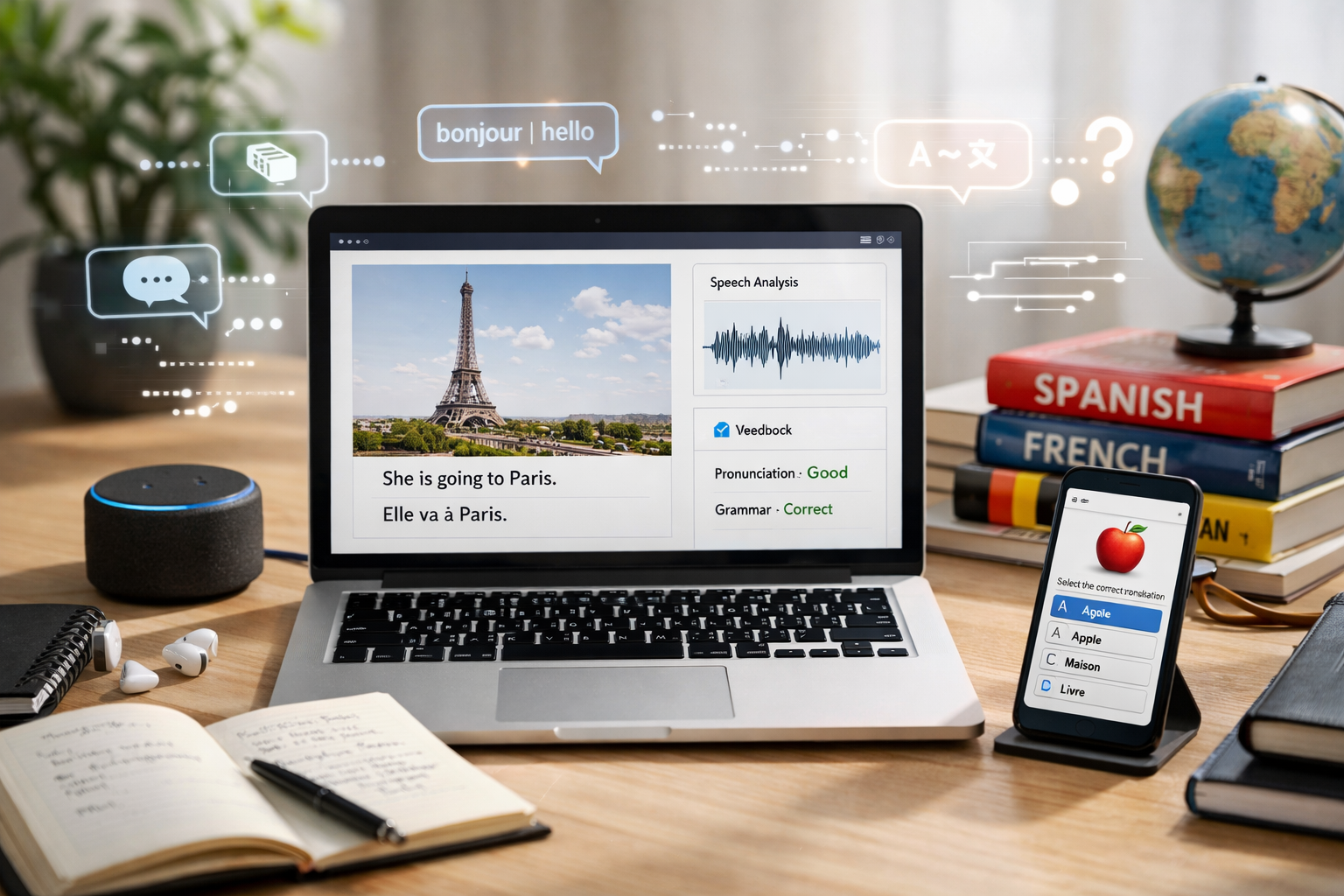
Natural language processing, or NLP, powers modern language learning platforms by helping software understand, analyse, and respond to human language. In practical terms, that means an app can listen to your pronunciation, spot grammar mistakes, suggest better word choices, translate sentences, and adapt lessons to your level. Instead of giving every learner the same fixed exercises, NLP makes language platforms feel more like a patient tutor that can react to what you say and write.
If you have ever used a language app that corrected your sentence, rated your speaking, or recommended easier or harder lessons, there is a good chance NLP was working behind the scenes. The technology is not magic. It uses patterns from large amounts of text and speech data to make useful predictions. For beginners, the important idea is simple: NLP helps computers work with language in a more human-like way.
NLP stands for natural language processing. It is a part of artificial intelligence that helps computers deal with language such as English, Spanish, French, Arabic, or Japanese. Human language is messy. We use slang, make spelling mistakes, speak with accents, and often mean more than the exact words we say. NLP gives computers tools to handle that messiness.
Think of NLP as a bridge between human communication and computer systems. A normal computer is excellent at numbers and strict rules. Human language does not follow strict rules all the time. NLP helps close that gap so a learning platform can do useful things like:
For language learning platforms, this matters because learning a language is really about using words, sounds, grammar, and meaning together. NLP helps software work with all of them.
One of the most visible uses of NLP is speech recognition. This is the technology that turns your spoken words into text. When you say, "I would like a coffee," the platform listens, breaks the audio into tiny sound units, compares them with patterns it has learned, and decides which words you probably said.
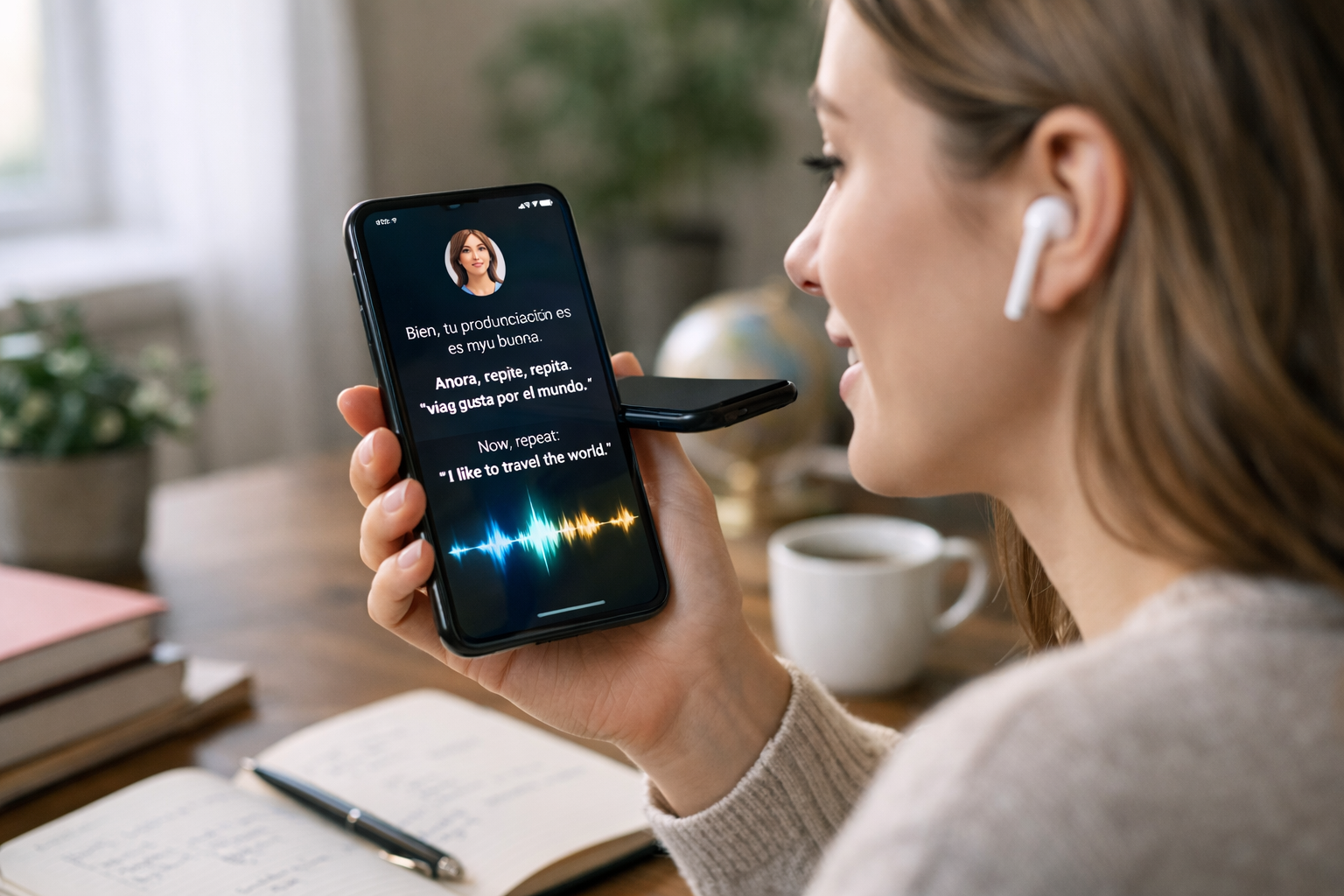
In language apps, this allows speaking practice. The platform can compare what you said with the expected phrase and give feedback. It may notice that you skipped a word, stressed the wrong syllable, or pronounced a vowel sound incorrectly. This is useful because speaking practice is often one of the hardest parts of self-study.
For example, a beginner learning Spanish might say "pero" and accidentally pronounce it closer to "perro." A well-designed system can flag that difference because those words mean different things. NLP does not just hear sound. It connects sound with likely words and meaning.
Many platforms now offer real-time grammar feedback. If a learner writes, "She go to school every day," the system can suggest, "She goes to school every day." This seems simple, but it requires the platform to understand sentence structure, verb forms, and context.
Before AI tools became common, software often relied on basic rule lists. That worked for simple errors, but not for natural language with many exceptions. Modern NLP systems can learn from huge numbers of correct and incorrect sentences. That helps them catch more realistic mistakes and offer better explanations.
For beginners, this instant feedback saves time. Instead of waiting for a teacher or searching online, learners can correct small mistakes immediately and keep moving.
Words often have more than one meaning. The word "bank" could mean a financial institution or the side of a river. NLP helps a platform decide which meaning fits the sentence. This is called understanding context.
That matters in language learning because direct word-for-word translation is often misleading. If a learner sees the phrase "run a business," the platform should not explain "run" only as moving quickly on foot. NLP helps identify the intended meaning and show a better explanation.
This also improves flashcards, reading tools, and word recommendations. Instead of teaching random vocabulary, the platform can prioritise words you actually need based on the lessons you complete, the errors you make, and the topics you study most often.
Many modern platforms include AI chat practice. This usually combines NLP with conversational AI. A learner can type or speak to a bot and receive a natural reply. For beginners, this is helpful because it creates a safe place to practise without fear of embarrassment.
Imagine a learner studying travel English. The chatbot might ask, "Where are you staying?" If the learner replies, "I stay hotel near airport," the system can understand the intent, respond politely, and suggest a better version such as, "I am staying at a hotel near the airport."
This kind of guided conversation helps learners build confidence. It also gives them more practice time than a traditional classroom alone. If you are curious about beginner-friendly AI topics like this, you can browse our AI courses to see how tools behind modern apps actually work.
Not every student learns in the same way or at the same speed. NLP helps platforms personalise the learning journey. If the system notices you frequently confuse past tense verbs, it can assign more exercises in that area. If your pronunciation scores improve but your writing remains weak, it can shift the balance of activities.
This is one reason modern platforms feel more interactive than old textbook software. They are not just displaying content. They are analysing your language use and adjusting what comes next.
A simple way to think about it is this: NLP helps the platform answer three useful questions:
That personalised loop can make study time more efficient, especially for busy adults learning in short sessions.
For absolute beginners, the biggest benefit is not that the technology is advanced. The biggest benefit is that it makes learning more accessible. Good NLP features can reduce frustration and increase motivation.
Here are a few ways beginners benefit:
In a traditional setting, a teacher may only have time to correct a few mistakes per student. A language platform can provide feedback every few seconds. Of course, software is not perfect, but when designed well, it becomes a powerful support tool.
You do not need coding knowledge to understand the basic process. Most NLP-powered learning platforms follow a simple flow:
Input: You type a sentence or speak into your device.
Processing: The system breaks your input into smaller pieces such as words, sounds, or sentence parts.
Analysis: It compares your input with patterns learned from large collections of text and speech.
Prediction: It predicts meaning, correctness, pronunciation quality, or the best next response.
Feedback: It gives you a correction, translation, score, hint, or new lesson.
The quality of the result depends on the training data, the design of the system, and how carefully it was tested with real learners. This is why some apps feel impressively helpful while others feel inaccurate or repetitive.
NLP is useful, but it is not perfect. Understanding its limits helps set realistic expectations.
That is why the best learning experience often combines AI support with human teaching, community practice, or real-world conversation. NLP is a strong assistant, not a complete replacement for human communication.
Language learning tools are moving beyond simple translation and multiple-choice quizzes. New systems can hold longer conversations, explain why an answer is wrong, and adapt more quickly to individual progress. As models improve, learners can expect more natural dialogue, better pronunciation analysis, and more useful writing feedback.
We are also seeing a growing connection between language learning and broader AI education. Understanding basic ideas like NLP, speech recognition, and machine learning can help learners feel more confident using modern digital tools at work and in daily life. If you are starting from zero and want plain-English lessons, you can register free on Edu AI and explore beginner-friendly learning paths.
If you are comparing platforms, look for features that solve real learning problems rather than flashy marketing claims. A strong platform should offer:
It is also worth checking whether the platform teaches in small, manageable steps. Beginners usually do better with short lessons, repeated review, and simple explanations.
NLP powers modern language learning platforms by helping them listen, read, correct, translate, and personalise your experience. In simple terms, it turns static lessons into interactive learning. For beginners, that can mean faster feedback, more confidence, and a smoother path from memorising words to actually using a language.
If you want to explore the ideas behind AI-powered learning in a beginner-friendly way, take a look at Edu AI to browse our AI courses or view course pricing. It is a practical next step if you want to understand both how modern learning platforms work and how to build your own AI knowledge from the ground up.



- Learning Evolved.
- Intelligence Amplified.