Languages — April 12, 2026 — Edu AI Team

You can use ChatGPT as a personal language tutor by asking it to explain words, correct your mistakes, create short lessons, role-play conversations, and build a study plan at your level. For beginners, this is useful because ChatGPT is available anytime, responds quickly, and can adapt to simple or advanced practice. It does not replace a human teacher in every situation, but it can be a practical, low-pressure way to practise reading, writing, listening ideas, and speaking scripts every day.
If you are completely new to this, ChatGPT is an AI chatbot. That simply means it is a computer tool that can understand your written questions and reply in natural language. In language learning, you can treat it like a patient practice partner: ask questions, make mistakes, and request clearer explanations until you understand.
Many beginners struggle for one main reason: they do not get enough practice. A classroom might meet once or twice a week. A private tutor can be expensive. Friends may not have time to help every day. ChatGPT fills some of that gap by giving you immediate practice whenever you want.
Here is why many learners find it helpful:
The key is not just using ChatGPT often. The key is using it correctly. Good prompts produce better lessons.
You can ask ChatGPT to teach words by topic, such as food, travel, jobs, shopping, or family. It can also give definitions in simple English, example sentences, synonyms, and mini quizzes.
Example prompt:
“Teach me 10 beginner Spanish words for ordering food. Give the English meaning, pronunciation help, and one simple example sentence for each.”
Grammar means the rules for building correct sentences. Beginners often feel grammar is confusing because explanations can be too technical. ChatGPT can simplify it.
Example prompt:
“Explain the difference between present simple and present continuous in very easy English, with 5 examples and a short quiz.”
One of the best uses of ChatGPT is role-play. Role-play means acting out a real-life situation, such as ordering coffee, asking for directions, or introducing yourself in a job interview.
Example prompt:
“Pretend you are a hotel receptionist. I am a beginner English learner. Ask me simple questions one at a time, and correct my answers gently.”
You can write a short paragraph and ask ChatGPT to correct it. Ask it not only to fix the mistakes, but also to explain why they are mistakes. That is how learning happens.
Example prompt:
“Correct my paragraph like a friendly tutor. Show my mistakes, the corrected version, and a simple explanation for each correction.”
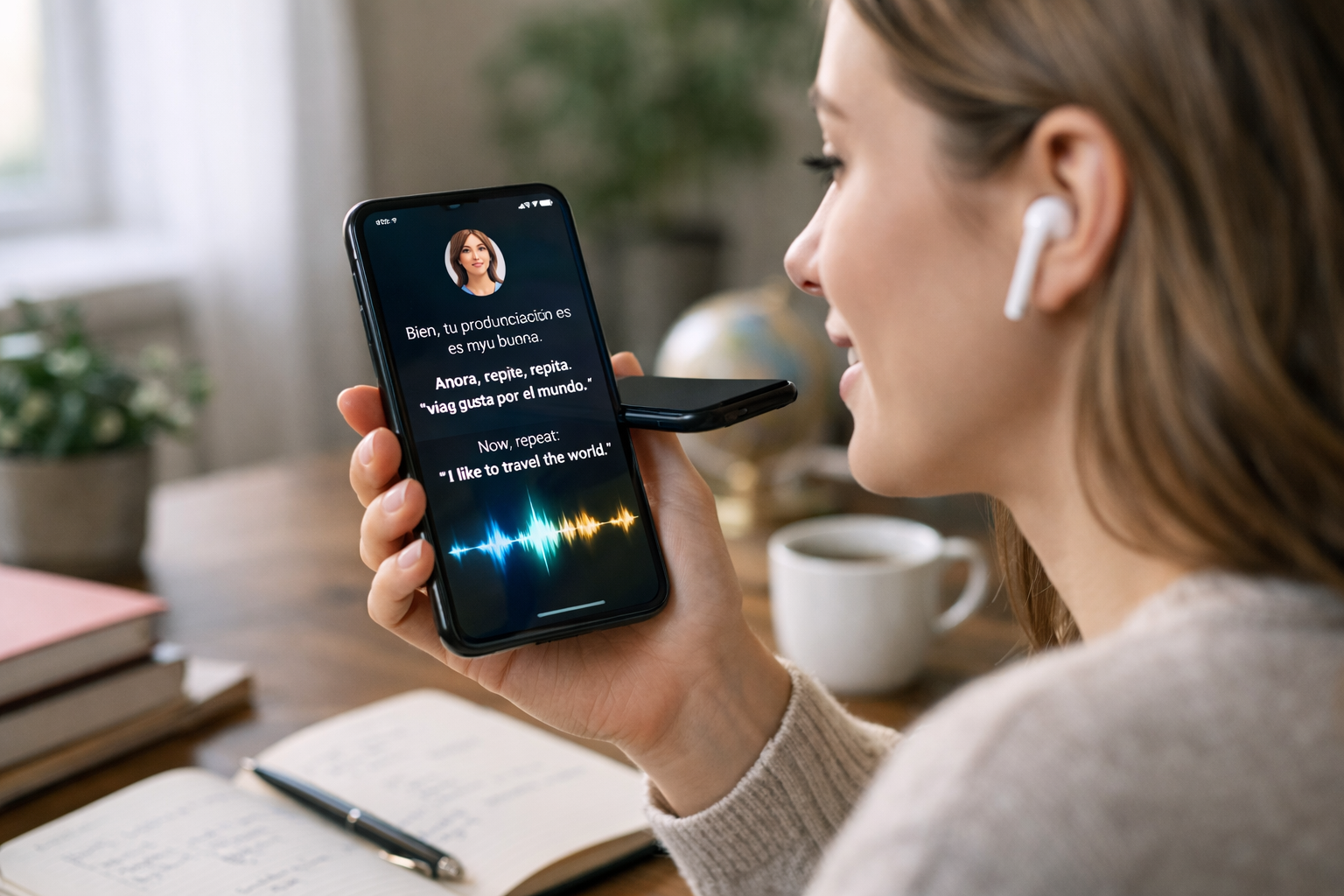
ChatGPT cannot hear your voice in every setup, but it can still help with pronunciation by breaking words into syllables, showing stress patterns, and comparing similar sounds.
Example prompt:
“Help me pronounce these French words. Break each one into simple sound parts for an English speaker.”
The easiest mistake is asking random questions with no plan. Instead, tell ChatGPT who you are, what language you are learning, your level, and your goal. This helps it respond in the right way.
Try this starter prompt:
“You are my personal Italian tutor. I am a complete beginner. Teach me in short lessons of 10 minutes. Use very simple explanations, correct my mistakes kindly, and focus on travel conversation first.”
This works because it gives four clear instructions:
You can also ask ChatGPT to remember a lesson format. For example:
That creates structure, which makes progress easier to see.
If you only have a short amount of time, consistency matters more than long study sessions. Fifteen minutes a day equals about 7.5 hours a month. That is enough to build real momentum.
Here is a beginner-friendly routine:
Ask for 5 to 8 useful words on one topic. Write them down by hand if possible. Writing helps memory.
Ask for a short explanation and then complete 3 to 5 example sentences.
Role-play a real situation. Ask ChatGPT to correct you after each answer, not all at once. Immediate feedback is easier to absorb.
A good closing prompt is:
“Test me on what I learned today. Give me 5 short questions, then tell me what I should review tomorrow.”
Good prompts are specific. Instead of saying “teach me English,” tell ChatGPT exactly what to do. Here are practical prompt templates you can copy and change.
If you are interested in learning how AI tools like ChatGPT work in simple terms, you can browse our AI courses for beginner-friendly lessons that explain the basics without assuming coding knowledge.
ChatGPT can be very helpful, but beginners should use it carefully. Here are the biggest mistakes to avoid.
If you only paste sentences and ask for translations, you may become dependent on it. Translation is useful, but real learning comes from creating your own sentences.
AI can make mistakes. Sometimes a phrase may sound unnatural or too formal. If something looks strange, ask:
“Is this how a native speaker would say it in everyday conversation?”
You can also ask for two versions: formal and casual.
Learning 50 new words in one sitting sounds productive, but most beginners forget them quickly. It is better to learn 5 to 10 useful words and reuse them several times.
Even if you are typing, you can still improve speaking. Read ChatGPT’s sample sentences out loud. Ask it to write short dialogues you can perform by yourself.
You will get better results if you guide it clearly. Use these tips:
A strong all-purpose prompt is:
“Please act as a patient beginner language tutor. Keep your explanations short, use everyday examples, and correct my mistakes in a clear and encouraging way.”
Usually, no. A human teacher is still better for deep pronunciation coaching, emotional encouragement, cultural nuance, and fully personalised long-term guidance. But ChatGPT can still be extremely valuable between lessons or when you cannot afford private tutoring.
Think of it this way:
For many learners, the best approach is a mix of both.
ChatGPT is especially useful if you:
It is also a good first step for people who are curious about AI but feel intimidated by technical topics. If that sounds like you, you can register free on Edu AI and explore beginner-friendly learning paths in both AI and language learning.
The simplest way to start is this: pick one language goal, open ChatGPT, and study for 15 minutes today. Ask for 5 words, 1 grammar point, and 1 short role-play conversation. Then repeat tomorrow. Small daily practice often beats occasional long study sessions.
If you want more structured beginner learning, including simple explanations of AI tools and guided online lessons, take the next step and browse our AI courses. If you are ready to begin exploring the platform, you can also register free on Edu AI and start building your skills at your own pace.



- Learning Evolved.
- Intelligence Amplified.